
Andrew Affrunti

Spousal Maintenance in Illinois: Calculation, Modification, and Sangamon County Divorce Rules

Quick Answer Spousal maintenance in Illinois is not automatic. A court first decides whether support is appropriate by reviewing each spouse’s income, property, financial needs, earning ability, marriage length, health, and standard of living. When the statutory guidelines apply, maintenance is generally calculated using 33.3 percent of the paying spouse’s net income minus 25 percent


Spousal Maintenance in Illinois: Calculation, Modification, and Sangamon County Divorce Rules Read More »

High-conflict divorce attorney in Springfield Illinois

How Family Law Attorneys Handle High-Conflict Divorce in Illinois

Not every divorce or family law matter proceeds through negotiation and settles with both parties reasonably satisfied. Some cases involve deeply entrenched positions, significant power imbalances, allegations of misconduct, or dynamics that make productive direct communication between the parties effectively impossible. These are high-conflict disputes, and they require a fundamentally different approach than the cooperative

How Family Law Attorneys Handle High-Conflict Divorce in Illinois Read More »

family law attorney explaining divorce custody and support matters in Illinois

Uncontested Divorce in Illinois: Do You Need a Lawyer or Can You File Alone?

Quick Answer Do you need a lawyer for an uncontested divorce in Illinois? Illinois does not generally require spouses to hire lawyers for an uncontested divorce. However, both spouses still must resolve the issues necessary for the court to enter a final judgment, which may include property and debt division, maintenance, child support, parenting time,

Uncontested Divorce in Illinois: Do You Need a Lawyer or Can You File Alone? Read More »

Illinois pretrial release hearing with criminal defense attorney

Illinois No Cash Bail: How Pretrial Release Works After an Arrest

Quick Answer Illinois no cash bail means courts no longer use money as the deciding factor for release after an arrest. Instead, a judge determines whether a person should be released with conditions or detained based on factors such as public safety, court appearance history, flight risk, and the facts of the case. Illinois no

Illinois No Cash Bail: How Pretrial Release Works After an Arrest Read More »

How Plea Bargains Work in Illinois Criminal Cases: What You Need to Know

Quick Answer A plea bargain is an agreement in which a defendant agrees to plead guilty in exchange for negotiated terms, such as reduced charges, dismissal of certain counts, or a sentencing recommendation. Before accepting a plea in Illinois, the defense should review the evidence, possible defenses, penalties, long-term consequences, and the risks of continuing

How Plea Bargains Work in Illinois Criminal Cases: What You Need to Know Read More »

Illinois Taser and stun gun laws FOID card weapon charge

Illinois Taser and Stun Gun Laws: FOID, Carry Rules, and Charges

Quick Answer Tasers and stun guns can be lawfully possessed in Illinois, but state weapons rules apply. Unless an exception applies, an Illinois resident generally must have a valid FOID card or Illinois Concealed Carry License to acquire or possess one. Carry, location, and transportation rules also matter. Criminal charges may arise from unlawful possession,

Illinois Taser and Stun Gun Laws: FOID, Carry Rules, and Charges Read More »

Are Suppressors Legal in Illinois? Laws, Charges & Penalties

Quick Answer Generally, no. Illinois law prohibits most civilian possession of a device or attachment designed, used, or intended to silence the report of a firearm. A standard violation under 720 ILCS 5/24-1(a)(6) is generally treated as a Class 3 felony, while certain location-based violations may carry a higher classification. Federal registration or lawful possession

Are Suppressors Legal in Illinois? Laws, Charges & Penalties Read More »

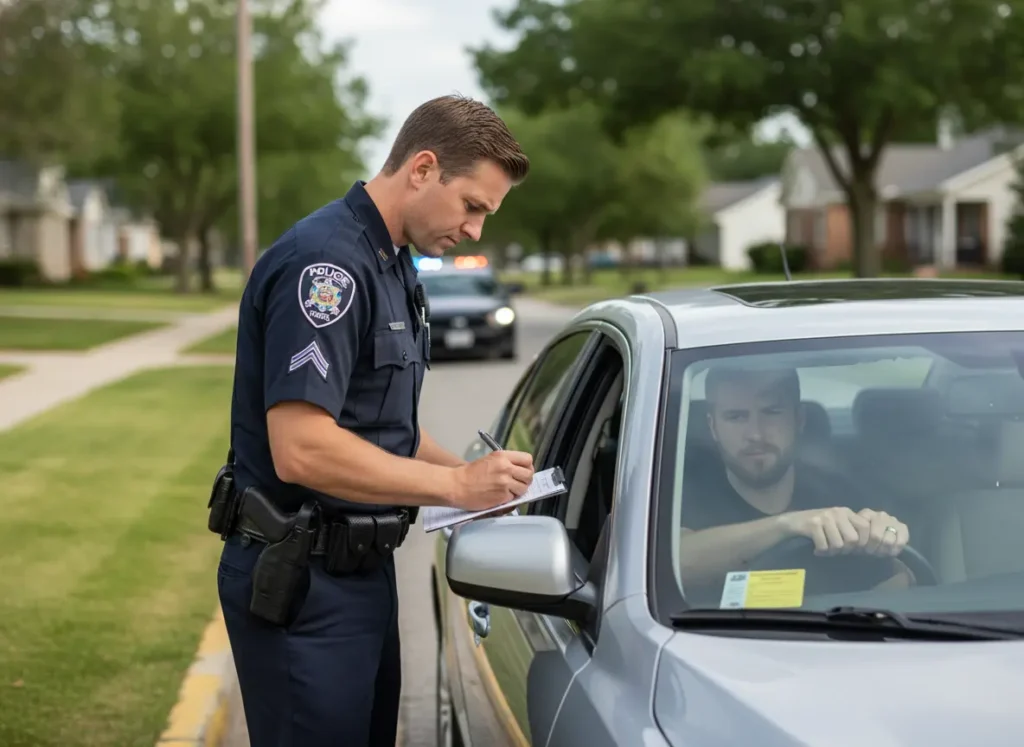
Moving vs non-moving violations Illinois traffic ticket points

Moving vs Non-Moving Violations in Illinois: Fines and Points

Quick Answer A moving violation generally involves how a vehicle is operated, such as speeding, improper lane use, or disobeying a traffic signal. A non-moving violation usually involves parking, equipment, registration, or another administrative issue. Moving-violation convictions are more likely to carry Illinois Secretary of State points and affect driving privileges, while non-moving violations generally

Moving vs Non-Moving Violations in Illinois: Fines and Points Read More »

Can You Carry a Gun in Illinois? FOID Card, CCL, and Carry Laws Explained

Quick Answer Yes, firearms can be legally possessed and carried in Illinois, but different rules apply to possession, concealed carry, transportation, and prohibited locations. Illinois residents generally need valid FOID authority to possess firearms or ammunition, while carrying a concealed handgun in public generally requires an Illinois Concealed Carry License. A firearm may also be

Can You Carry a Gun in Illinois? FOID Card, CCL, and Carry Laws Explained Read More »

FREE CONSULTATION 217-528-2183