
- Quick Answer
- What Police Can and Cannot Do During a Search Warrant
- What Police Must Show to Get a Search Warrant
- Can a Search Warrant Be Challenged in Court?
- What Is the Illinois Search Warrant Process?
- When Can Police Enter Your Home Without a Warrant?
- What Happens When Police Execute a Search Warrant
- What Should You Do After Police Search Your Home?
- Can I Refuse a Police Search of My Home in Illinois?
- Search Warrant Cases in Springfield and Sangamon County
- Need a Search Warrant Reviewed?
- Frequently Asked Questions
- What do police need to get a search warrant in Illinois?
- How long is an Illinois search warrant valid?
- Can police search anywhere they want once they have a warrant?
- Can an Illinois search warrant be challenged?
- What happens if police search beyond the scope of the warrant?
- Do Illinois police always have to knock before executing a search warrant?
- Does suppressed evidence automatically make criminal charges disappear?
Quick Answer
An Illinois search warrant generally requires a sworn application establishing probable cause and particularly describing the person or place to be searched and the property to be seized. The warrant generally must be executed within 96 hours after issuance. Police must remain within the lawful scope of the warrant or have another legal basis for additional searches or seizures. A defendant may challenge probable cause, the warrant’s description, how the search was executed, or evidence obtained through an unlawful search or seizure.
What Police Can and Cannot Do During a Search Warrant
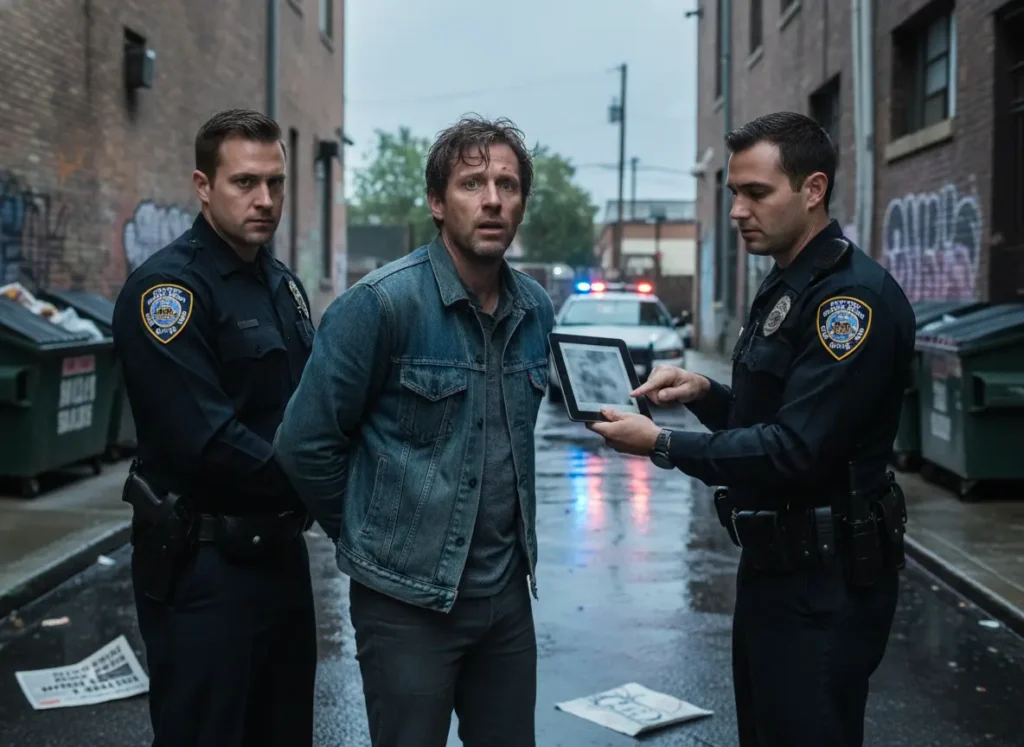
When police arrive with a search warrant, you should stay calm and avoid interfering. You still have rights. A warrant does not give officers unlimited power to search anything they want.
| Police May Generally | Potential Legal Issue |
|---|---|
| Search the person or location particularly described in the warrant. | Searching a different residence, unit, vehicle, or person may exceed the warrant. |
| Search areas where the listed evidence could reasonably be located. | The size and nature of the item being sought can affect where police are permitted to look. |
| Seize property described in the warrant. | Property outside the warrant may require another lawful basis for seizure. |
| Secure the location while carrying out the authorized search. | The manner and duration of detention may still raise legal questions depending on the circumstances. |
| Use reasonable force when legally authorized to execute the warrant. | Unreasonable execution or entry methods may create separate Fourth Amendment issues. |
| Ask questions during or after the search. | A warrant does not itself require a person to provide an incriminating explanation about the alleged offense. |
If officers exceeded the warrant’s scope, seized evidence without another lawful basis, or executed the search unlawfully, those issues may support a motion to suppress under Illinois law.
What Police Must Show to Get a Search Warrant
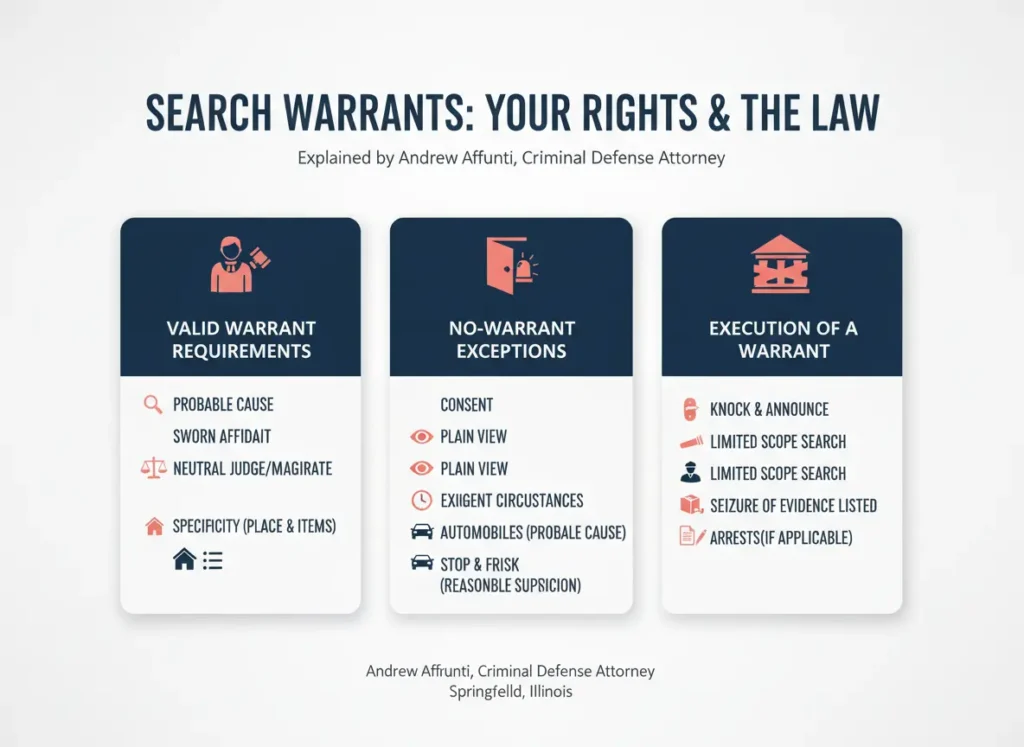
Illinois search-warrant law generally requires a sworn complaint stating facts sufficient to establish probable cause and particularly describing:
- The person or place to be searched
- The property or evidence to be seized
Questions worth reviewing may include:
- How recent the supporting information was
- Where the information came from
- Whether it was corroborated
- Whether the alleged evidence was connected to the specific location
- Whether the location was described accurately
- Whether material facts were misstated or omitted
A judge’s signature does not prevent later review of whether the warrant satisfied constitutional and statutory requirements.
Can a Search Warrant Be Challenged in Court?
Yes. A defense attorney may challenge evidence obtained through a search warrant when there is a legal problem with the warrant application, probable cause, warrant language, execution of the search, or seizure of evidence.
Possible issues include:
- Insufficient probable cause
- Stale information
- False or materially misleading information
- Material omissions
- A vague or incorrect property description
- A search that exceeded the authorized scope
- An unlawful entry or execution method
- Digital searches exceeding authorized categories or dates
- Evidence obtained through an otherwise unlawful seizure
When appropriate, the defense may file a motion asking the court to suppress unlawfully obtained evidence.
Suppression does not automatically dismiss every criminal charge. Its effect depends on how important the challenged evidence is to the prosecution’s remaining case. When evidence is challenged after an arrest, the search issue becomes part of the broader criminal defense strategy.
What Is the Illinois Search Warrant Process?
A search warrant is a judicial order authorizing law enforcement to search the person or place identified in the warrant and seize the property or evidence described within its lawful scope.
| Step | What Happens |
|---|---|
| 1. Warrant application | Law enforcement presents a sworn application supporting probable cause. |
| 2. Judicial review | A judge determines whether the application satisfies the legal requirements. |
| 3. Execution | Police execute the warrant within its authorized scope and applicable statutory rules. |
| 4. Property seized | Officers seize property authorized by the warrant or otherwise lawfully subject to seizure. |
| 5. Defense review | The warrant, affidavit, inventory, reports, video, and seized evidence can be reviewed for possible legal challenges. |
Illinois search warrants generally must be executed within 96 hours after issuance. A warrant not executed within that period is void and must be returned to the issuing court as not executed.
If property is seized, Illinois law also requires the duplicate warrant to be left with the person from whom the property was seized or, if no person is available, at the place searched.
When Can Police Enter Your Home Without a Warrant?
A home receives strong Fourth Amendment protection, but recognized exceptions may sometimes allow police entry without first obtaining a search warrant.
Potential exceptions can include:
Consent
Police may enter when someone with sufficient authority voluntarily consents to the entry or search. Whether consent was actually voluntary can become a disputed factual issue.
Emergency or Exigent Circumstances
A warrant may not be required in certain emergency circumstances, such as an immediate threat to safety or another situation in which delaying entry to obtain a warrant would create a legally recognized emergency.
Hot Pursuit
In qualifying circumstances, officers pursuing a suspect may argue that immediate entry was justified without stopping to obtain a warrant.
Other Case-Specific Exceptions
Search-and-seizure law contains other doctrines that may apply depending on the location, police conduct, arrest, vehicle, property, and circumstances.
Plain view is different. It may allow police to seize certain evidence when officers are already lawfully present, but it should not be treated as automatic permission to enter a residence in the first place.
Whether an exception applies depends heavily on the facts of the specific search. Vehicle searches involve additional rules. Review when police can search your car during an Illinois traffic stop.
What Happens When Police Execute a Search Warrant
When police execute a search warrant, the warrant defines the place or person to be searched and the property they are seeking.
Illinois law generally requires execution within 96 hours of issuance. It also regulates when force may be used to enter property.
During the search:
- Do not physically interfere with officers.
- Ask for a copy of the warrant when practical.
- Preserve the warrant and any property inventory.
- Do not voluntarily expand the search by giving additional consent.
- Avoid providing unnecessary explanations about the alleged evidence.
- Observe which rooms, containers, vehicles, or devices are searched when it is safe to do so.
- Keep track of property that is removed.
A warrant does not authorize an unlimited search.
A court may authorize entry without first knocking and announcing only when the statutory requirements are met.
Section 108-8 requires specific factual findings involving qualifying exigent circumstances, such as a reasonable belief that notice would create a weapon-related danger or an imminent danger that evidence would be destroyed.
Whether officers complied with the warrant’s entry authorization and execution requirements can be part of the defense review.
What Should You Do After Police Search Your Home?
After the search:
- Avoid giving investigators additional explanations about the alleged evidence.
- Keep the warrant and supporting paperwork.
- Preserve the property inventory and receipts.
- Write down when officers arrived and how they entered.
- Record which rooms, containers, vehicles, or devices were searched.
- Note what officers seized.
- Identify everyone who witnessed the search.
- Preserve doorbell, surveillance, or other video before it is overwritten.
- Keep arrest paperwork and court notices.
If officers also searched or seized a device, review whether police can search your phone without a warrant in Illinois. If the search also resulted in an arrest, review what to expect after a first arrest in Springfield, Illinois.
Can I Refuse a Police Search of My Home in Illinois?
If police ask for permission to search your home without a warrant, you can generally state that you do not consent.
A simple response is:
“I do not consent to a search.”
Do not physically interfere with officers.
If officers have a valid warrant or another lawful basis to search, your lack of consent does not necessarily prevent the search. Refusing consent also does not require you to physically obstruct execution of a warrant.
Whether consent was voluntary and whether the person giving consent had legal authority can later become important issues.
Refusing voluntary consent does not itself invalidate a later search conducted under a valid warrant or another recognized legal basis.
Search Warrant Cases in Springfield and Sangamon County
If a search warrant was executed in Springfield or Sangamon County, preserve the warrant, supporting paperwork available to you, property inventory, arrest documents, photographs, and any doorbell or surveillance footage. The warrant’s probable-cause basis, description of the property, execution, scope of the search, and seizure of evidence may all require review.
Need a Search Warrant Reviewed?
A search-warrant challenge may depend on probable cause, the supporting application, the description of the place or property, the timing and manner of execution, the scope of the search, digital evidence, and how property was seized. Reviewing the warrant and available records can help identify whether evidence may be challenged.
Schedule a Confidential ConsultationFrequently Asked Questions
What do police need to get a search warrant in Illinois?
Police generally need a sworn application stating facts sufficient to establish probable cause and particularly describing the person or place to be searched and the property to be seized.
How long is an Illinois search warrant valid?
An Illinois search warrant generally must be executed within 96 hours after it is issued. A warrant not executed within that period is void under Section 108-6.
Can police search anywhere they want once they have a warrant?
No. The warrant limits the search to the authorized person or place and the evidence described, although officers may generally inspect areas where the listed evidence could reasonably be located.
Can an Illinois search warrant be challenged?
Yes. Potential issues may include insufficient probable cause, stale information, false or misleading statements, material omissions, an incorrect description, improper execution, or a search exceeding the warrant’s lawful scope.
What happens if police search beyond the scope of the warrant?
A defendant may ask the court to suppress evidence obtained through an unlawful search or seizure. Whether suppression applies depends on the facts and whether another lawful basis justified the search or seizure.
Do Illinois police always have to knock before executing a search warrant?
No. A court may authorize entry without first knocking and announcing when the specific statutory requirements for that authorization are met.
Does suppressed evidence automatically make criminal charges disappear?
No. Suppression prevents unlawfully obtained evidence from being used against the defendant when the motion is granted, but whether the prosecution can continue depends on the remaining admissible evidence.