
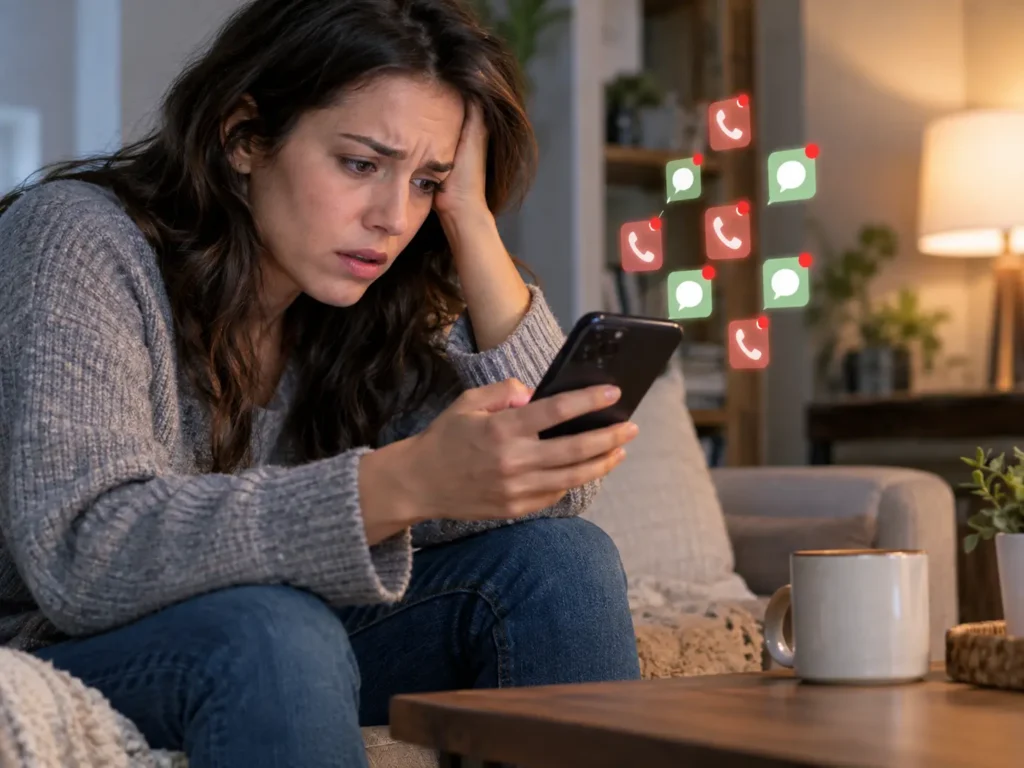
Texts, calls, voicemails, emails, social media messages, and other digital communications can lead to criminal charges in Illinois when they cross the line into harassment. What feels like venting, arguing, repeated messaging, or “just trying to get a response” may become a criminal issue depending on the specific type of message, the intent behind it, the person targeted, and whether threats or disruption are involved.
Illinois has a specific law for harassment through electronic communications. This charge is different from cyberstalking, although the two can overlap. Harassment through electronic communications often focuses on the content, purpose, and effect of a message or digital contact. Cyberstalking usually involves a course of conduct directed at a specific person that causes fear or emotional distress.
If you were charged in Springfield, Sangamon County, or anywhere in Illinois, the key questions are what was sent, why it was sent, who received it, whether the message was threatening or obscene, whether the target was a minor, and whether the State can prove intent.
Quick Answer
Harassment through electronic communications in Illinois can involve obscene messages intended to offend, disrupting phone or electronic service, sending files or messages that prevent device use, threatening injury to a person or property, targeting a child under 13, or knowingly allowing a device to be used for harassment. Penalties may include misdemeanor or felony consequences depending on the facts, prior history, victim status, and whether the conduct overlaps with cyberstalking. Legal defenses may include lack of intent, protected speech, mistaken identity, consent, insufficient evidence, or constitutional violations.
What Is Harassment Through Electronic Communications?
Harassment through electronic communications happens when a person uses electronic communication for a purpose prohibited by Illinois law. This may involve texts, calls, emails, voicemails, instant messages, social media messages, or other digital transmissions.
Illinois law lists several specific categories of conduct, including:
- Obscene communications made with intent to offend
- Interrupting phone or electronic communication service with intent to harass
- Sending a file, document, or communication that prevents use of a phone or electronic device
- Harassing a person under 13 through electronic communication when the defendant is at least 16
- Threatening injury to a person or property
- Knowingly allowing an electronic communication device to be used for those purposes
The exact type of message matters. A rude message, emotional argument, or unwanted text is not always a crime. The State must prove the conduct fits the statute.
What Actions Lead to Charges?
What Actions Lead to Charges depends on the content, purpose, and impact of the communication.
A person may face charges after allegations involving:
- Repeated texts
- Threatening messages
- Obscene messages
- Harassing voicemails
- Emails intended to intimidate or offend
- Social media direct messages
- Fake account messages
- Sending files that disrupt a device
- Flooding someone’s phone or inbox
- Contacting a child under 13
- Allowing another person to use your phone or account to harass someone
Police may look at screenshots, call logs, voicemails, account records, device data, witness statements, and the full communication history.
The specific type of message can change the entire case. One angry message may be treated differently from repeated threats, device flooding, or contact with a minor.
Obscene Content
Obscene Content can trigger charges if the communication is made with intent to offend. Illinois law specifically includes making an obscene comment, request, suggestion, or proposal with intent to offend.
Examples may include:
- Obscene texts
- Explicit messages sent to offend
- Sexual comments sent to harass
- Offensive proposals
- Repeated obscene voicemails
- Social media messages with obscene content
The defense may focus on whether the content was legally obscene, whether there was intent to offend, whether the message was taken out of context, or whether the communication was part of a mutual conversation.
A message can be inappropriate without necessarily meeting the legal standard for a criminal charge. That distinction matters.
Service Disruption
Service Disruption involves interrupting someone’s telephone service or electronic communication service with intent to harass. Illinois law includes this as one of the prohibited purposes under harassment through electronic communications.
This may involve allegations such as:
- Repeated calls meant to block normal phone use
- Repeated messages designed to overwhelm service
- Interference with someone’s ability to use electronic communication
- Conduct meant to make a phone or account unusable
The State may try to prove intent through volume, timing, repeated behavior, prior warnings, or statements made by the accused.
The defense may challenge whether there was actual disruption, whether the accused caused it, and whether the communication was made with intent to harass.
Device Flooding
Device Flooding can occur when a person sends a file, document, or communication that prevents another person from using their phone service or electronic communication device. Illinois law includes this type of conduct even if the communication is not read in full or at all.
Examples may include:
- Sending repeated large files
- Sending messages that freeze or overwhelm a device
- Sending documents that block normal device use
- Flooding a phone, inbox, or messaging app
- Sending content meant to interrupt service
This is different from simply sending many annoying messages. Device flooding focuses on whether the communication prevents the person from using their device or service.
Digital evidence matters in these cases. Phone records, screenshots, technical logs, app records, and device reports may all be reviewed.
Threats
Threats are one of the most serious types of electronic harassment allegations. Illinois law includes threatening injury to the person or property of the recipient, or to the recipient’s family or household members.
Threat-related messages may include:
- Threats of physical harm
- Threats to damage property
- Threats involving family members
- Threats involving household members
- Threats sent through text, voicemail, email, or social media
- Threats made during arguments, breakups, custody disputes, or domestic conflict
The defense may review whether the words were actually a threat, whether they were conditional, whether they were taken out of context, whether the accused sent them, and whether the message was protected speech or criminal conduct.
Threats can also lead to related charges, such as disorderly conduct, stalking, cyberstalking, intimidation, violation of an order of protection, or violation of a stalking no contact order.
Targeting Minors
Targeting Minors can make electronic harassment allegations more serious. Illinois law includes transmitting, or knowingly inducing another person to transmit, an electronic communication for the purpose of harassing a person under 13 years old when the defendant is at least 16 years old.
This may involve:
- Harassing texts to a child under 13
- Social media messages sent to a minor
- Online game or app messages
- Messages sent through another person
- Encouraging someone else to message the child
- Repeated digital contact meant to distress or intimidate
Cases involving minors are treated carefully because courts and prosecutors may view the alleged victim as vulnerable.
The defense may review whether the accused knew the person’s age, whether the communication was actually harassing, whether the accused sent or caused the message, and whether the evidence identifies the correct sender.
Allowing Device Use
Allowing Device Use can also lead to charges. Illinois law includes knowingly permitting an electronic communication device to be used for one of the prohibited purposes.
This may involve allegations such as:
- Letting someone use your phone to send threats
- Allowing another person to use your account to harass someone
- Letting someone use your device to send obscene messages
- Allowing a device to be used to contact a minor
- Sharing access after knowing the device is being used for harassment
The key word is knowingly. The State may need to prove the accused knew the device was being used for illegal harassment and allowed it anyway.
A defense may exist if the device was used without permission, the accused did not know what was sent, or another person accessed the account or phone without authorization.
Penalties in Illinois
Penalties in Illinois depend on whether the case is charged as a misdemeanor or felony, whether there are prior offenses, whether the same victim or family member was involved, whether a protective order existed, and whether the conduct overlaps with cyberstalking or another offense.
Possible penalties may include:
- Jail
- Prison if charged as a felony
- Fines and court costs
- Probation
- Conditional discharge
- Community service
- No-contact orders
- Stay-away orders
- Device or internet restrictions in some cases
- Counseling or evaluations
- Criminal record if convicted
- Employment, school, housing, and licensing consequences
The exact charge matters. “Electronic harassment” can involve very different facts, from one threatening text to repeated digital conduct involving a protective order. Same phone, very different legal headache.
Misdemeanor
A first harassment through electronic communications charge is commonly handled as a misdemeanor unless felony-enhancing facts apply. Related penalty provisions for Illinois harassment offenses provide higher penalties for repeat violations, including a second or subsequent violation as a Class A misdemeanor with mandatory minimum jail or community service terms in certain situations.
A misdemeanor case may involve:
- Offensive or obscene messages
- Harassing calls or texts
- Service disruption allegations
- Threatening messages without felony enhancement
- Allowing device use for harassment
- First-time allegations without aggravating facts
Possible misdemeanor consequences may include:
- Jail exposure
- Fines and court costs
- Probation or conditional discharge
- Community service
- No-contact order
- Criminal record if convicted
A first offense may have more room for negotiation, but it should not be ignored.
Felony
Felony charges may apply when aggravating facts are present. Illinois harassment penalty provisions list Class 4 felony circumstances for certain harassment offenses, including situations involving prior harassment-related convictions, the same victim or family or household member, protected orders, or certain serious prior offenses.
Felony risk may increase if:
- There are prior harassment convictions
- The same victim or household member is involved
- A protective order exists
- A stalking no contact order exists
- The alleged conduct violates a court order
- The message includes serious threats
- The conduct overlaps with cyberstalking
- The target is a minor
- The accused has certain prior criminal history
A Class 4 felony in Illinois can carry prison exposure, probation if legally available, fines, court costs, and a permanent felony record if convicted.
Cyberstalking
Cyberstalking is different from harassment through electronic communications, although the facts may overlap.
Illinois cyberstalking can involve a course of conduct using electronic communication directed at a specific person when the person knows or should know it would cause a reasonable person to fear for safety or suffer emotional distress. It can also involve electronic harassment on at least two separate occasions with threats, apprehension of harm, solicitation of criminal acts, certain spyware or monitoring software, or harassing websites maintained for at least 24 hours.
Cyberstalking is generally a Class 4 felony. A second or subsequent conviction is a Class 3 felony.
Cyberstalking may involve:
- Repeated threatening messages
- Repeated digital harassment
- Fake accounts
- Tracking software
- Spyware
- Harassing websites
- Online posts directed at a specific person
- Messages that cause fear or emotional distress
- Contact despite warnings or orders
The major difference is that cyberstalking often focuses on repeated conduct and fear or emotional distress, while harassment through electronic communications may focus on specific prohibited messages or electronic conduct.
Specific Type of Message
Specific type of message is one of the most important details in these cases. The charge may depend on exactly what was sent.
A defense attorney may ask:
- Was it a text, call, voicemail, email, DM, or post?
- Was the message obscene?
- Was it threatening?
- Was it sent to a minor?
- Did it disrupt service?
- Did it prevent device use?
- Was it sent once or repeatedly?
- Was it sent after a warning?
- Was there a protective order?
- Was it part of a mutual conversation?
- Was the sender clearly identified?
Examples of message types that may matter include:
- Angry breakup texts
- Threatening voicemails
- Obscene direct messages
- Repeated calls
- Harassing emails
- Messages sent through fake accounts
- Messages sent through a friend
- Digital files that freeze or flood a device
- Social media comments
- Group chat messages
- Messages to a child under 13
The content, timing, context, and sender identity all matter.
Legal Defenses
Legal defenses depend on the facts, evidence, and exact charge.
Possible defenses may include:
- Lack of intent to harass
- No obscene content under the law
- No true threat
- Protected speech
- Mutual conversation
- Consent or ongoing communication
- Mistaken identity
- Hacked account
- Someone else used the device
- No proof the accused sent the message
- Message taken out of context
- No service disruption
- No device flooding
- No qualifying minor-related conduct
- Insufficient evidence
- Constitutional violations
Electronic communication cases are often evidence-heavy. Screenshots alone may not tell the whole story. They can be cropped, incomplete, undated, or missing context.
Lack of Intent to Harass
Lack of intent to harass may be a defense when the message was not sent for a prohibited purpose.
This may apply when:
- The person was trying to resolve a real issue
- The message was part of mutual communication
- The communication was emotional but not harassing
- The person did not intend to offend
- The message was misunderstood
- The communication was sent for a legitimate purpose
- The accused did not know someone else used the device
Intent can be proven through context, but it can also be challenged through the full message history.
Protected Speech
Protected speech may be an issue when the charge is based on words, opinions, criticism, or emotional statements rather than true threats, obscene harassment, or legally prohibited conduct.
A defense may argue:
- The message was not a true threat
- The speech was political, personal, or opinion-based
- The words were rude but not criminal
- The communication did not meet the statutory definition
- The State is overcharging protected expression
The First Amendment does not protect every message. Threats, harassment, and obscene communications may still be prosecuted. But speech-based charges must be examined carefully.
Mistaken Identity or Account Access
Mistaken identity is common in digital cases. A phone number, account, IP address, or social media profile does not always prove who actually sent the message.
Possible issues include:
- Shared phones
- Shared computers
- Shared Wi-Fi
- Hacked accounts
- Fake profiles
- Spoofed numbers
- Borrowed devices
- Family members using the same account
- Missing login records
- Incomplete screenshots
The State must connect the accused person to the communication.
Constitutional Violations
Constitutional violations may affect electronic harassment cases when police obtain evidence through improper searches, seizures, or questioning.
Possible issues may include:
- Illegal phone search
- Illegal computer search
- Overbroad warrant
- Invalid warrant
- Unlawful traffic stop
- Improper account search
- Statements taken without proper warnings
- Coerced statements
- Lack of probable cause
If evidence was collected illegally, a criminal defense attorney may ask the court to suppress it.
Harassment and Other Charges
Harassment through electronic communications may appear with other charges.
Related charges may include:
- Cyberstalking
- Stalking
- Disorderly conduct
- Intimidation
- Violation of an order of protection
- Violation of a stalking no contact order
- Domestic battery
- Criminal damage to property
- Identity theft
- Computer-related offenses
- Probation violation
For example, repeated threatening texts after an order of protection may create both harassment and order violation issues. Digital tracking may lead to cyberstalking allegations. A fake account may create identity-related issues depending on the facts.
What You Should Do If Charged
If you are charged with harassment through electronic communications in Illinois, take the case seriously.
You should:
- Stop contact unless your attorney says otherwise
- Follow all no-contact orders
- Save the full message history
- Do not delete messages
- Do not post about the case online
- Do not use friends or family to pass messages
- Preserve screenshots, call logs, and account records
- Write down the timeline privately
- Avoid accessing disputed accounts
- Speak with a local criminal defense attorney
Do not send “one last message” to explain yourself. That message may become Exhibit A.
How a Springfield Criminal Defense Attorney Can Help
A Springfield criminal defense attorney can review the charge, evidence, and possible defenses.
An attorney may help by:
- Identifying the exact statute and charge level
- Reviewing the specific type of message
- Checking whether the message fits the statute
- Reviewing screenshots and call logs
- Challenging sender identity
- Challenging intent
- Challenging threat allegations
- Reviewing cyberstalking overlap
- Reviewing protective order issues
- Filing motions to suppress evidence
- Negotiating with prosecutors
- Seeking reduction or dismissal
- Preparing for trial
Digital cases require careful review because context can change the meaning of the message.
Speak With a Springfield Electronic Harassment Defense Attorney
If you were charged with harassment through electronic communications in Springfield, Sangamon County, or Central Illinois, do not assume it is “just texts.”
The specific type of message, the alleged target, the intent, prior history, protective orders, and cyberstalking allegations can all change the risk.
A Springfield criminal defense attorney can review the evidence, explain the penalties, identify legal defenses, and help protect your record and future.
Final Thoughts
Harassment through electronic communications in Illinois can involve obscene content, service disruption, device flooding, threats, targeting minors, or knowingly allowing a device to be used for harassment. The exact type of message matters because different facts can lead to misdemeanor or felony consequences.
Cyberstalking is a separate and more serious charge that often involves repeated electronic conduct directed at a specific person, fear for safety, emotional distress, threats, spyware, or harassing online content.
Legal defenses may include lack of intent, protected speech, mistaken identity, consent, insufficient evidence, and constitutional violations. If you were charged in Springfield or Sangamon County, speak with a local criminal defense attorney as soon as possible.