
Andrew Affrunti

Can You Clear Your Criminal Record in Illinois? Expungement and Sealing Explained

A criminal record follows you into job applications, rental screenings, professional licensing reviews, and background checks of every kind. In Illinois, that does not always have to be permanent. The state has one of the more expansive expungement and sealing frameworks in the country, and recent changes under the Clean Slate Act expanded eligibility further. […]

Can You Clear Your Criminal Record in Illinois? Expungement and Sealing Explained Read More »

What Knives Are Legal in Illinois? Carry Laws and Restrictions

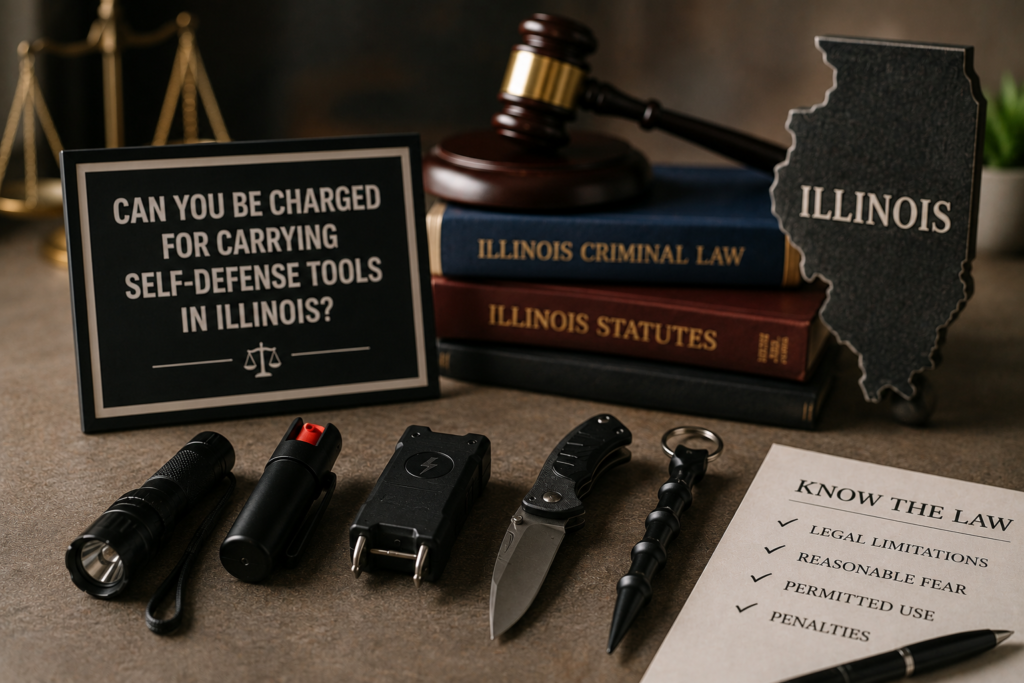
Quick Answer Many common pocket knives and utility knives are legal in Illinois, but the law becomes stricter when a knife is carried with unlawful intent, brought into a restricted location, or falls into a prohibited category. Ballistic knives are illegal. Switchblades are restricted, though Illinois law provides an exception for people with a valid

What Knives Are Legal in Illinois? Carry Laws and Restrictions Read More »

Illinois Drug Possession Penalties by Charge Class and Substance

Quick Answer What are the penalties for drug possession in Illinois? Drug possession penalties in Illinois depend on the substance, amount, charge class, prior record, and whether the case involves simple possession or possession with intent to deliver. Many controlled substance possession cases are charged as felonies, even for small amounts. Penalties may include probation,

Illinois Drug Possession Penalties by Charge Class and Substance Read More »

Spousal Maintenance in Illinois: Alimony Rules Explained

Quick Answer In Illinois, spousal maintenance, also called alimony, is financial support one spouse may be ordered to pay the other during or after divorce. Courts look at income, property, financial needs, earning ability, marriage length, standard of living, and other statutory factors before deciding whether maintenance is appropriate. If maintenance is awarded, Illinois law

Spousal Maintenance in Illinois: Alimony Rules Explained Read More »

How Family Law Attorneys Handle High-Conflict Divorce in Illinois

Not every divorce or family law matter proceeds through negotiation and settles with both parties reasonably satisfied. Some cases involve deeply entrenched positions, significant power imbalances, allegations of misconduct, or dynamics that make productive direct communication between the parties effectively impossible. These are high-conflict disputes, and they require a fundamentally different approach than the cooperative

How Family Law Attorneys Handle High-Conflict Divorce in Illinois Read More »

Do You Need a Lawyer for an Uncontested Divorce in Illinois?

Quick Answer Do you need a lawyer for an uncontested divorce in Illinois? You do not always need a lawyer for an uncontested divorce in Illinois, but skipping legal guidance may be risky when property, debt, parenting time, child support, or maintenance is involved. A lawyer helps make sure your agreement is complete, enforceable, and

Do You Need a Lawyer for an Uncontested Divorce in Illinois? Read More »

How a Family Law Attorney Helps During Divorce

High-conflict family law cases go beyond normal disagreement. They often involve harassment, refusal to cooperate, domestic violence allegations, hidden assets, or one party using the legal process to pressure the other. Standard negotiation usually fails in these situations. A family law attorney reduces risk by documenting facts early, limiting direct conflict, and presenting clear, evidence-based

How a Family Law Attorney Helps During Divorce Read More »

Illinois No-Cash Bail 2026: What Pretrial Release Means for Your Case

Quick Answer Does Illinois still use cash bail? No. Illinois no longer uses cash bail in criminal cases. After an arrest, the court decides whether you should be released with conditions or detained before trial. The decision is based on public safety, flight risk, the charge, and the evidence presented at the detention hearing, not

Illinois No-Cash Bail 2026: What Pretrial Release Means for Your Case Read More »

FREE CONSULTATION 217-528-2183