
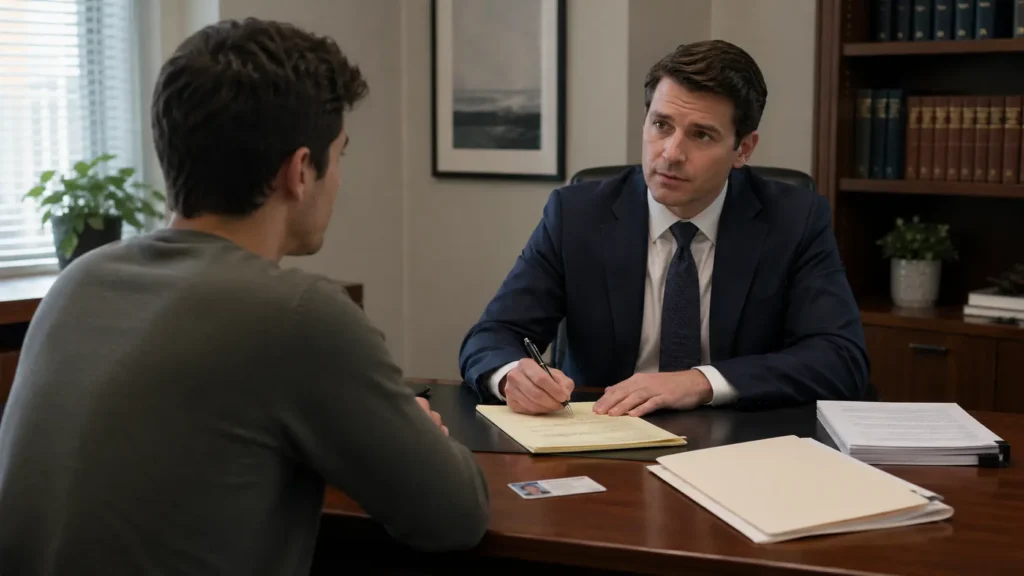
- What should you bring to your first meeting with a criminal defense attorney?
- Key Documents to Bring to Your Criminal Defense Consultation
- What NOT to Do Before Your Consultation
- Why Preparation Matters
- Criminal Defense Consultation Checklist Table
- Questions to Ask Your Criminal Defense Attorney
- 1. Bring Every Court Document and Release Order You Received
- 2. Why Police Reports and Incident Summaries Matter Early
- 3. Create a Clear Timeline Before Meeting Your Attorney
- 4. What Evidence Should You Preserve for Your Attorney?
- 5. Why Your Job and Professional Background Matter in Criminal Cases
- 6. Be Honest About Prior Charges or Criminal History
- Why Preparation Improves the First Legal Review
- Criminal Defense Consultations in Springfield and Sangamon County
- Preparing for a Criminal Defense Consultation?
- Related Criminal Defense Resources
- Criminal Defense Consultation FAQs in Illinois
- What should I bring to my first meeting with a criminal defense attorney?
- Can I meet with an attorney if I do not have the police report?
- Should I bring text messages, photographs, or videos?
- Why should I bring my release conditions?
- Should I prepare a timeline before the consultation?
- Should I disclose prior arrests or criminal cases?
- What should I avoid doing before meeting the attorney?
Your first meeting with a criminal defense attorney is an opportunity to understand the charge, upcoming court dates, release conditions, possible consequences, and the work that should begin immediately.
You do not need to obtain every police report or build your own defense before the consultation. Bring the documents and evidence already available to you, preserve anything that may later become important, and prepare an accurate timeline of what happened.
This guide provides a practical checklist for criminal defense consultations in Springfield and Sangamon County, including what to bring, what questions to ask, and what mistakes to avoid before the meeting.
Quick Answer
What should you bring to your first meeting with a criminal defense attorney?
Bring the court and release paperwork you already have, citations or charging documents, relevant police paperwork, a written timeline, witness information, and any unedited photos, videos, messages, receipts, or other evidence related to the case. If your job, CDL, professional license, immigration status, or other important interests could be affected, bring information about those as well. You do not need to obtain every police report before scheduling the consultation.
Key Documents to Bring to Your Criminal Defense Consultation
| What to Bring | Examples | Why It Matters |
|---|---|---|
| Court documents | Charging papers, complaints, citations, summonses, and court notices | Shows the exact allegations, case number, court location, and upcoming dates. |
| Release conditions | No-contact orders, travel limits, reporting instructions, and firearm restrictions | Helps the attorney identify restrictions that must be followed immediately. |
| Police documents | Arrest receipts, incident summaries, property inventories, and available reports | Provides an initial view of how law enforcement described the incident. |
| Written timeline | Dates, times, locations, conversations, police actions, and witness names | Preserves details while they are still fresh and helps identify disputed facts. |
| Digital and physical evidence | Messages, photographs, videos, emails, call logs, receipts, and location records | May support the timeline, challenge an allegation, or identify additional evidence. |
| Witness information | Names, phone numbers, addresses, and a brief note about what each person observed | Allows potentially helpful witnesses to be evaluated before memories fade. |
| Employment and licensing records | Job policies, CDL records, professional licenses, and security-clearance documents | Helps identify consequences beyond the criminal sentence. |
| Prior case records | Dispositions, probation orders, expungement documents, and prior charging papers | Helps the attorney evaluate criminal-history and sentencing issues accurately. |
| Your questions | Questions about court, evidence, communication, fees, and possible outcomes | Keeps the consultation focused and reduces the chance of forgetting an important concern. |
If your case involves DUI charges, read more about DUI defense in Springfield, IL: DUI defense attorney in Springfield, IL.
What NOT to Do Before Your Consultation
Avoid taking actions that may destroy evidence, violate a court order, or create additional witnesses against you.
Before meeting with your attorney:
- Do not delete, edit, crop, or alter messages, photographs, videos, or account data.
- Do not contact an alleged victim, complaining witness, or codefendant when a no-contact order or release condition may apply.
- Do not ask another person to change, hide, or withdraw a statement.
- Do not post about the allegation, arrest, police, witnesses, or court case on social media.
- Do not send detailed explanations to police, prosecutors, employers, or licensing agencies without legal advice.
- Do not miss court or ignore a release, reporting, travel, or firearm restriction.
- Do not bring friends or relatives into the consultation unless the attorney advises you to do so.
Be honest with your lawyer, including about facts that appear unfavorable. Attorney-client advice becomes less useful when the lawyer receives incomplete or inaccurate information.
Review the most common mistakes to avoid after an arrest in Illinois before speaking with police, witnesses, or other people about the case.
Why Preparation Matters
Organized documents help an attorney identify the charge, court schedule, release restrictions, available evidence, and issues requiring immediate attention.
Preparation can also make the consultation more efficient. Instead of spending most of the meeting reconstructing dates or locating documents, the attorney can focus on legal risks, evidence preservation, the next court appearance, and the work that may be needed.
Missing paperwork does not mean you should delay getting legal advice. Bring what you have and explain what may still exist elsewhere.
Criminal Defense Consultation Checklist Table
| What to Bring | Why It Helps Your Attorney |
|---|---|
| Court paperwork | Shows the charge, court date, and case details. |
| Release documents | Helps review conditions and restrictions. |
| Tickets or citations | Identifies related traffic or criminal allegations. |
| Police reports or summaries | Shows how law enforcement described the incident. |
| Written timeline | Preserves details while they are still fresh. |
| Witness names | Helps identify people who may support your defense. |
| Photos, videos, or messages | May support your version of events. |
| Employment or license documents | Helps assess job, CDL, or professional consequences. |
| Prior case information | Helps the attorney evaluate risk and strategy. |
| Questions for the attorney | Keeps the meeting focused and productive. |
Questions to Ask Your Criminal Defense Attorney
Prepare your questions before the consultation so the most important concerns are addressed.
Useful questions include:
- What exact charges or allegations am I facing?
- What happens at my next court appearance?
- What release conditions must I follow?
- What evidence is currently available?
- Is there evidence that should be preserved immediately?
- Should I speak with police, investigators, or an insurance company?
- What defenses or evidentiary issues may require investigation?
- What penalties and non-court consequences should I understand?
- Who will personally handle my case?
- How will I receive updates?
- What work is included in the legal fee?
- Does the agreement include motions, hearings, and trial preparation?
The attorney may not be able to predict the final outcome during the first meeting because discovery and investigation may still be incomplete. The consultation should provide a clearer understanding of the next steps and immediate risks.
1. Bring Every Court Document and Release Order You Received
Bring every court or release document already in your possession, including:
- Charging documents
- Citations or tickets
- Court-date notices
- Pretrial release paperwork
- Written release conditions
- No-contact or geographic restrictions
These documents can show the charge, upcoming court dates, and conditions that must be followed while the case is pending.
Illinois law requires defendants on pretrial release to appear as ordered and comply with applicable court conditions. Additional conditions must be individualized and, when imposed under the statute, use the least restrictive means necessary.
2. Why Police Reports and Incident Summaries Matter Early
If you were given a copy of a police report or summary, bring it. Even partial information helps your attorney understand how officers described the situation.
If you do not have a report, do not worry. Your attorney can request it later.
When Your First Attorney Meeting Is Urgent
A consultation may be especially time-sensitive when:
- A court date is approaching
- Pretrial release conditions are unclear
- A no-contact order affects work, housing, or family contact
- A driver’s license or professional license may be affected
- Relevant video, messages, or other evidence could be lost
- Police have requested another interview
In those situations, bring the paperwork already available so the upcoming deadline or restriction can be reviewed first.
Why Police Reports and Incident Summaries Matter Early
Bring any report, incident summary, arrest sheet, property receipt, or officer information you already possess. Do not delay the consultation merely because a full police report has not been provided.
The initial documents may help the attorney identify the alleged offense, officers involved, property seized, statements attributed to you, and evidence that may need to be preserved or requested.
Police reports reflect law enforcement’s account. They are not automatically complete or accurate, and they should be compared with recordings, physical evidence, witnesses, and your confidential account of what occurred. If police have already arrested or questioned you, review what a criminal defense attorney does first after an arrest in Springfield.
3. Create a Clear Timeline Before Meeting Your Attorney
Write a private, factual timeline while the details remain fresh. Include:
- What happened before the alleged incident
- Dates, times, and locations
- Who was present
- What each person said or did
- When police arrived
- What police asked
- What you said
- Whether you were searched, detained, or arrested
- What property police seized
- Whether photographs, recordings, or surveillance cameras exist
- What happened after your release
Separate what you personally observed from what another person told you. Do not exaggerate, guess, or change details to make the account sound better.
Give the timeline directly to your lawyer rather than posting it, emailing it broadly, or sharing it with witnesses. For a broader local timeline, read what happens after an arrest in Sangamon County.
4. What Evidence Should You Preserve for Your Attorney?
Preserve any original material that may relate to the allegation, arrest, witnesses, police encounter, or timeline.
This may include:
- Text messages and direct messages
- Emails
- Photographs and videos
- Call logs and voicemails
- Receipts and transaction records
- Phone-location or vehicle-location information
- Medical records and photographs of injuries
- Employment time records
- Social-media messages
- Doorbell, business, or residential surveillance footage
- Names and contact details of potential witnesses
Do not delete unfavorable material. Do not edit, crop, annotate, forward, or repeatedly screenshot files when the original version is available. Tell the attorney where the original evidence is stored.
5. Why Your Job and Professional Background Matter in Criminal Cases
Bring information about your employment or professional status when the charge could affect:
- A Commercial Driver’s License
- Professional licensing
- Security clearance
- Employment background checks
- Employer reporting obligations
- Required travel
These consequences can be separate from the criminal sentence itself, so identifying them early may be important when evaluating plea offers and other case decisions.
6. Be Honest About Prior Charges or Criminal History
Tell your attorney about prior arrests, charges, convictions, supervision, probation, warrants, missed court dates, and pending cases, including matters from other states.
Bring prior charging documents, court dispositions, probation records, or expungement and sealing documents when available.
Do not assume an old or dismissed case is irrelevant. Accurate history helps the attorney evaluate possible penalties, release issues, negotiation risks, and record consequences before advising you.
Why Preparation Improves the First Legal Review
Preparation does not determine whether charges will be dismissed or what sentence may result. It helps the attorney understand the situation more efficiently and identify questions requiring further investigation.
Organized records may reveal an approaching deadline, unclear release condition, missing recording, potential witness, employment concern, or inconsistency that deserves attention.
The purpose of the first consultation is to assess the available information, protect against avoidable mistakes, and establish the next steps.
Criminal Defense Consultations in Springfield and Sangamon County
A criminal defense consultation in Springfield or Sangamon County should focus on the charge, court date, release conditions, evidence, and risks that could affect your future. Local court procedures and deadlines can shape what your attorney needs to review first.
Bringing organized paperwork helps your attorney understand the case faster and gives you a clearer plan before your next court appearance.
Have a criminal defense consultation coming up? Call 217-528-2183 to speak with a Springfield criminal defense attorney about what to bring and what to avoid before court.
Preparing for a Criminal Defense Consultation?
Bring the court and release paperwork already available to you, along with a written timeline, relevant evidence, witness information, and details about any employment, CDL, licensing, or other consequences that may be affected by the charge. You do not need to obtain every police report or investigate the case yourself before scheduling the meeting.
Schedule a Confidential ConsultationRelated Criminal Defense Resources
- Criminal Defense Attorney in Springfield, IL
- First Arrest in Springfield, Illinois
- What a Criminal Defense Attorney Does at Every Stage of a Criminal Case
- Can a Criminal Defense Attorney Get Charges Dropped in Illinois?
- Mistakes to Avoid After Being Arrested in Illinois
Criminal Defense Consultation FAQs in Illinois
What should I bring to my first meeting with a criminal defense attorney?
Bring court papers, citations, charging documents, release conditions, available police documents, unedited evidence, a written timeline, witness information, and a list of questions.
Can I meet with an attorney if I do not have the police report?
Yes. Do not delay the consultation because you do not have a complete police report. Bring the documents currently available and tell the attorney what police agency was involved.
Should I bring text messages, photographs, or videos?
Yes. Bring any original messages, photographs, videos, emails, call logs, receipts, or location information related to the allegation or timeline. Do not edit or delete anything.
Why should I bring my release conditions?
Release conditions may restrict contact, travel, firearm possession, locations, or other conduct. The attorney needs to review the exact written order and explain what must be followed.
Should I prepare a timeline before the consultation?
Yes. Write down dates, times, locations, witnesses, police questions, statements, searches, seized property, and events occurring before and after the arrest.
Should I disclose prior arrests or criminal cases?
Yes. Tell the attorney about prior arrests, charges, convictions, supervision, probation, warrants, and pending matters, even when the prior case occurred in another state or was dismissed.
What should I avoid doing before meeting the attorney?
Do not delete evidence, contact witnesses or alleged victims, discuss the allegations online, violate release conditions, or provide additional statements to investigators without legal advice.