
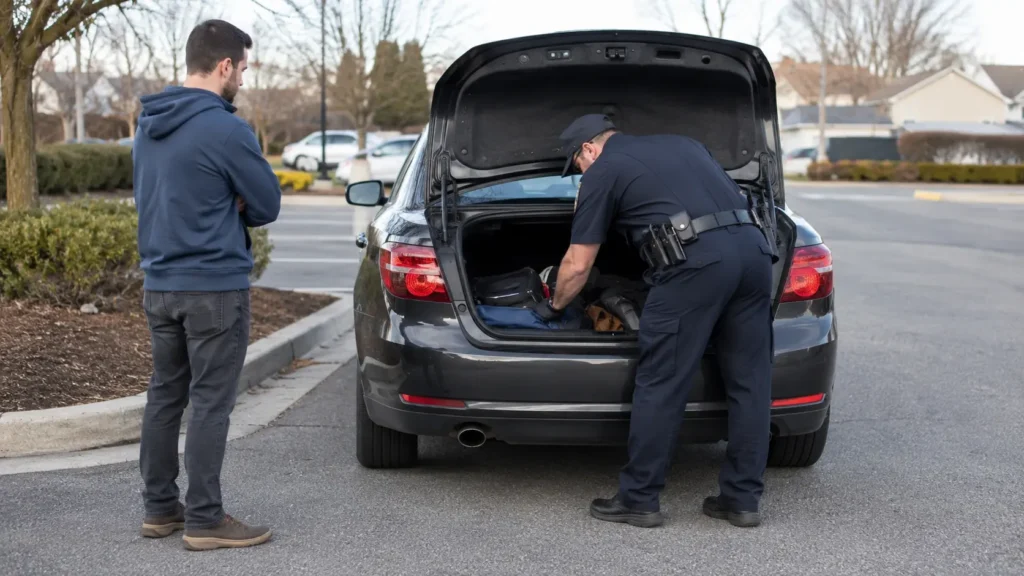
- Quick Answer
- Was Your Vehicle Searched During a Traffic Stop?
- Was Evidence Found During a Traffic Stop Search?
- When Can Police Search a Car During an Illinois Traffic Stop?
- Can You Refuse a Car Search During a Traffic Stop?
- Probable Cause vs Reasonable Suspicion During a Traffic Stop
- When Police Can and Cannot Search Your Car in Illinois
- Can Police Search a Locked Glove Box, Trunk, or Bag in Illinois?
- What Counts as Probable Cause to Search a Car?
- Does the Smell of Marijuana Allow Police to Search Your Car in Illinois?
- What to Do If Police Ask to Search Your Car
- What Happens After a Traffic Stop Search in Illinois?
- When Is a Vehicle Search Illegal?
- Can Police Extend a Traffic Stop to Search Your Car?
- What If Police Found Drugs, Weapons, or Other Evidence?
- What Not To Say During a Car Search
- How an Illegal Car Search Can Affect Your Criminal Case
- Search Incident to Arrest
- Inventory Search
- Plain View
- Your Rights and Protections During a Traffic Stop
- What If They Search Anyway?
- Talk to an Illinois Criminal Defense Lawyer After a Car Search
- Challenge an Illegal Traffic Stop Search
- Related Articles
- Common Questions About Car Searches in Illinois
- Can police search my car just because they stopped me?
- Do I have to let the police search my car?
- Can the police search my car if I say no?
- Can police search a locked glove box or bag?
- What should I do if police found something in my car?
- Can police search my car just because they pulled me over?
- Can I refuse consent to search my car in Illinois?
- What should I say if I do not consent to a search?
- Can evidence found in an illegal car search be thrown out?
- Does smelling cannabis or alcohol allow police to search my car?
- Can police search my car because I seem nervous?
- Can police make me wait for a K-9 during a traffic stop in Illinois?
- Can police search my car after a traffic ticket in Illinois?
- Can evidence from an illegal car search be dismissed in Illinois?
- Can police search my car without a warrant in Illinois?
- Can evidence from an illegal car search be suppressed in Illinois?
- Can police search my car after I refuse consent?
- Can an illegal vehicle search affect my criminal case?
Quick Answer
Police cannot automatically search your car during an Illinois traffic stop. A search usually requires consent, probable cause, evidence in plain view, a lawful arrest-related reason, an inventory search, or another recognized legal exception. If police searched your vehicle without proper justification, the evidence may be challenged.
Was Your Vehicle Searched During a Traffic Stop?
A traffic stop does not automatically give police permission to search your vehicle. The reason for the stop, what officers observed, whether you gave consent, and where evidence was found can all affect whether the search was lawful.
Was Evidence Found During a Traffic Stop Search?
Evidence found during a vehicle search may affect your criminal case, but the legality of the search matters. A criminal defense attorney can review the traffic stop, police reports, body camera footage, consent issues, and whether the evidence can be challenged.
Schedule a Confidential ConsultationWhen Can Police Search a Car During an Illinois Traffic Stop?
Police may search a car during an Illinois traffic stop only when a recognized legal exception applies. Common examples include probable cause that evidence or contraband is inside the vehicle, voluntary consent, evidence in plain view, a search connected to a lawful arrest, or an inventory search after towing or impoundment.
However, officers cannot search a vehicle just because they pulled someone over for speeding, expired registration, a lane violation, or another ordinary traffic issue. The search must be supported by facts, not a guess, pressure tactic, or general suspicion.
If police found drugs, weapons, or other evidence, the defense may review whether the original stop was valid, whether the search was lawful, whether the stop was extended too long, and whether the evidence should be suppressed.
If the search led to a drug allegation, review how drug possession charges in Springfield, IL may depend on search legality and possession evidence.
If the search involved a firearm, knife, brass knuckles, or another item, this guide explains Illinois weapons charges and what you cannot carry or possess.
| Search Issue | May Be Legal When | May Be Challenged When |
|---|---|---|
| Probable cause search | Police have specific facts suggesting evidence or contraband is in the vehicle. | The search was based only on a hunch, vague suspicion, or unsupported claim. |
| Consent search | The driver or authorized person voluntarily agrees to the search. | Consent was pressured, unclear, limited, or given after coercive questioning. |
| Plain view evidence | Police lawfully see contraband or evidence from a lawful position. | The officer moved items, entered the vehicle, or searched before having a lawful basis. |
| Search after arrest | The search is tied to a lawful arrest and allowed under search incident rules. | The search went beyond what the law allows or was not connected to officer safety or evidence preservation. |
| Inventory search | The vehicle is lawfully towed or impounded and police follow standard inventory procedures. | The inventory search was used as an excuse to investigate without probable cause. |
| Extended traffic stop | Police have a lawful reason to continue the stop beyond the traffic matter. | The stop was prolonged to search for unrelated evidence without reasonable suspicion. |
Can You Refuse a Car Search During a Traffic Stop?
Yes. You can refuse consent to a car search during a traffic stop. Refusing consent does not automatically stop police from searching if they have another legal reason, such as probable cause, a warrant, or a valid inventory search. However, clearly refusing consent can matter later if the search is challenged in court.
If you refuse, stay calm and respectful. You can say, “I do not consent to a search.” Do not physically resist, argue on the roadside, or try to block officers from searching. The place to challenge an illegal search is usually in court, not during the traffic stop.
If your traffic stop involved alcohol or field sobriety testing, visit the DUI defense attorney in Springfield, IL page.
Probable Cause vs Reasonable Suspicion During a Traffic Stop
Reasonable suspicion may allow police to stop a vehicle if they believe a traffic violation or criminal activity may be happening. Probable cause is a stronger standard and may be needed to search the vehicle for evidence or contraband.
This difference matters because a lawful stop does not always mean a lawful search. A defense attorney can review whether police had a valid reason for the stop, whether the stop was extended too long, and whether the officer had enough facts to justify the search.
When Police Can and Cannot Search Your Car in Illinois
A car search during an Illinois traffic stop depends on the reason police give for the search. Some situations may allow a search, while others do not automatically give police that right. This table shows the common situations drivers face during traffic stops.
| Situation | Can Police Search? | Why It Matters |
|---|---|---|
| You give consent | Yes | If you agree to the search, police usually do not need a warrant. |
| Police have probable cause | Yes | Police must have specific facts suggesting evidence of a crime may be inside the car. |
| Illegal item is in plain view | Usually yes | Visible drugs, weapons, or contraband may give police a reason to search further. |
| Basic traffic violation only | Not automatically | Speeding, expired registration, or failure to signal does not automatically justify a vehicle search. |
| You refuse consent | Only if another legal reason exists | Refusing a search does not create probable cause by itself. |
Can Police Search a Locked Glove Box, Trunk, or Bag in Illinois?
Whether police can search a locked glove box, trunk, purse, backpack, or container depends on the legal basis for the search. If police only asked for consent and you refused, they usually need another lawful reason before opening closed or locked areas.
If police claim probable cause, the search may extend to areas where the suspected evidence could reasonably be found. For example, a search for a weapon, drugs, or open cannabis container may raise different questions than a search based only on a minor traffic violation.
If police opened a locked glove box, trunk, bag, or container during your traffic stop, the search should be reviewed carefully. The issue is not only what police found. The issue is whether they had the right to search that specific area before they found it.
What Counts as Probable Cause to Search a Car?
Probable cause means police have specific facts that suggest evidence of a crime may be inside the vehicle. It must be based on more than a guess, hunch, or routine traffic violation.
Examples may include visible contraband, an illegal weapon in plain view, signs of impaired driving, an open container, drug-related evidence, or statements made during the stop. The facts must connect the search to possible criminal evidence.
If police claim probable cause, your attorney can review what the officer saw, smelled, heard, or relied on before searching the vehicle.
Does the Smell of Marijuana Allow Police to Search Your Car in Illinois?
Not always. In Illinois, the smell of burnt cannabis alone does not automatically give police probable cause to search a vehicle. Courts now look more closely at the full facts of the traffic stop because adult cannabis possession is legal in many situations.
Other facts may still matter. Police may look for signs of impaired driving, open cannabis containers, unlawful possession, visible contraband, statements made during the stop, or other evidence connected to a crime.
The smell of raw cannabis may be treated differently from the smell of burnt cannabis because Illinois law has specific rules for transporting cannabis in a vehicle. If police searched your car based on cannabis odor, your attorney should review exactly what the officer claimed to smell and what other facts were present.
What to Do If Police Ask to Search Your Car
- Stay calm and keep your hands visible.
- Do not argue with the officer on the roadside.
- Ask if you are free to leave.
- Say, “I do not consent to a search,” if you do not want to give permission.
- Do not physically resist if police search anyway.
- Remember what the officer said and did.
- Write down details after the stop.
- Speak with a criminal defense attorney before discussing the case.
What Happens After a Traffic Stop Search in Illinois?
| Step | What Happens |
|---|---|
| Traffic Stop Begins | Police stop the vehicle for a traffic violation or suspected offense. |
| Search Request | Police may ask for consent, but drivers can refuse consent. |
| Search Occurs | Police must have a lawful basis before searching the vehicle. |
| Evidence Found | Drugs, weapons, or other evidence may lead to criminal charges. |
| Legal Review | An attorney reviews whether the stop, search, and seizure were lawful. |
When Is a Vehicle Search Illegal?
A vehicle search may be illegal if police searched without consent, probable cause, a warrant, a valid inventory reason, or another recognized legal exception. A search may also be challenged if officers extended the traffic stop without proper justification or pressured the driver into consent.
If evidence was found after a questionable search, a criminal defense attorney in Springfield can review whether the search violated your rights.
Illegal search issues often appear in cases involving drug possession, weapons charges, DUI investigations, suspended license stops, and other criminal charges that began with a traffic stop. If you believe evidence was found through an unlawful search, a criminal defense attorney in Springfield can review whether police violated your rights. If the search violated your rights, your attorney may be able to file a motion to suppress the evidence.
If the search happened after an arrest, read this step-by-step guide on what happens after being charged with a crime in Illinois. If police found drugs during the search, read more about drug possession defense in Springfield, IL.
Can Police Extend a Traffic Stop to Search Your Car?
Police cannot turn every traffic stop into a long roadside investigation without a lawful reason. A stop that begins for speeding, registration, or another traffic issue may become illegal if officers extend it without reasonable suspicion or another valid basis.
This issue often comes up when police wait for a K-9 unit, continue questioning after the traffic matter is finished, or delay the driver while looking for a reason to search. If the stop was unlawfully extended, evidence found later may be challenged in court.
A criminal defense attorney in Springfield can review whether police exceeded the limits of the traffic stop and whether evidence should be challenged.
What If Police Found Drugs, Weapons, or Other Evidence?
If police found drugs, weapons, alcohol, stolen property, or other evidence during a car search, the legality of the stop and search may become one of the most important issues in the case. The defense may review why the stop happened, what the officer claimed to see or smell, whether consent was requested, and whether the search went beyond legal limits.
Do not explain ownership, possession, intent, or why something was in the vehicle without legal advice. Statements made during or after the traffic stop may be used by prosecutors later.
If the search involved drugs or controlled substances, visit the drug possession and distribution defense in Springfield, IL page.
If police found a firearm, knife, Taser, or another weapon, read more about what happens when police find a weapon during an Illinois traffic stop.
If the item was a Taser or stun gun, this guide explains what happens when a Taser or stun gun is found during an Illinois traffic stop.
What Not To Say During a Car Search
During a traffic stop or car search, avoid guessing, explaining, apologizing, or making statements about ownership, knowledge, drugs, weapons, alcohol, or other items in the vehicle. Even casual comments can appear in the police report and may be used later.
Stay respectful, keep your hands visible, do not physically resist, and avoid detailed answers about the facts of the case. You can ask to speak with an attorney before answering questions about the search or anything police claim they found.
For legal help after an unlawful search or criminal charge, visit the criminal defense attorney in Springfield, IL page.
How an Illegal Car Search Can Affect Your Criminal Case
An illegal car search can affect the entire criminal case. If police found drugs, a weapon, alcohol, stolen property, or other evidence during an unlawful search, your attorney may be able to file a motion to suppress.
A motion to suppress asks the court to keep illegally obtained evidence out of the case. If the judge grants the motion, prosecutors may lose key evidence needed to prove the charge.
This is why the details of the stop matter. The officer’s reason for the stop, the length of the detention, the request for consent, the claimed probable cause, and the exact location of the evidence can all affect the defense.
Search Incident to Arrest
Police may search part of a vehicle after a lawful arrest, but this rule has limits.
A search incident to arrest often focuses on officer safety and evidence preservation. Police may search areas within reach or areas connected to the reason for the arrest, depending on the facts.
Example:
If someone is arrested for a weapons offense and police have reason to believe a weapon is inside the car, the search may be easier to justify.
But if someone is arrested for an old warrant or a minor traffic issue, police do not automatically get unlimited access to every part of the vehicle. If your case started with an arrest, read mistakes to avoid after being arrested.
Inventory Search
An inventory search happens when police lawfully tow or impound a vehicle.
The stated purpose is usually to:
• List property inside the vehicle
• Protect the owner’s belongings
• Protect police from property claims
• Check for dangerous items
An inventory search should follow department policy. It should not be used as a fake reason to search for evidence.
If police impound your vehicle and then search it, your attorney may review whether the tow was lawful and whether officers followed proper procedures.
Plain View
Plain view means an officer sees evidence without searching first.
Examples include:
• A firearm visible on the seat
• Drug paraphernalia in the cup holder
• Open alcohol containers
• Stolen items visible through the window
If illegal items are clearly visible, police may use that as a basis to seize the item and possibly search further.
Plain view does not allow police to create visibility by opening bags, moving items, or digging through the car before they have legal grounds. If police found a weapon during the stop, read what happens if police find a weapon during a traffic stop in Illinois.
Your Rights and Protections During a Traffic Stop
During a traffic stop, you should stay calm and avoid giving police extra reasons to escalate the situation.
You have the right to:
• Remain silent beyond basic identifying information
• Refuse consent to search
• Ask if you are free to leave
• Avoid answering questions about drugs, weapons, alcohol, or where you are going
• Contact a lawyer if you are arrested
You should not:
• Physically block the search
• Lie to police
• Reach suddenly for items
• Argue on the roadside
• Admit ownership of anything questionable without legal advice
The roadside is not the place to win the legal argument. The courtroom is.
Traffic stops can also involve questions about electronic devices. Learn more about whether police can search your phone without a warrant and how privacy rights apply.
What If They Search Anyway?
If police search your car after you refuse consent, do not fight them physically.
Instead, remember as much as possible:
• Why did police stop you?
• Did they ask for consent?
• What did you say?
• How long did the stop last?
• Did a K-9 arrive?
• Did officers claim they smelled something?
• Did they say what gave them probable cause?
• Where did they search?
• What did they find?
• Were you arrested?
These details may help your attorney challenge the search.
Talk to an Illinois Criminal Defense Lawyer After a Car Search
If police searched your car during a traffic stop in Illinois, do not assume the search was legal.
A criminal defense attorney can review the stop, the officer’s reason for the search, body camera footage, police reports, consent issues, probable cause, and whether your rights were violated.
Contact CDL today to schedule a criminal defense consultation and protect your rights before your case moves forward.
Challenge an Illegal Traffic Stop Search
If police searched your vehicle and found evidence, the search should be carefully reviewed. Andrew Affrunti can examine whether police had proper justification, followed legal procedures, and violated your rights.
Contact the OfficeRelated Articles
- What Happens If Police Find a Weapon During a Traffic Stop in Illinois?
- Drug Possession Charges in Illinois: Penalties by Substance
- Illinois Weapons Charges: What You Cannot Carry or Possess
- Can Police Search Your Phone Without a Warrant in Illinois?
Common Questions About Car Searches in Illinois
Can police search my car just because they stopped me?
No. A traffic stop alone does not automatically allow police to search your car. They need consent, probable cause, plain view evidence, a lawful arrest-related reason, or another recognized legal basis.
Do I have to let the police search my car?
No. If police ask for permission, you may refuse. You should clearly say, “I do not consent to a search.”
Can the police search my car if I say no?
Yes, but only if they have another lawful reason, such as probable cause or evidence in plain view. Your refusal protects your rights and may help your attorney challenge the search later.
Can police search a locked glove box or bag?
It depends on the legal basis for the search. If police have probable cause to search for evidence that may be inside a container, they may try to search it. If they lack probable cause or consent, the search may be challenged.
What should I do if police found something in my car?
Do not explain, argue, or admit ownership without legal advice. Contact a criminal defense lawyer as soon as possible. Evidence found during a traffic stop may be challenged if the search violated your rights.
Can police search my car just because they pulled me over?
No. A traffic stop alone does not automatically allow police to search your car. Officers usually need consent, probable cause, a warrant, evidence in plain view, a lawful arrest issue, or a valid inventory search reason.
Can I refuse consent to search my car in Illinois?
Yes. You can refuse consent to a car search. Police may still search if they have another legal reason, but your refusal may matter later if the search is challenged in court.
What should I say if I do not consent to a search?
You can calmly say, “I do not consent to a search.” Do not argue, physically resist, or interfere with officers. If police search anyway, the legality of the search can be challenged later.
Can evidence found in an illegal car search be thrown out?
Yes. If police violated your rights during the stop or search, a criminal defense attorney may file a motion to suppress the evidence. If the evidence is suppressed, the prosecution’s case may become weaker.
Does smelling cannabis or alcohol allow police to search my car?
It depends on the facts. Odor, officer observations, impaired driving signs, visible evidence, and Illinois search rules may all matter. A defense attorney can review whether the search was legally justified.
Can police search my car because I seem nervous?
Nervousness alone should not automatically justify a vehicle search. Police generally need consent, probable cause, plain view evidence, a lawful arrest-related reason, a warrant, or another valid legal basis. If the search was based only on weak or unclear reasons, a defense attorney may challenge it.
Can police make me wait for a K-9 during a traffic stop in Illinois?
Police cannot extend a traffic stop longer than necessary without legal justification. If officers delayed the stop only to wait for a K-9, the search may need to be reviewed carefully. The timing, reason for the stop, officer statements, and body camera footage may matter.
Can police search my car after a traffic ticket in Illinois?
A traffic ticket alone does not automatically allow police to search a vehicle. Officers generally need consent, probable cause, plain view evidence, a lawful arrest-related reason, or another recognized legal exception.
Can evidence from an illegal car search be dismissed in Illinois?
Yes. If police violated your constitutional rights during the traffic stop or vehicle search, a defense attorney may file a motion to suppress evidence. If granted, important evidence may be excluded from the case.
Can police search my car without a warrant in Illinois?
Police do not always need a warrant to search a vehicle, but they must have a legal basis such as consent, probable cause, plain view evidence, a lawful arrest-related reason, or another recognized exception.
Can evidence from an illegal car search be suppressed in Illinois?
Yes. If police violated your rights during a vehicle search, a defense attorney may challenge the evidence through a motion to suppress.
Can police search my car after I refuse consent?
Police may still search a vehicle after consent is refused if they have another legal basis, such as probable cause, plain view evidence, a lawful arrest-related reason, or another recognized exception.
Can an illegal vehicle search affect my criminal case?
Yes. If police violated your rights during a vehicle search, your attorney may challenge the evidence through a motion to suppress.