
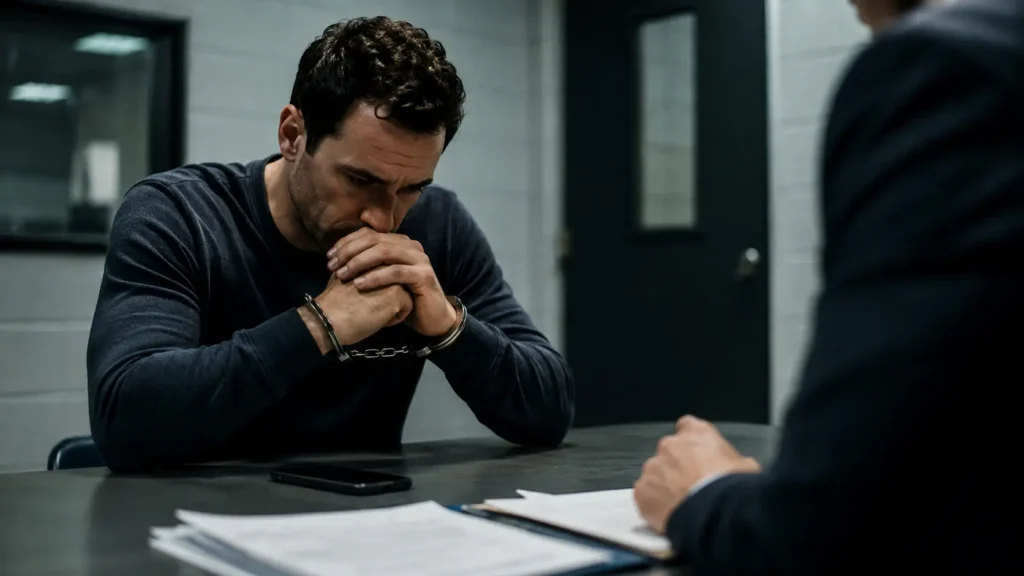
- What mistakes should you avoid after an arrest in Illinois?
- Common Mistakes After an Arrest in Illinois
- Mistake 1: Talking to Police Without a Criminal Defense Attorney
- What Not To Say After an Arrest
- Mistake 2: Assuming Cooperation Will Protect Your Case
- Mistake 3: Agreeing to Searches Without Understanding Your Rights
- Mistake 4: Discussing Your Case With Anyone Other Than Your Lawyer
- Mistake 5: Posting About Your Arrest or Case Online
- Mistake 6: Violating Illinois Pretrial Release Conditions
- Mistake 7: Missing Court or Ignoring Court Orders
- Mistake 8: Waiting Too Long to Hire a Criminal Defense Lawyer
- Mistake 9: Assuming an Arrest Means You Will Be Convicted
- First 24 Hours After an Arrest Checklist
- Protect Your Case After an Arrest
- Related Articles
- Frequently Asked Questions About Mistakes After an Arrest in Illinois
- What is the biggest mistake to avoid after being arrested?
- Should I talk to police after an arrest?
- Can posting online hurt my criminal case?
- What happens if I miss court after an arrest?
- Can contacting an alleged victim or witness cause problems?
- Can a lawyer help if I already talked to police or made another mistake?
- What should I do immediately after being released from custody?
- Should I accept a plea soon after being arrested?
Being arrested in Illinois can put your freedom, record, job, license, and future at risk fast. The first few hours after an arrest are not the time to explain your side, post online, contact witnesses, or make rushed decisions without legal guidance.
Even small mistakes can affect pretrial release, court conditions, plea options, and the strength of your defense. If you were arrested in Springfield, Sangamon County, or anywhere in Central Illinois, the safest next step is to stay quiet, follow court orders, and speak with a criminal defense attorney before making decisions about the case.
Quick Answer
What mistakes should you avoid after an arrest in Illinois?
After an arrest in Illinois, avoid discussing the allegations with police or others without legal advice, consenting to searches without understanding your rights, contacting protected parties or witnesses, posting about the case online, violating pretrial release conditions, missing court, deleting evidence, or accepting a plea before reviewing the evidence and consequences. Save your paperwork, confirm every court date, follow court orders, and preserve information that may be relevant to your defense.
If your arrest involved DUI, drug possession, theft or burglary, or another criminal charge, speak with a criminal defense attorney in Springfield, IL before talking to police or accepting a plea.
Common Mistakes After an Arrest in Illinois
After an arrest, small decisions can create major consequences. The most dangerous mistakes usually involve statements, missed court dates, release violations, and rushed decisions before the evidence is reviewed.
If charges have already been filed, read this step-by-step guide on what happens after being charged with a crime in Illinois.
| Mistake After Arrest | Why It Can Hurt Your Case | Better Step |
|---|---|---|
| Talking to police without legal advice | Statements can be used against you later | Ask to speak with an attorney before answering detailed questions |
| Posting online about the arrest | Social media posts, comments, and messages may become evidence | Do not discuss the case online |
| Contacting witnesses or alleged victims | Contact may violate release rules or create new problems | Let your attorney handle communication |
| Missing court | The judge may issue a warrant or change release conditions | Confirm every court date and arrive early |
| Violating pretrial release conditions | Violations can lead to detention or additional charges | Follow every court order exactly |
| Accepting a plea too quickly | A plea may affect your record, job, license, and housing | Review evidence and possible defenses first |
| Waiting too long to call a lawyer | Evidence may disappear and defense options may narrow | Get legal guidance early |
Mistake 1: Talking to Police Without a Criminal Defense Attorney
The most common mistake is trying to explain yourself. Many people believe that if they just tell their side of the story, everything will clear up.
Police are gathering evidence. Statements made under stress can be inconsistent or incomplete. Those statements may later be used in court.
You generally have the right not to answer investigative questions about the alleged offense. If you want to remain silent or speak with counsel, state that clearly and avoid volunteering details about the case.
What Not To Say After an Arrest
After an arrest, avoid explaining what happened, guessing about facts, apologizing, blaming someone else, or trying to talk your way out of the situation. Even statements that seem harmless can be misunderstood, taken out of context, or used by prosecutors later.
Safer responses include:
- “I want to remain silent.”
- “I want to speak with an attorney.”
- “I do not want to answer questions without legal advice.”
Remain calm and respectful, but avoid guessing, explaining, apologizing, or making detailed statements about the alleged offense before you understand how those statements may be used.
Mistake 2: Assuming Cooperation Will Protect Your Case
Being respectful is smart. Giving detailed explanations is risky. Cooperation does not automatically lead to reduced charges or favorable treatment.
Prosecutors rely on evidence, not intentions. Silence protects you from making statements that create problems later.
Mistake 3: Agreeing to Searches Without Understanding Your Rights
Police may ask for permission to search a vehicle, home, phone, bag, or other property. You generally do not have to voluntarily consent merely because an officer asks.
If consent is given, it may provide police with a legal basis for at least part of the search. However, consent issues can still involve questions about whether permission was voluntary, who had authority to give it, what the consent covered, and whether officers exceeded its scope.
If police search without consent, a defense attorney can review whether a warrant or another recognized exception to the warrant requirement justified the search.
Mistake 4: Discussing Your Case With Anyone Other Than Your Lawyer
Do not assume conversations about your case are private. Statements to friends, relatives, witnesses, other inmates, or people on jail calls may later be repeated, recorded, subpoenaed, or otherwise become relevant to the case. Attorney-client communications receive special legal protections when the requirements for privilege and confidentiality are satisfied.
Avoid discussing:
- What happened
- What police said
- What evidence may exist
Even casual comments can be misunderstood or repeated.
Mistake 5: Posting About Your Arrest or Case Online
Social media damages more cases than people realize. Posts, photos, and comments can be used as evidence.
Avoid:
- Explaining your version online
- Venting frustrations
- Making jokes about the situation
Online silence protects your defense.
Mistake 6: Violating Illinois Pretrial Release Conditions
Illinois has abolished monetary bail. Under the current pretrial-release system, defendants are generally eligible for release before conviction, subject to required appearances and any lawful conditions imposed by the court. Pretrial detention is available only in circumstances authorized by Illinois law and after the required proceedings.
Release conditions may include no-contact requirements, travel restrictions, electronic monitoring, or other court-ordered conditions. Violations can lead to sanctions, modification of release conditions, or—in circumstances authorized by law—revocation or detention proceedings.
Mistake 7: Missing Court or Ignoring Court Orders
Missing a required court appearance can create additional problems, but the exact response depends on the circumstances. The court may issue a summons or warrant, address release conditions, or take other action permitted by Illinois law.
Confirm every court date and read all court notices carefully. If you already missed court, review what happens if you miss a court date in Illinois before assuming a warrant has automatically been issued.
Mistake 8: Waiting Too Long to Hire a Criminal Defense Lawyer
Time matters after an arrest. Evidence can disappear. Surveillance footage may be deleted. Witness memories fade.
Early legal review may help identify evidence that should be preserved, clarify release conditions and court dates, evaluate police conduct, and address legal issues before important information becomes harder to obtain. If you need help understanding your options after an arrest, a criminal defense attorney in Springfield, IL can review your case and explain the next steps.
Mistake 9: Assuming an Arrest Means You Will Be Convicted
An arrest is not a conviction. The prosecution still must prove the charge, and the defense may dispute the facts, challenge admissibility of evidence, raise legal defenses, or contest whether the State can prove each required element.
Assuming the worst often leads to rushed decisions that are hard to undo.
First 24 Hours After an Arrest Checklist
| What To Do | Why It Matters |
|---|---|
| Avoid discussing the allegations | Statements may later become evidence |
| Save all paperwork | Court notices and release orders contain important dates and conditions |
| Confirm the next court date | Missing court may trigger additional court action |
| Follow release conditions | Violations may lead to sanctions or modification of release |
| Preserve evidence | Messages, video, photos, receipts, and witness information may become important |
| Write down what happened | Details can become harder to remember over time |
| Obtain legal advice | Counsel can review the charge, evidence, release conditions, and next steps |
If this is your first arrest, read more about what happens after a first arrest in Springfield, Illinois.
Protect Your Case After an Arrest
If you were arrested in Illinois, the next steps may involve release conditions, court dates, police statements, evidence, searches, and decisions about how to respond to the charge. Reviewing those issues early can help you understand your obligations and avoid additional mistakes while the case is pending.
Schedule a Confidential ConsultationRelated Articles
- First Arrest? What a Criminal Defense Lawyer Wants You to Know
- What Happens If You Have a Warrant in Illinois and Don’t Know It
- What Happens After Being Charged With a Crime in Illinois
- Illinois Pretrial Release and No Cash Bail Rules
Frequently Asked Questions About Mistakes After an Arrest in Illinois
What is the biggest mistake to avoid after being arrested?
One of the biggest risks is discussing the allegations before understanding how your statements may be used. Avoid giving detailed explanations to police, witnesses, alleged victims, friends, family, or online audiences without legal advice.
Should I talk to police after an arrest?
You generally do not have to answer investigative questions about the alleged offense merely because you were arrested. If you want to remain silent or speak with an attorney, clearly state that choice and avoid volunteering details about the case.
Can posting online hurt my criminal case?
Yes. Social media posts, comments, photos, videos, private messages, and other digital communications may be preserved or used as evidence.
What happens if I miss court after an arrest?
The court may issue a summons or warrant, address your release conditions, or take other action permitted by Illinois law. A missed appearance does not necessarily produce the same result in every case.
Can contacting an alleged victim or witness cause problems?
Yes. Contact may violate a no-contact provision, order of protection, or pretrial release condition. Even when contact is not expressly prohibited, statements or messages may later become evidence.
Can a lawyer help if I already talked to police or made another mistake?
Yes. An attorney can review what happened, determine whether statements or evidence raise legal issues, explain the possible consequences, and help prevent additional mistakes while the case is pending.
What should I do immediately after being released from custody?
Save your paperwork, confirm your next court date, review and follow every release condition, preserve relevant evidence, avoid discussing the allegations publicly, and obtain legal advice before making important decisions about the case.
Should I accept a plea soon after being arrested?
Before accepting a plea, understand the charge, available evidence, possible defenses, sentencing exposure, plea terms, and potential effects on your record, employment, license, immigration status, housing, or firearm rights when applicable.