

- What happens after a first arrest in Springfield, Illinois?
- What to Do After Your First Arrest in Springfield, Illinois
- Booking and Processing: What Happens Right After an Arrest
- Pretrial Release in Illinois: No Cash Bail, But Conditions Still Apply
- Your First Court Appearance After an Arrest in Sangamon County
- First Arrest Timeline in Sangamon County
- First Arrest vs. Criminal Conviction in Illinois
- Your Constitutional Rights After an Arrest in Illinois
- Does Being a First-Time Defendant Change What Happens?
- Common Mistakes to Avoid After a First Arrest in Illinois
- Will a First Arrest Stay on Your Record in Illinois?
- Moving Forward After a First Arrest Without Making Things Worse
- First Arrest in Springfield or Sangamon County?
- Related Springfield Arrest and Criminal Defense Resources
- Frequently Asked Questions
- What happens after a first arrest in Springfield, Illinois?
- Does a first arrest mean I will be convicted?
- Can I be released after a first arrest in Illinois?
- What should I avoid doing after my first arrest?
- Does having no prior criminal record help?
- Will a dismissed first arrest disappear from my record automatically?
- How long does a first-arrest criminal case take in Illinois?
Quick Answer
What happens after a first arrest in Springfield, Illinois?
After a first arrest in Springfield, a person may go through booking, pretrial-release proceedings, an initial court appearance, arraignment, discovery, motions, negotiations, and possibly trial. A first arrest does not automatically mean a conviction. Illinois generally presumes defendants are eligible for pretrial release, although detention may be ordered in qualifying cases through the statutory detention process. Follow all court conditions, preserve your paperwork, avoid discussing the allegations publicly, and understand the charge before making plea or case decisions.
A first arrest in Springfield, Illinois does not automatically mean you will be convicted. The outcome depends on the charge, the evidence, police conduct, your criminal history, and the decisions made during the early stages of the case.
For someone who has never been arrested before, the process can feel unfamiliar and move surprisingly fast. You may be concerned about staying in custody, attending court, protecting your job, avoiding a permanent record, and explaining the situation to your family.
The most important steps are to remain silent about the allegations, preserve every document you receive, follow all release conditions, confirm your court date, and speak with a criminal defense attorney before entering a plea or giving a detailed statement.
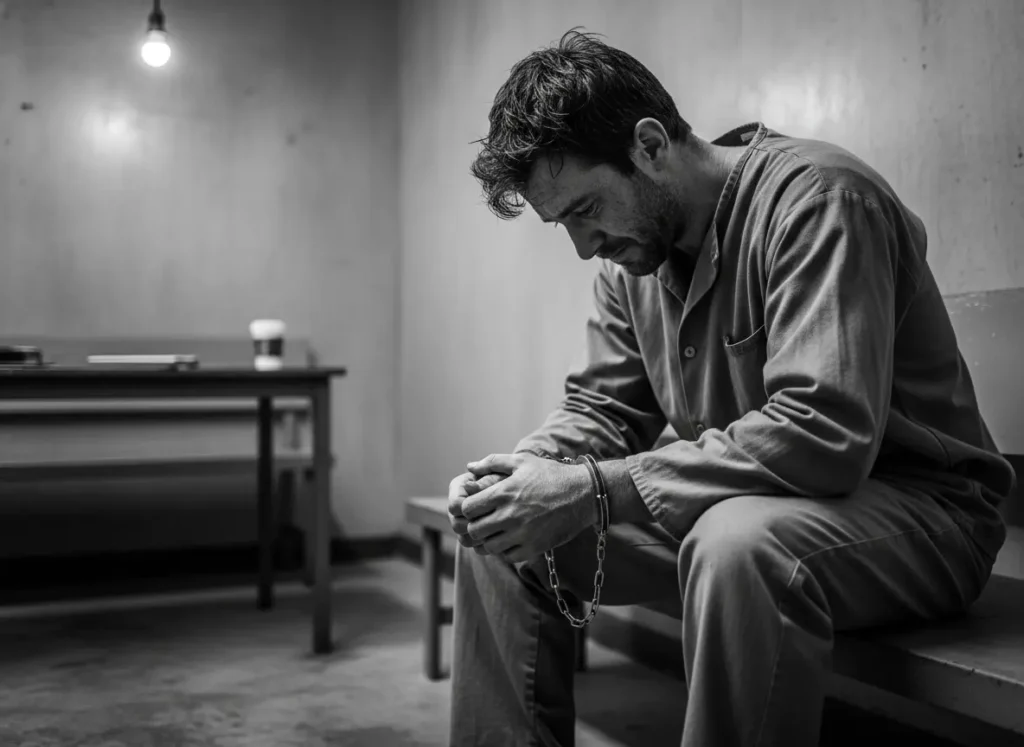
What to Do After Your First Arrest in Springfield, Illinois
During the first hours and days after an arrest:
- Stay calm and do not argue with police.
- Avoid discussing the allegations.
- Keep citation papers, release documents, and court notices.
- Read all release conditions carefully.
- Follow no-contact, travel, supervision, or other court requirements.
- Confirm the next court date.
- Do not post about the case online.
- Preserve relevant messages, photos, video, receipts, and witness information.
What happens next will depend heavily on the offense charged and the evidence involved.
Booking and Processing: What Happens Right After an Arrest
Booking is the administrative process that follows many arrests. Depending on the circumstances, law enforcement may record identifying information, fingerprints, photographs, property information, and the alleged offense.
What happens after booking depends on the charge, custody status, and whether pretrial release or detention issues must be addressed.
Pretrial Release in Illinois: No Cash Bail, But Conditions Still Apply
Illinois no longer uses monetary bail for ordinary criminal pretrial release.
Under Illinois law, defendants are generally presumed eligible for pretrial release. Depending on the case, the court may impose conditions designed to ensure court appearances and address applicable safety concerns. Pretrial detention is permitted only when statutory requirements are satisfied.
Release conditions may include:
- No-contact requirements
- Travel restrictions
- Reporting or supervision
- Other conditions ordered by the court
Violating a release condition can result in additional court proceedings and may lead to modification, sanctions, or revocation when legally authorized. It should not be described as automatically resulting in detention.
Your First Court Appearance After an Arrest in Sangamon County

After an arrest or filing of criminal charges, one of the next steps may be an initial court appearance. What occurs at that hearing depends on the charge, custody status, pretrial release issues, and how the case was initiated.
The court may address:
- The charge
- Representation by counsel
- Pretrial release or detention issues
- Existing release conditions
- Future court dates
- Other preliminary matters
The first appearance is not the trial, and the complete criminal process normally involves additional hearings. For more on local court procedure, read how Sangamon County Circuit Court handles criminal cases.
What Happens at an Arraignment in Illinois?
In Illinois, this hearing is called an arraignment. The hearing takes place at the Sangamon County Circuit Court in Springfield.
What Happens During the Arraignment
At arraignment, the charge is formally addressed and the defendant may enter a plea.
The court may also address scheduling and other procedural issues depending on the case.
A defendant should understand the charge and available options before entering a plea.
How to Dress, Act, and Prepare for Your First Court Date
- Arrive early enough to find the correct courtroom.
- Bring court paperwork.
- Dress appropriately for court.
- Turn off or silence your phone.
- Address the judge respectfully.
- Do not discuss case facts in hallways or public areas.
- Follow instructions from court personnel.
- Make sure you know the next court date before leaving.
What Happens After the Arraignment
After arraignment, a criminal case may move into the pretrial stage.
Depending on the case, that can involve:
- Discovery and evidence review
- Defense investigation
- Body-camera or video review
- Witness evaluation
- Motions
- Negotiations
- Additional status hearings
- Trial preparation
The exact path depends on the charge and evidence.
First Arrest Timeline in Sangamon County
| Stage | What Usually Happens |
|---|---|
| Arrest or citation | Police take action based on an alleged offense, warrant, or investigation. |
| Booking | Police record personal information, fingerprints, photos, and alleged charge details. |
| Release review | The court reviews whether release conditions or detention issues apply. |
| First court appearance | The judge reviews charges, conditions, and next steps. |
| Arraignment | The charge is formally addressed and the defendant may enter a plea. |
| Pretrial stage | The defense reviews evidence, investigates facts, files motions, and negotiates options. |
First Arrest vs. Criminal Conviction in Illinois
| First Arrest | Criminal Conviction |
|---|---|
| An accusation that starts the criminal process. | A court finding of guilt or accepted plea resolution. |
| The State must still prove the charge. | The case has resulted in a legal finding or admission of guilt. |
| Defense options may still include dismissal, reduction, or other resolutions. | Consequences may include penalties, sentencing, and record impact. |
Your Constitutional Rights After an Arrest in Illinois
Important constitutional protections may include:
- The right to remain silent
- The right to counsel during qualifying custodial questioning
- Protection against unreasonable searches and seizures
- The right to challenge the State’s evidence
- The right to due process
Statements made after an arrest may become evidence, so avoid guessing, volunteering explanations, or trying to talk your way out of the allegation.
Does Being a First-Time Defendant Change What Happens?
Having no prior criminal record does not automatically make the charge disappear, but it may be an important factor when attorneys, prosecutors, and courts evaluate the case. The effect of a clean record depends on the charge, the available evidence, the alleged harm, and whether any special sentencing or statutory restrictions apply.
Some first-time defendants may have options that are less likely to be available to people with significant criminal histories. Depending on the circumstances, these could include negotiated reductions, court supervision, diversion-related options, dismissal, or penalties that do not involve incarceration. None of these results is guaranteed.
A criminal defense attorney can evaluate whether the evidence can be challenged before discussing alternative outcomes. A clean record should be used strategically, not treated as a reason to plead guilty before the case has been fully reviewed.
Common Mistakes to Avoid After a First Arrest in Illinois
Avoid:
- Discussing the allegations unnecessarily
- Posting about the case online
- Contacting someone contrary to a no-contact order
- Ignoring release conditions
- Missing court
- Throwing away arrest or court paperwork
- Deleting potentially relevant evidence
- Assuming a first arrest will automatically be dismissed
- Entering a plea before understanding the charge and consequences
Learn more about mistakes to avoid after being arrested in Illinois .
Will a First Arrest Stay on Your Record in Illinois?
An arrest can remain part of criminal-history records even when it does not result in a conviction.
What remains publicly or legally accessible can depend on:
- The charge
- The final disposition
- Whether supervision was entered
- Whether the record qualifies for sealing
- Whether the record qualifies for expungement
A dismissal does not necessarily erase an arrest record automatically. For the next step after a case ends, review Illinois expungement and record-sealing options.
Moving Forward After a First Arrest Without Making Things Worse
A first arrest does not define your future.
Cases resolve through strategy, negotiation, or evidence challenges. What you do early matters most.
A criminal defense attorney reviews your case, identifies weaknesses, and protects your rights.
If you or someone you know faces a first arrest in Springfield, Illinois, speak with a defense attorney as soon as possible. For direct defense help, speak with a criminal defense attorney in Springfield, IL.
First Arrest in Springfield or Sangamon County?
A first arrest can involve unfamiliar court procedures, release conditions, evidence, and decisions that may affect how the case proceeds. Andrew Affrunti can review the charge, arrest paperwork, police conduct, upcoming court dates, and possible defense issues in Springfield and Sangamon County.
Schedule a Confidential ConsultationCall 217-528-2183
Related Springfield Arrest and Criminal Defense Resources
- What to Do First After Being Arrested in Springfield, IL
- Mistakes to Avoid After Being Arrested in Illinois
- What Happens After You Are Charged With a Crime in Illinois?
- Illinois Pretrial Release Law Explained
Frequently Asked Questions
What happens after a first arrest in Springfield, Illinois?
The process may include booking, pretrial release proceedings, a first court appearance, arraignment, evidence review, pretrial hearings, and additional court dates. The exact process depends on the charge and custody status.
Does a first arrest mean I will be convicted?
No. An arrest is an accusation, not a conviction. The State still must establish the charged offense, and the case may be affected by the evidence, police conduct, witnesses, motions, negotiations, and other legal issues.
Can I be released after a first arrest in Illinois?
Potentially. Illinois generally presumes eligibility for pretrial release, although conditions may be imposed and detention may be sought in cases that satisfy the statutory requirements.
What should I avoid doing after my first arrest?
Avoid discussing the allegations unnecessarily, posting about the case online, violating release conditions, missing court, deleting potentially relevant evidence, and assuming the case will automatically disappear because it is your first arrest.
Does having no prior criminal record help?
A clean record may be relevant when possible case resolutions or sentencing issues are evaluated, but it does not guarantee dismissal, supervision, or a reduced charge.
Will a dismissed first arrest disappear from my record automatically?
Not necessarily. The criminal case may end, but an arrest record may remain unless it qualifies for and goes through an applicable sealing or expungement process.
How long does a first-arrest criminal case take in Illinois?
There is no single timeline. The duration depends on the charge, evidence, motions, negotiations, court scheduling, continuances, and whether the case proceeds toward trial.