
- How Do Criminal Defense Attorneys Build a Defense Strategy?
- How Illinois Criminal Defense Attorneys Start Building Your Case
- Why Defense Strategy Matters for Your Case
- How Defense Attorneys Review Evidence in Illinois Criminal Cases
- How Criminal Defense Attorneys Independently Investigate Cases in Illinois
- Constitutional Violations That Can Change the Outcome of an Illinois Criminal Case
- Defining the Theory of the Defense
- Quick Reference Guide: Defense Strategy by Situation
- Building the Pretrial Motion Strategy
- Trial vs. Plea Deal in Illinois: How Your Defense Attorney Decides
- Preparing for Trial
- Why the Attorney You Choose Matters
- Facing Criminal Charges in Illinois? Talk to Andrew Affrunti.
- Frequently Asked Questions
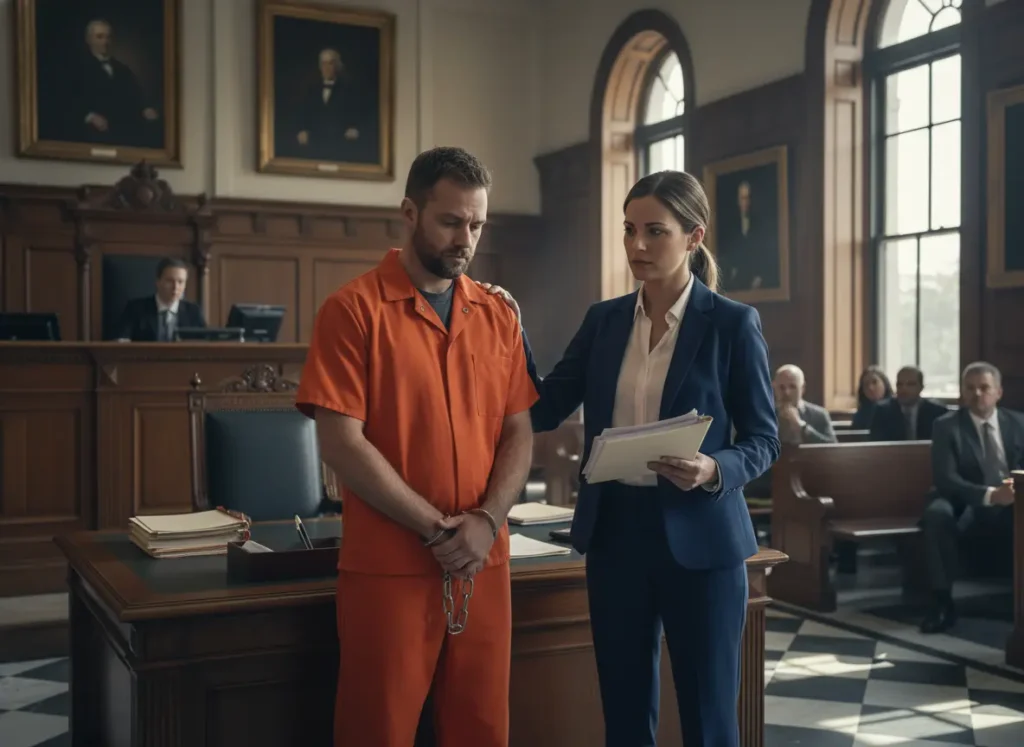
When most people think about criminal defense, they picture a courtroom. A lawyer standing before a jury, delivering a closing argument, fighting for their client in front of a packed gallery. That image is not wrong, but it tells only a small part of the story.
The truth is that the most important work in a criminal defense case happens long before anyone sets foot in a courtroom. It happens in the weeks and months of preparation that precede trial, in the careful review of evidence, in the identification of constitutional violations, in the strategic decisions about what to challenge and how.
Building a defense strategy is not a single event. It is a layered, deliberate process that begins the moment an attorney takes a case and continues until the matter is fully resolved. Understanding how that process works helps you appreciate why the attorney you choose, and how early you involve them, matters so much.
Why Do Some Defense Strategies Fail Before They Even Begin?
Because key decisions get made before a real strategy is built. Without early guidance, important details get missed, evidence goes unchallenged, and the case starts moving forward based only on the prosecution’s version of events.
How Do Criminal Defense Attorneys Build a Defense Strategy?
A criminal defense strategy is built through a structured, multi-phase process. The attorney begins by gathering the complete facts from the client’s perspective, then analyzes all prosecution evidence provided through discovery, conducts independent investigation, identifies any Fourth, Fifth, or Sixth Amendment violations, and develops a central theory of defense. In Illinois, this process can take weeks to months depending on the complexity of the charges. The earlier the process begins, the more strategic options the defense has available.
How Illinois Criminal Defense Attorneys Start Building Your Case
Before any legal strategy can take shape, a criminal defense attorney in Illinois must understand the facts of the case from the defendant’s own account, not from law enforcement reports. The initial attorney-client meeting is one of the most consequential parts of the entire case. A skilled defense attorney listens carefully, asks detailed questions about what occurred before the alleged offense, during the encounter, and immediately after, and works to identify details that may appear minor but carry legal significance. Timeline inconsistencies, uninterviewed witnesses, and gaps in police documentation frequently surface during this conversation.
The first conversation between an attorney and a new client is one of the most important parts of the entire case. A good defense attorney listens carefully, asks detailed questions, and works to understand not just what happened but the full context surrounding it. Where were you? Who was present? What did law enforcement say and do? What happened in the moments before the alleged offense? What happened after?
Details that seem minor to a client often matter enormously to an attorney. An inconsistency in a police report. A timeline that doesn’t quite add up. A witness who was present but never interviewed. These are the kinds of things that surface when an attorney takes the time to hear the full story rather than simply reviewing the prosecution’s file.
The foundation of every defense strategy is an accurate, thorough understanding of the facts. Everything built on top of that foundation depends on how solid it is.
Why Defense Strategy Matters for Your Case
The strength of your defense strategy affects every stage of your case, from what evidence is allowed, to whether charges are reduced, to whether your case goes to trial or resolves early.
How Defense Attorneys Review Evidence in Illinois Criminal Cases
Once the attorney understands the client’s account, the next step is reviewing the evidence the prosecution intends to use. This process is called discovery, and it gives the defense access to the material the state has gathered, including police reports, witness statements, surveillance footage, forensic results, lab reports, phone records, and any other evidence the prosecution plans to rely on at trial.
Reviewing this material is not a passive exercise. A skilled defense attorney approaches the prosecution’s evidence with a critical, skeptical eye, looking not just at what the evidence says but at how it was gathered, how it was handled, and whether it was obtained lawfully.
Identifying Gaps and Inconsistencies
Evidence rarely tells a clean, complete story. Police reports contain errors. Witness memories are imperfect and subject to bias. Forensic analysis has limitations that are often not disclosed in the summary findings. Surveillance footage may be incomplete or of poor quality.
Part of a defense attorney’s job during the evidence review phase is identifying every gap, inconsistency, and weakness in the prosecution’s case. These become the building blocks of the defense strategy, either as points to be challenged at trial or as leverage in negotiations.
Evaluating the Chain of Custody
Physical evidence is only as reliable as the process used to collect, store, and transfer it. If evidence was mishandled at any point, its integrity may be compromised. Defense attorneys examine the chain of custody for physical evidence carefully, looking for breaks or irregularities that could undermine the reliability of what the prosecution is presenting.
Assessing Witness Credibility
Witness testimony is frequently the most powerful and the most vulnerable part of a prosecution’s case. Defense attorneys scrutinize witness statements for internal inconsistencies, contradictions with other evidence, potential bias, and prior statements that conflict with what a witness now claims to remember. A witness whose credibility can be effectively challenged in cross-examination can significantly weaken the prosecution’s narrative.
How Criminal Defense Attorneys Independently Investigate Cases in Illinois
Reviewing the prosecution’s evidence is necessary but not sufficient. A thorough defense also requires independent investigation, because the prosecution’s file reflects what law enforcement chose to look for and how they chose to document it. It may not reflect everything that is relevant to the defense.
Defense attorneys and their investigators may revisit the scene of the alleged offense, locate and interview witnesses who were not contacted by police, review records the prosecution did not obtain, and gather evidence that supports an alternative account of events or contradicts the state’s theory of the case.
Independent investigation is particularly important in cases where law enforcement moved quickly or where the investigation appears to have been conducted with a predetermined conclusion in mind. The defense is not obligated to accept the prosecution’s framing of the facts. Building an independent factual record gives the defense the ability to present a complete and competing narrative.
Constitutional Violations That Can Change the Outcome of an Illinois Criminal Case
Illinois criminal defense attorneys examine three constitutional amendments in nearly every case. The Fourth Amendment to the U.S. Constitution protects individuals from unreasonable searches and seizures. Evidence obtained through an unlawful traffic stop, a warrant lacking probable cause, or a search that exceeded the warrant’s scope may be excluded from trial through a suppression motion. The Fifth Amendment protects defendants from compelled self-incrimination and requires that Miranda warnings be properly given before a custodial interrogation. If a defendant’s statements were obtained in violation of Miranda, those statements may be suppressed. The Sixth Amendment guarantees the right to counsel at all critical stages of a criminal prosecution, including interrogation after charges are filed.
Fourth Amendment: Unlawful Search and Seizure
The Fourth Amendment protects against unreasonable searches and seizures. Evidence obtained through an unlawful search, one conducted without a valid warrant, without proper consent, or outside the bounds of an applicable exception, may be subject to suppression. If the prosecution’s case depends heavily on evidence that was gathered in violation of the Fourth Amendment, a successful suppression motion can fundamentally change the trajectory of the case.
Defense attorneys examine every search and seizure involved in a case closely. Was the traffic stop that led to the discovery of contraband legally justified? Was the search warrant supported by sufficient probable cause? Was the scope of the search consistent with what the warrant authorized? These are not technicalities. They are constitutional protections that exist precisely to prevent the government from building cases on unlawfully obtained evidence.
Fifth Amendment: Self-Incrimination and Due Process
The Fifth Amendment protects against compelled self-incrimination and guarantees due process of law. If a client made statements to law enforcement, the defense will examine whether those statements were truly voluntary, whether Miranda warnings were properly given, and whether the interrogation methods used were constitutionally permissible.
Statements obtained in violation of a defendant’s Fifth Amendment rights may be suppressed, preventing the prosecution from using them at trial. In cases where a defendant’s own words are central to the prosecution’s case, a successful suppression motion based on Fifth Amendment violations can be decisive.
Sixth Amendment: Right to Counsel
The Sixth Amendment guarantees the right to counsel at all critical stages of a criminal prosecution. If a client was questioned after invoking the right to an attorney, or if counsel was denied at a critical proceeding, those violations carry serious consequences for how the case may proceed.
Identifying constitutional violations early is one of the highest-value activities a defense attorney performs. It is not about looking for loopholes. It is about holding the government to the standards that the law demands.
Defining the Theory of the Defense
With a thorough understanding of the facts, a complete review of the evidence, independent investigation complete, and constitutional issues identified, the defense attorney is ready to define the theory of the defense. This is the central argument that will frame everything that follows, the narrative the defense will present to explain the evidence and create reasonable doubt in the minds of a jury or judge.
Defense theories take many different forms depending on the facts of the case.
Challenging the Sufficiency of the Evidence
In many cases, the most effective defense is a direct challenge to whether the prosecution can actually prove what it claims. The burden of proof in a criminal case is beyond a reasonable doubt, which is a demanding standard. If the evidence is circumstantial, conflicting, or dependent on unreliable witnesses, a defense built around the insufficiency of the prosecution’s proof can be highly effective without requiring the defense to assert an alternative explanation.
Mistaken Identity
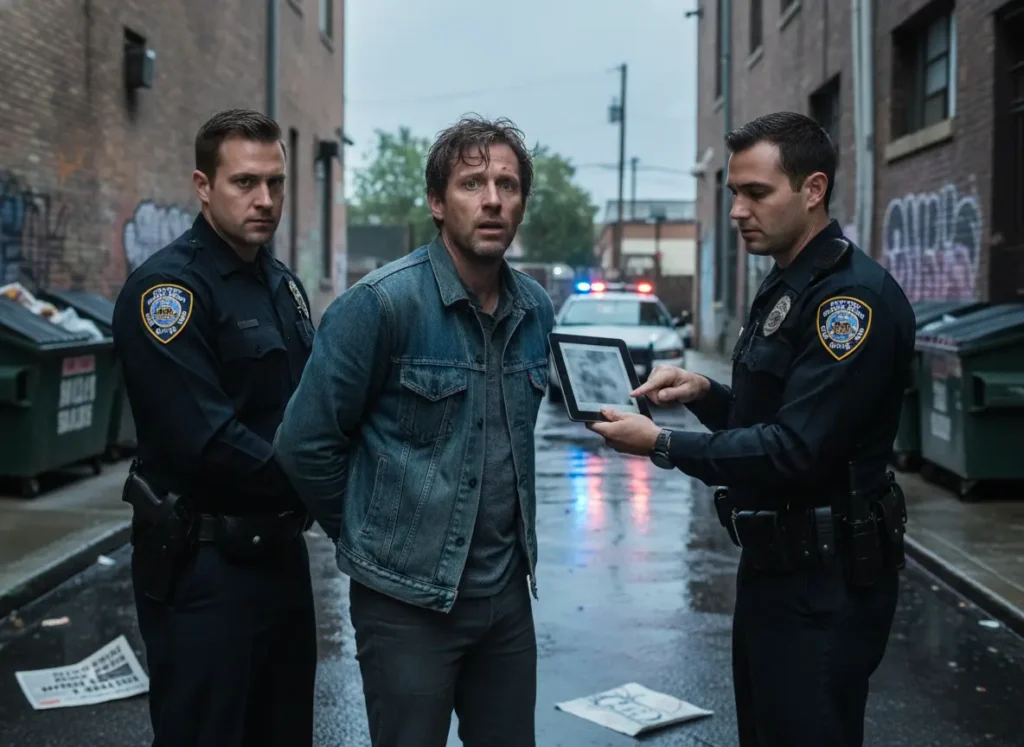
Eyewitness identification is one of the most frequently cited causes of wrongful conviction. Human memory is fallible, particularly under stress, and witness certainty does not reliably correlate with witness accuracy. In cases where the prosecution’s case rests significantly on eyewitness identification, the defense may build a strategy around challenging the reliability of that identification through cross-examination, expert testimony, and evidence about the conditions under which the identification was made.
Alibi
If the defendant was not present at the location where the alleged offense occurred, alibi evidence establishes that fact. Building an alibi defense requires gathering supporting evidence, including witness testimony, electronic records, surveillance footage, or other documentation that places the defendant elsewhere at the relevant time.
Lack of Intent
Many criminal offenses require the prosecution to prove not just that an act occurred, but that the defendant acted with a specific mental state, such as intent, knowledge, or recklessness. If the evidence does not support the required mental state, a defense based on lack of intent may be appropriate. This is particularly relevant in cases involving financial crimes, certain drug offenses, and other charges where the defendant’s state of mind is an element the prosecution must prove.
Affirmative Defenses
In some cases, the defense does not dispute that the act occurred but presents a legal justification or excuse that negates criminal liability. Self-defense is the most commonly known affirmative defense, asserting that the defendant’s actions were a legally permissible response to an immediate threat of harm. Other affirmative defenses may apply depending on the specific charges and circumstances.
Quick Reference Guide: Defense Strategy by Situation
| Situation | Primary Defense Focus | Why It Matters |
|---|---|---|
| Evidence obtained during a traffic stop | Fourth Amendment suppression motion | If the stop lacked legal justification, evidence discovered during it may be excludable |
| Defendant made statements to police | Fifth Amendment review of Miranda compliance | Statements taken without proper warnings or after invoking counsel may be suppressed |
| Case depends heavily on eyewitness identification | Mistaken identity defense | Eyewitness memory is unreliable under stress; challenging identification procedures can create reasonable doubt |
| Prosecution’s evidence is circumstantial or conflicting | Sufficiency of evidence challenge | The beyond reasonable doubt standard is demanding; weak or inconsistent evidence may not meet it |
| Defendant was elsewhere when offense occurred | Alibi defense with supporting documentation | Electronic records, surveillance footage, and witness testimony can establish location independently |
| Charge requires specific mental state to convict | Lack of intent defense | Many offenses require the prosecution to prove intent; absence of that mental state negates criminal liability |
| Physical evidence was handled by multiple parties | Chain of custody review | Breaks or irregularities in evidence handling undermine its reliability and admissibility |
| Defendant acted in response to an immediate threat | Self-defense or affirmative defense | Legal justification negates criminal liability even when the act itself is not disputed |
| Key witnesses have prior inconsistent statements | Credibility challenge through cross-examination | Contradictions between current testimony and prior statements weaken the prosecution’s narrative |
| Prosecution’s case has procedural defects | Motion to dismiss based on constitutional violations | Procedural violations can result in charges being narrowed or dismissed before trial |
Building the Pretrial Motion Strategy
Once the theory of the defense is defined, the attorney maps out the pretrial motion strategy. Pretrial motions are legal arguments presented to the court before trial begins, and they can profoundly affect the shape of the case.
Common pretrial motions in criminal defense include motions to suppress unlawfully obtained evidence, motions to dismiss charges based on constitutional violations or procedural defects, motions to compel the prosecution to disclose additional evidence, and motions in limine to limit what the prosecution can present at trial.
A successful pretrial motion can exclude key evidence, narrow the scope of the charges, or in some cases, end the case entirely. The pretrial motion phase is one of the most consequential battlegrounds in criminal defense, and it is fought almost entirely outside the jury’s view.
Trial vs. Plea Deal in Illinois: How Your Defense Attorney Decides
Not every criminal case should go to trial, and not every case should be resolved through a plea agreement. One of the most important judgment calls a defense attorney makes is evaluating which path best serves the client’s interests.
This evaluation depends on a range of factors, including the strength of the evidence, the outcome of pretrial motions, the severity of the potential sentence if convicted at trial, the charges the prosecution is willing to accept in a negotiated resolution, and the client’s personal circumstances and priorities.
A defense attorney who genuinely serves their client’s interests does not have a predetermined preference for trial or plea. They evaluate each case on its merits and give the client an honest, clear-eyed assessment of the risks and potential outcomes associated with each path. The client makes the final decision. The attorney’s job is to make sure that decision is fully informed.
When negotiation is the right path, an attorney who has done thorough pretrial work is in a significantly stronger position. Prosecutors negotiate based on the perceived strength of their case. A defense that has identified constitutional violations, suppressed key evidence, and developed compelling competing narrative changes that calculus considerably.
Preparing for Trial
When a case proceeds to trial, the preparation that has happened in the preceding weeks and months comes into full effect. Trial preparation includes developing detailed cross-examination strategies for prosecution witnesses, preparing any defense witnesses to testify, working with expert witnesses where technical or scientific evidence is at issue, crafting opening and closing arguments, and anticipating the prosecution’s strategy at every stage.
Effective trial advocacy is built on preparation. An attorney who knows the evidence inside and out, who has thought through every angle the prosecution might take, and who has a clear and persuasive theory of the defense to present is in the strongest possible position to advocate for their client.
Juries respond to clarity, credibility, and coherence. A well-prepared defense attorney presents a narrative that holds together, challenges the prosecution’s evidence at its weakest points, and gives the jury a principled reason to find reasonable doubt.
Why the Attorney You Choose Matters
Every stage of the process described above requires skill, experience, and judgment. Building a defense strategy is not a formulaic exercise. It requires an attorney who knows the law, understands the local courts and how prosecutors operate, and is willing to invest the time and attention that serious criminal cases demand.
The difference between an attorney who reviews the prosecution’s file and files a few standard motions and one who conducts independent investigation, pursues every constitutional issue, develops a compelling theory of the defense, and prepares thoroughly for trial is often the difference between conviction and acquittal, between maximum exposure and a negotiated outcome that preserves the client’s future.
Facing Criminal Charges in Illinois? Talk to Andrew Affrunti.
If you are facing criminal charges in Springfield or anywhere in Central Illinois, the quality of your defense strategy depends entirely on the attorney you choose and how early you bring them in.
Andrew Affrunti brings focused, experienced criminal defense representation to clients throughout Sangamon, Christian, McLean, Macon, Tazewell, and surrounding counties. Every case receives thorough investigation, careful analysis of constitutional issues, and a defense strategy built on the specific facts and circumstances of the situation, not a one-size-fits-all approach.
From the initial investigation through pretrial motions, negotiations, and trial, Andrew works to identify every available advantage and apply pressure where it matters most.
The earlier you act, the more options your defense has.
Call today for a confidential consultation: 217-528-2183
Legal information provided in this article is for general informational purposes only and does not constitute legal advice. For advice specific to your situation, please consult a licensed attorney.
Frequently Asked Questions
How do criminal defense attorneys build a defense strategy?
Defense strategy begins with a detailed review of the facts from the client’s perspective. The attorney then analyzes the prosecution’s evidence, identifies weaknesses, and investigates independently. Strategy develops over time as new facts, evidence, and legal issues emerge.
What is the first step in building a defense?
The first step is understanding the complete facts of the case. This includes what happened before, during, and after the alleged offense. Small details often become critical in shaping the defense.
Why is reviewing evidence so important in a criminal case?
Evidence forms the foundation of the prosecution’s case. A defense attorney reviews how the evidence was collected, handled, and presented. Errors or inconsistencies can weaken the case significantly.
What are common weaknesses attorneys look for in a case?
Attorneys look for gaps in timelines, inconsistent witness statements, and unreliable evidence. They also evaluate whether procedures were followed correctly. These weaknesses become leverage in motions or negotiations.