Drug Possession and Distribution Defense Attorney in Springfield, IL
Quick Answer
If you are charged with drug possession or distribution in Springfield, Illinois, important issues may include what substance was found, the amount, whether prosecutors can prove knowing possession or intent to deliver, how police obtained the evidence, and whether the substance was properly tested. A defense attorney can review the stop, search, arrest, laboratory evidence, statements, and possession evidence before important case decisions are made.
Facing Drug Charges in Springfield, Illinois
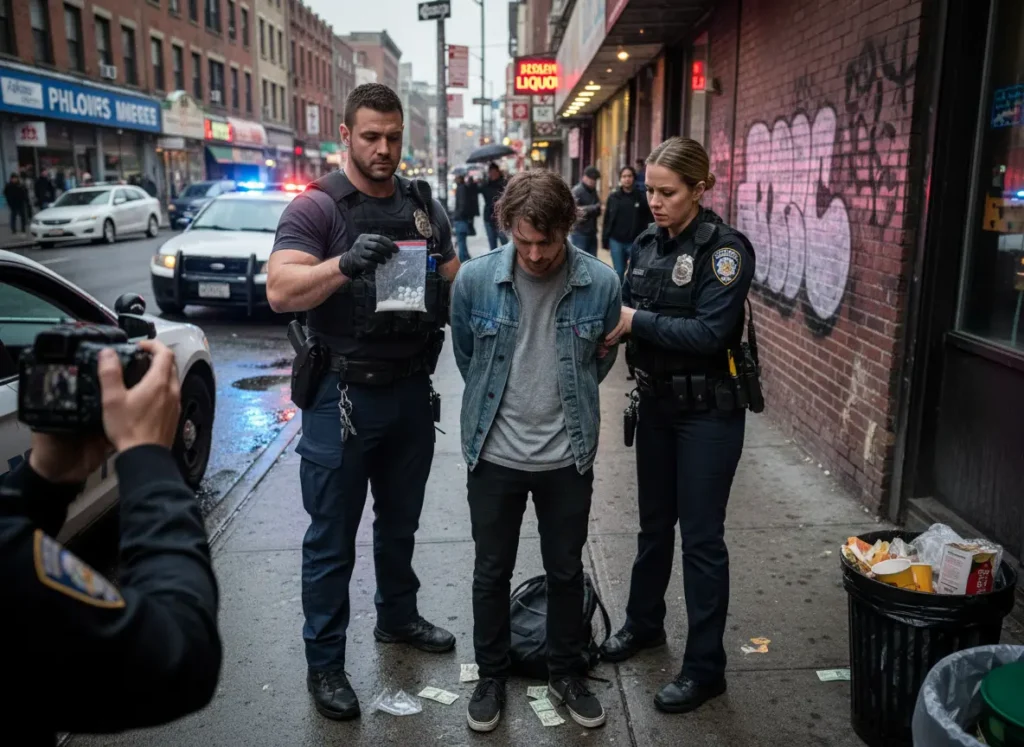
Drug cases in Illinois can involve possession, possession with intent to deliver, delivery, manufacturing, trafficking, or other controlled-substance allegations.
The exact legal exposure depends on factors such as:
– The substance involved – The alleged quantity – Whether possession or delivery is charged – Prior criminal history – Whether another enhancement applies – Whether alternative sentencing is legally available
An arrest is not a conviction. Prosecutors must prove the elements of the particular offense with admissible evidence.
Section 402 criminalizes knowing possession, while Section 401 separately addresses manufacture, delivery, and possession with intent to manufacture or deliver.
Drug Possession Defense in Springfield and Sangamon County
A drug possession case often turns on whether prosecutors can prove that the accused knowingly possessed the substance.
Possession disputes can become especially important when drugs were found:
Inside a shared vehicle
In a home occupied by several people
In another person’s bag or container
In a common area
Somewhere multiple people could access
The defense may also examine the traffic stop, search, seizure, police statements, laboratory testing, and evidence linking the accused to the substance.
Drug Possession Penalties and Defense Issues in Illinois
Issue
Why It Matters
Defense Review
Substance
Illinois penalties vary by the controlled substance and statute involved.
Review laboratory testing and statutory classification.
Quantity
Weight can affect the charged offense and sentencing range.
Review weighing, laboratory reports, packaging, and statutory thresholds.
Possession
The State must establish knowing possession.
Examine ownership, control, access, location, and other occupants.
Search or seizure
Unlawfully obtained evidence may be subject to suppression.
Review consent, probable cause, warrants, traffic-stop timing, and police video.
Review quantity, packaging, communications, money, and other evidence prosecutors rely on.
Drug Possession and Distribution Charges in Illinois
Illinois drug statutes distinguish among several types of conduct. Depending on the substance and allegations, a case may involve:
– Possession of a controlled substance – Possession with intent to manufacture or deliver – Delivery – Manufacturing – Controlled-substance trafficking – Cannabis offenses governed by separate statutes – Other drug-specific offenses
Section 401 prohibits knowingly manufacturing, delivering, or possessing with intent to manufacture or deliver controlled substances covered by that provision. The offense level depends heavily on the substance and quantity involved.
Possession vs Intent to Deliver
Possession generally requires proof that the accused knowingly possessed the controlled substance.
Possession with intent to deliver requires additional proof that the person intended to manufacture or deliver the substance.
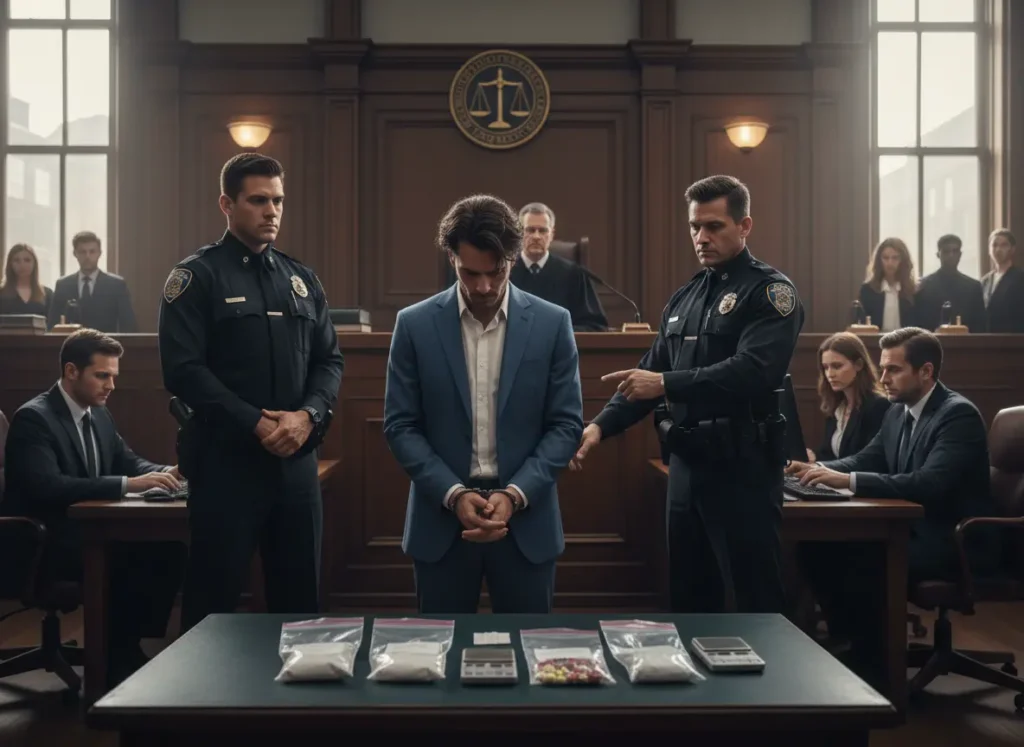
Prosecutors may rely on circumstantial evidence such as: – Quantity – Packaging – Communications – Cash or financial evidence – Scales or other items – Witness testimony – Other surrounding circumstances
No single factor automatically establishes intent. The evidence must be evaluated as a whole.
Andrew Affrunti represents clients throughout Central Illinois
Sangamon County
Christian County
McLean County
Macon County
Tazewell County
DeWitt County
Logan County
Shelby County
Mason County
Menard County
Cass County
Morgan County
Macoupin County
Bond County
Fayette County
If your case is filed or pending in one of these areas, legal help is available.
Penalties for Drug Crimes in Springfield, IL
Drug convictions often result in:
– Felony records – Prison or jail sentences – Heavy fines – Probation with strict conditions – Loss of employment opportunities – Loss of housing eligibility
Sentencing depends on charge level, prior history, and evidence strength.
Defenses to Drug Possession and Distribution Charges
Lack of Knowing Possession The State must prove knowing possession. Drugs found in a shared vehicle, residence, or container may create disputes over knowledge and control.
Intent to Deliver When prosecutors allege intent to deliver, the defense can examine the quantity, packaging, communications, money, witness testimony, and other circumstances relied on to infer intent.
Illegal Search or Seizure Evidence obtained through an unlawful search or seizure may be challenged through a motion to suppress. Illinois Section 114-12 provides a procedure for defendants to seek suppression of unlawfully seized evidence.
Laboratory Testing and Evidence Handling The defense may examine laboratory reports, identification of the substance, weight, documentation, and evidence-handling issues.
Statements Statements may be reviewed for voluntariness, constitutional issues, accuracy, context, and whether police attributed knowledge or ownership to the accused.
Witness or Informant Evidence When confidential informants or cooperating witnesses are involved, credibility, consistency, incentives, and corroboration may become relevant.
Search and Seizure Violations in Drug Cases
Drug cases frequently involve Fourth Amendment search-and-seizure questions.
Issues may include:
– Whether the initial traffic stop was lawful – Whether consent was actually given – Whether probable cause existed – Whether police had a valid warrant – Whether a search exceeded the warrant or consent – Whether a vehicle detention was unlawfully prolonged – Whether a home search complied with constitutional requirements – Whether other recognized search exceptions applied
If a court grants a motion to suppress, the unlawfully obtained evidence generally cannot be used against the defendant at trial. Whether that results in dismissal or another outcome depends on what admissible evidence remains.
Alternative Sentencing Options in Illinois Drug Cases
Some defendants charged with qualifying Illinois drug offenses may be eligible for alternatives to a conventional conviction or prison sentence.
For example, Section 410 provides a specific probation procedure for certain qualifying defendants charged with possession under Section 402(c). Under that provision, the court may defer judgment and impose 24 months of probation. If the defendant successfully completes the statutory conditions, the court discharges the person and dismisses the proceedings.
Other treatment, probation, specialty-court, or sentencing options may also exist depending on:
– The offense charged – Criminal history – Substance and quantity – Eligibility requirements – Court findings – Applicable sentencing statutes
What To Do After a Drug Arrest
After a drug arrest or charge:
1. Keep the charging and release paperwork. 2. Avoid volunteering explanations about the alleged drugs. 3. Do not physically interfere with police activity. 4. Preserve relevant messages, photographs, video, receipts, and witness information. 5. Record where the substance was allegedly found. 6. Identify other people who had access to the vehicle, room, bag, or property. 7. Follow all court and pretrial release conditions. 8. Have the stop, search, testing, and possession evidence reviewed before making important case decisions.
What does Illinois have to prove for drug possession?
Illinois law generally requires the State to prove that the defendant knowingly possessed the controlled or counterfeit substance. When drugs are not found directly on a person, knowledge and control can become important disputed issues.
Can I be charged if drugs were found in someone else’s car or home?
Potentially. Prosecutors may rely on a constructive-possession theory even when drugs were not physically on the accused. The evidence must still connect the person to knowing possession or control of the substance.
What is the difference between possession and possession with intent to deliver?
Possession focuses on knowingly possessing the controlled substance. Possession with intent to deliver requires additional evidence that the accused intended to manufacture or deliver it.
Can an illegal search affect a drug possession case?
Yes. A defendant may ask the court to suppress evidence obtained through an unlawful search or seizure. If evidence is suppressed, the effect on the prosecution depends on what admissible evidence remains.
Can a first-time drug possession case be dismissed after probation?
Certain qualifying defendants may be eligible for probation under Section 410 of the Illinois Controlled Substances Act. If the statutory conditions are successfully completed, the court discharges the person and dismisses the proceedings. Eligibility is not automatic.
Can drug charges be based on drugs that were not found on me?
Yes. Illinois prosecutors may allege constructive possession based on knowledge and control even when the substance was found somewhere else. These cases often depend heavily on circumstantial evidence.
What evidence does a drug defense attorney review?
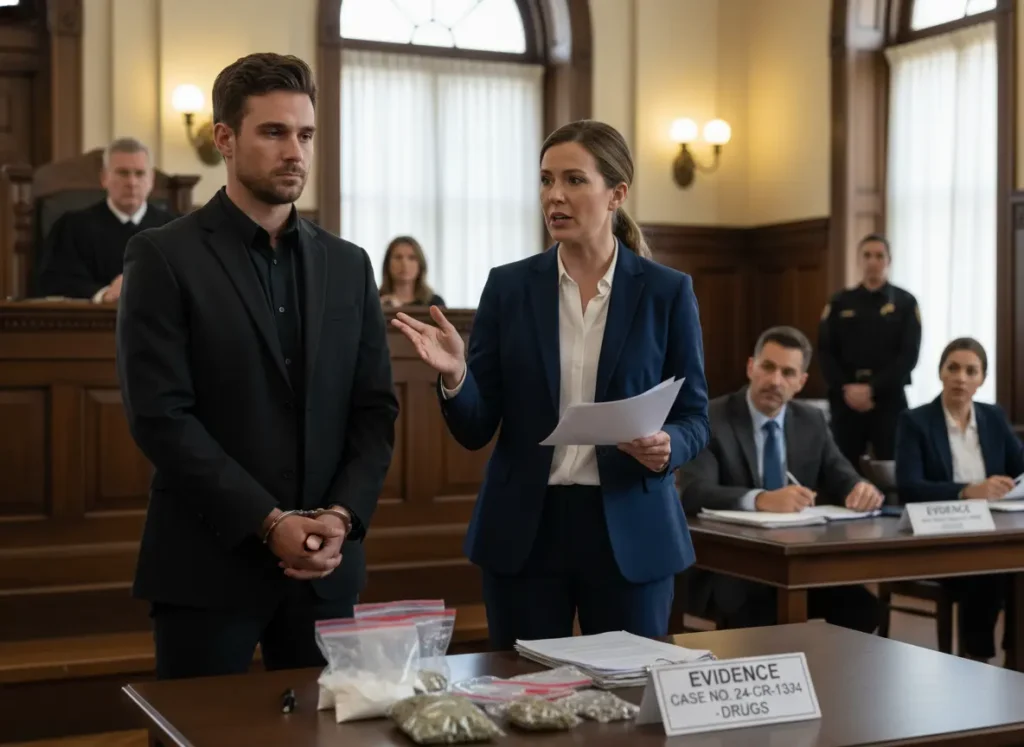
Relevant evidence may include police reports, body-camera or dash-camera footage, search warrants, consent evidence, laboratory reports, drug weight, photographs, communications, witness statements, and evidence showing who controlled the location where the substance was found.
Drug Possession and Distribution Defense in Springfield, IL
Drug cases can turn on knowing possession, intent, laboratory testing, the quantity or type of substance, police searches, statements, and the evidence linking a person to the drugs. Andrew Affrunti can review drug possession and distribution charges in Springfield, Sangamon County, and surrounding Central Illinois communities.
Drug Possession and Distribution Defense in Springfield, IL
Drug charges threaten your freedom, future, and reputation. Strong defense focuses on evidence, procedure, and leverage.
If you or a loved one is facing drug possession or distribution charges in Springfield, Illinois, speak with a defense attorney who will review your case, explain your options, and fight for the best possible outcome.