
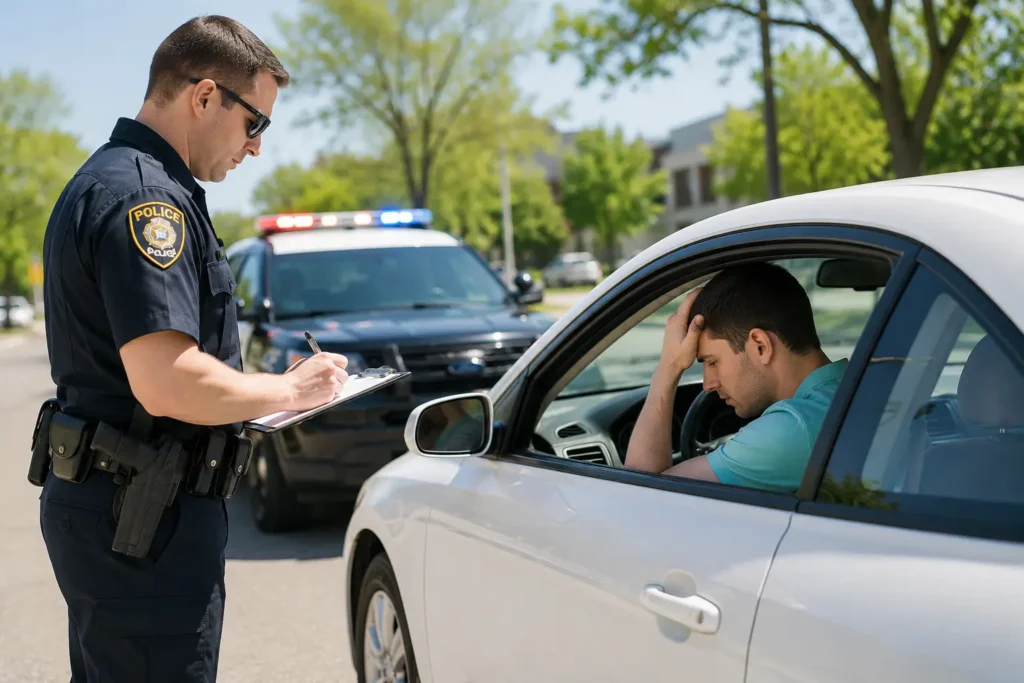
- What happens to your license after a DUI arrest in Illinois?
- DUI Arrest vs. DUI Conviction: How Each Affects Your Illinois License
- What Is a Statutory Summary Suspension After an Illinois DUI?
- When Does a DUI License Suspension Start in Illinois?
- Can You Drive During an Illinois DUI Suspension With an MDDP?
- Illinois MDDP and BAIID Requirements After a DUI
- When Does a DUI Conviction Lead to License Revocation in Illinois?
- DUI License Suspension vs. License Revocation in Illinois
- Can You Contest a DUI License Suspension in Illinois?
- How Drug-Related DUI Charges Affect Your License in Illinois
- How Additional Charges Can Affect an Illinois DUI Case
- How an Illinois DUI Affects CDL and Commercial Driving Privileges
- License and Criminal Consequences of an Illinois DUI
- How to Protect Your License After a DUI Arrest in Illinois
- How a DUI Attorney Can Challenge an Illinois License Suspension
- Speak With a Springfield DUI Defense Attorney Before Your Suspension Begins
- Frequently Asked Questions
- When does a DUI license suspension start in Illinois?
- Can your license be suspended before you are convicted of DUI in Illinois?
- Can you challenge a DUI license suspension in Illinois?
- Can you drive during a DUI suspension in Illinois?
- What is an MDDP in Illinois?
- What is the difference between DUI suspension and revocation in Illinois?
- Does winning a license suspension hearing dismiss the DUI charge?
- Does a DUI conviction revoke your license in Illinois?
A DUI arrest in Illinois can affect your license before your criminal case is over. Many drivers think they only lose their license if they are convicted, but that is not always true. Illinois has administrative suspensions that can begin after a DUI arrest, even while the court case is still pending.
That means you may be dealing with two problems at once: the criminal DUI charge in court and the license action through the Illinois Secretary of State. If the case also involves drug possession, theft, an accident, a suspended license, or another criminal allegation, the consequences can become even more complicated.
If you were arrested for DUI in Springfield, Sangamon County, or anywhere in Illinois, you need to understand what happens to your license, when the suspension starts, whether you may qualify for an MDDP, and how contesting the suspension may protect your ability to drive.
Quick Answer
What happens to your license after a DUI arrest in Illinois?
After a DUI arrest in Illinois, you may face a statutory summary suspension that is separate from the criminal DUI case. The suspension generally takes effect on the 46th day after notice. First-time offenders who qualify may be able to drive during the suspension with a Monitoring Device Driving Permit (MDDP) and a BAIID-equipped vehicle. You may also request a court hearing to challenge the statutory summary suspension. A DUI conviction can create separate license consequences, including revocation.
DUI Arrest vs. DUI Conviction: How Each Affects Your Illinois License
A DUI arrest and a DUI conviction are not the same thing. This matters because your license can be affected at different stages.
A DUI arrest may trigger an administrative suspension through the Illinois Secretary of State. A DUI conviction may trigger court-ordered revocation or other license consequences.
In simple terms:
- The administrative case affects your driving privileges after the arrest
- The criminal case determines whether you are convicted of DUI
- The Secretary of State handles license reinstatement and driving privileges
- The court handles the criminal charge, penalties, supervision, trial, or sentencing
This split process is where many drivers get blindsided. You can be fighting the criminal case and still have an administrative license issue moving at the same time.
What Is a Statutory Summary Suspension After an Illinois DUI?
Administrative Suspensions are license actions handled separately from the criminal DUI charge. In Illinois DUI cases, this is commonly called a statutory summary suspension.
A statutory summary suspension may happen if:
- You submit to breath, blood, or urine testing and test over the legal limit
- You refuse chemical testing
- You fail to complete testing
- The officer submits the required sworn report
- The Secretary of State processes the suspension
This suspension is not the same as a criminal conviction. It is based on the DUI arrest and testing issue.
The suspension may apply even if:
- It is your first DUI arrest
- You have not been convicted
- You plan to fight the DUI charge
- The criminal case is still pending
- You need your license for work, school, or family responsibilities
That is why early action matters. Waiting until the first court date can make the license problem harder to fix.
When Does a DUI License Suspension Start in Illinois?
In Illinois, a statutory summary suspension generally takes effect on the 46th day after notice of the suspension is given. This means the license action does not ordinarily begin on the day of the DUI arrest. The period before the effective date can be important for reviewing the paperwork, determining whether a challenge is appropriate, and evaluating eligibility for driving relief.
| Stage | What Happens |
|---|---|
| DUI arrest and notice | The driver may receive notice of a statutory summary suspension. |
| Before suspension begins | Review the DUI paperwork and determine whether the suspension should be challenged. |
| 46th day after notice | The statutory summary suspension generally takes effect. |
| Judicial challenge | A written request for a hearing may be filed to seek rescission of the suspension. |
| During eligible first-offender suspension | An MDDP with a BAIID may provide driving relief for qualifying drivers. |
| After suspension | Driving privileges may be restored after applicable requirements and reinstatement fees are satisfied, unless another suspension or revocation applies. |
During this period, you should:
- Save the DUI tickets and paperwork
- Review any Notice of Statutory Summary Suspension
- Write down what happened during the stop and arrest
- Note whether you took or refused testing
- Avoid missing court
- Speak with a DUI defense attorney quickly
The timeline is not the moment to procrastinate. Because the suspension timeline continues while the criminal case is pending, reviewing the notice and available options promptly is important.
Can You Drive During an Illinois DUI Suspension With an MDDP?
Getting Back on the Road (MDDP) is one of the most important topics for first-time DUI offenders in Illinois.
MDDP stands for Monitoring Device Driving Permit. If you are eligible, an MDDP may allow you to drive during the statutory summary suspension period, but only in a vehicle equipped with a BAIID.
BAIID stands for Breath Alcohol Ignition Interlock Device. It is installed in the vehicle and requires breath testing before and during driving.
If you qualify for an MDDP, it may allow you to drive during the statutory summary suspension in a properly equipped vehicle. Unlike a permit limited only to work or medical trips, an MDDP generally allows an eligible driver to travel to any location at any time, provided the required BAIID rules are followed.
An MDDP is not automatic for everyone. Eligibility depends on the case, prior history, type of suspension, and whether disqualifying factors apply.
Illinois MDDP and BAIID Requirements After a DUI
If you receive an MDDP, you generally must use a BAIID-equipped vehicle. The device prevents the vehicle from starting if alcohol is detected.
A BAIID may also require rolling tests while driving. Failing to follow the rules can create more problems with the Secretary of State.
Common BAIID problems include:
- Missed rolling retests
- Failed breath tests
- Driving a non-equipped vehicle
- Tampering allegations
- Failure to report for monitoring
- Device lockouts
- Missed installation deadlines
A violation can extend the suspension or create additional consequences. Do not treat the device like a casual inconvenience. BAIID requirements should be followed carefully because violations may create additional licensing consequences.
When Does a DUI Conviction Lead to License Revocation in Illinois?
Court-Ordered Revocation is different from an administrative suspension. If you are convicted of DUI in Illinois, your driver’s license may be revoked.
A suspension is temporary for a set period. A revocation is more serious because your driving privileges are taken away and you must go through reinstatement steps before you can legally drive again.
A DUI conviction may lead to:
- License revocation
- Reinstatement requirements
- Alcohol or drug evaluation
- Treatment or education
- Secretary of State hearing requirements
- Reinstatement fees
- Possible restricted driving permit process
- Increased insurance requirements
- Employment and CDL consequences
This is why avoiding a DUI conviction can be a major defense goal when possible.
DUI License Suspension vs. License Revocation in Illinois
Many people use suspension and revocation like they mean the same thing. They do not.
A suspension usually means your license is temporarily inactive for a specific period. Once the suspension ends and requirements are met, reinstatement may be possible.
A revocation means your driving privileges have been terminated. You must become eligible and then apply to get driving privileges restored. Reinstatement is not automatic.
This difference is critical in DUI cases because the administrative suspension and criminal DUI outcome may create separate license consequences.
Can You Contest a DUI License Suspension in Illinois?
Contesting the Suspension means challenging the statutory summary suspension in court. In Illinois, this is often done through a petition to rescind the statutory summary suspension.
A defense attorney may challenge issues such as:
- Whether the officer had a valid reason to stop the vehicle
- Whether there was probable cause for the DUI arrest
- Whether chemical testing was requested properly
- Whether warnings were given correctly
- Whether testing was conducted correctly
- Whether the officer’s sworn report was accurate
- Whether the refusal allegation is valid
- Whether paperwork was completed properly
If the court grants the petition, the statutory summary suspension may be rescinded. That can protect your license during the criminal case.
Contesting the suspension does not automatically dismiss the DUI charge. It only addresses the administrative license suspension. However, the same facts may also help the defense in the criminal DUI case. If you are dealing with both the criminal charge and a license suspension, a Springfield DUI defense attorney can review the traffic stop, chemical testing, suspension paperwork, and criminal case together.
How Drug-Related DUI Charges Affect Your License in Illinois
A DUI does not only involve alcohol. Illinois DUI cases may involve cannabis, controlled substances, prescription medication, or other impairing substances.
A drug-related DUI may overlap with:
- Drug possession
- Prescription medication issues
- Cannabis possession
- Blood or urine testing
- Field sobriety testing
- Search and seizure issues
- Vehicle searches
- Lab report delays
If police also claim they found drugs in the vehicle, you may face both DUI and drug possession charges. This can increase the pressure on your license, criminal record, and pretrial release conditions.
How Additional Charges Can Affect an Illinois DUI Case
A DUI arrest can become more complicated when additional criminal allegations arise from the same incident, such as drug possession, driving while suspended, leaving the scene of an accident, or resisting or obstructing an officer. These additional charges may create separate criminal consequences and should be evaluated alongside the DUI and license issues.
How an Illinois DUI Affects CDL and Commercial Driving Privileges
CDL drivers face higher risk after a DUI arrest. A DUI can affect both regular driving privileges and commercial driving privileges.
Even if the DUI happened in a personal vehicle, a CDL holder may face commercial license consequences. This can affect:
- Employment
- Route eligibility
- Insurance approval
- Employer reporting requirements
- Future driving jobs
- Income stability
CDL drivers should speak with a defense attorney quickly because a standard DUI strategy may not fully protect commercial driving concerns.
License and Criminal Consequences of an Illinois DUI
A DUI arrest can create more than one consequence at the same time.
Possible consequences include:
- Statutory summary suspension
- MDDP and BAIID requirements
- License revocation if convicted
- Court fines and costs
- DUI evaluation
- Alcohol or drug treatment
- Victim impact panel
- Probation or court supervision
- Jail exposure
- Increased insurance rates
- Employment issues
- CDL disqualification
- Criminal record issues
- Problems if connected to theft, drug possession, or other charges
The sooner you understand the license timeline, the better chance you have to avoid preventable damage.
How to Protect Your License After a DUI Arrest in Illinois
If you were arrested for DUI in Illinois, take these steps quickly:
- Save all DUI paperwork
- Do not miss court
- Check the suspension notice
- Write down what happened during the stop
- Note whether you took or refused testing
- Avoid driving if your license is suspended
- Ask whether you qualify for an MDDP
- Follow all BAIID rules if issued
- Avoid new charges
- Speak with a DUI defense attorney
Do not assume that because you feel fine to drive, you are legally allowed to drive. Driving during suspension can lead to a new criminal charge.
How a DUI Attorney Can Challenge an Illinois License Suspension
A Springfield DUI defense attorney can review both the criminal case and the license suspension.
An attorney may help by:
- Reviewing the stop
- Challenging probable cause
- Filing a petition to rescind the suspension
- Reviewing breath, blood, or urine testing
- Checking DUI paperwork
- Explaining MDDP eligibility
- Addressing BAIID issues
- Negotiating with prosecutors
- Challenging drug possession or related charges
- Working to avoid conviction where possible
- Protecting your license and record
DUI defense is not just about the courtroom. It is also about protecting your ability to drive legally.
Speak With a Springfield DUI Defense Attorney Before Your Suspension Begins
A DUI arrest can create both a criminal case and a separate driver’s license issue. Reviewing the suspension notice, traffic stop, chemical testing, MDDP eligibility, and available challenges early can help you understand your options before the suspension takes effect.
Contact a DUI Defense AttorneyFrequently Asked Questions
When does a DUI license suspension start in Illinois?
A statutory summary suspension generally takes effect on the 46th day after notice of the suspension is given.
Can your license be suspended before you are convicted of DUI in Illinois?
Yes. A statutory summary suspension is an administrative license action that is separate from the criminal DUI case, so it may take effect while the criminal charge is still pending.
Can you challenge a DUI license suspension in Illinois?
Yes. A driver may request a judicial hearing and seek rescission of the statutory summary suspension. The issues that may be challenged depend on the circumstances of the arrest, testing, notice, and other statutory requirements.
Can you drive during a DUI suspension in Illinois?
Some eligible first-time offenders may qualify for a Monitoring Device Driving Permit, or MDDP, which requires the use of a vehicle equipped with a Breath Alcohol Ignition Interlock Device.
What is an MDDP in Illinois?
An MDDP is a Monitoring Device Driving Permit that may allow an eligible first-time DUI offender to drive during a statutory summary suspension while using a properly installed BAIID.
What is the difference between DUI suspension and revocation in Illinois?
A suspension temporarily removes driving privileges for a specified period. A revocation terminates driving privileges and generally requires the driver to complete the applicable reinstatement process before driving privileges can be restored.
Does winning a license suspension hearing dismiss the DUI charge?
No. Rescinding the statutory summary suspension does not automatically dismiss the criminal DUI charge because the license proceeding and criminal case are separate matters.
Does a DUI conviction revoke your license in Illinois?
Illinois law provides for revocation of driving privileges following a DUI conviction. The requirements and length of the revocation depend on the driver’s record and circumstances of the case.