
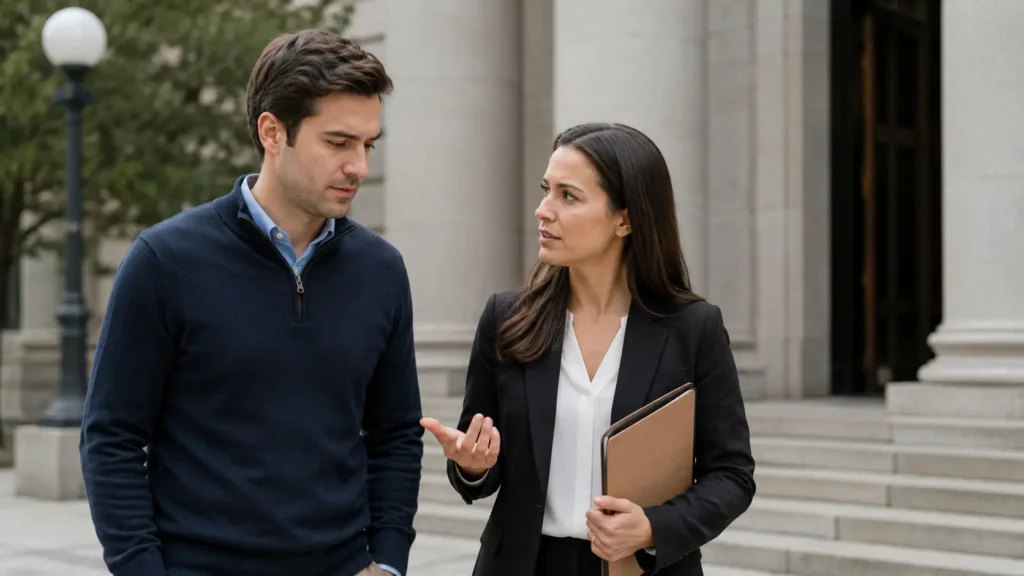
- What happens at your first misdemeanor court date in Illinois?
- What Counts as a Misdemeanor Charge in Illinois?
- Illinois Misdemeanor Penalties by Charge Class
- What To Do Before Your First Illinois Court Date
- What Not To Say at Your First Misdemeanor Court Date
- What Happens at Your First Misdemeanor Court Appearance?
- First Misdemeanor Court Date Timeline in Illinois
- What Happens After the First Misdemeanor Court Date?
- Should You Plead Guilty at Your First Court Appearance?
- Court Supervision vs Conviction in an Illinois Misdemeanor Case
- Common Mistakes Before a First Misdemeanor Court Date
- When Should You Contact a Criminal Defense Attorney?
- Facing a Misdemeanor Charge in Springfield?
- Related Misdemeanor and Criminal Defense Resources
- Common Questions About Illinois Misdemeanor Charges
- What happens at a first misdemeanor court date in Illinois?
- What is the most serious misdemeanor class in Illinois?
- Can you go to jail for a misdemeanor in Illinois?
- Should I plead guilty at my first misdemeanor court date?
- Can I get court supervision for an Illinois misdemeanor?
- Will my misdemeanor case be finished at the first court date?
- What should I bring to my first misdemeanor court date?
- Do I have the right to a lawyer for an Illinois misdemeanor charge?
Quick Answer
What happens at your first misdemeanor court date in Illinois?
At a first Illinois misdemeanor court appearance, the judge may identify the charge, address your right to counsel, review any existing pretrial release conditions, and schedule the next stage of the case. Many misdemeanor cases are not resolved at the first hearing because police reports, video, witness statements, test results, or other discovery may still need to be reviewed before major plea or defense decisions are made.
What Counts as a Misdemeanor Charge in Illinois?
A misdemeanor is a criminal offense that is less serious than a felony but more serious than a petty offense.
Illinois uses three main misdemeanor classifications:
- Class A misdemeanor
- Class B misdemeanor
- Class C misdemeanor
Examples can include certain DUI offenses, battery, theft allegations, criminal trespass, disorderly conduct, aggravated speeding, and some driving-while-suspended charges. The exact classification depends on the statute, circumstances, prior history, and any aggravating factors.
The misdemeanor class matters because it determines the maximum ordinary jail exposure and helps define available sentencing options.
Illinois Misdemeanor Penalties by Charge Class
Misdemeanor penalties depend on the charge class, facts, prior record, and final court outcome. A misdemeanor is less serious than a felony, but it can still carry jail exposure, fines, probation, court supervision, and a criminal record.
| Class | Possible Jail | Important Point |
|---|---|---|
| Class A misdemeanor | Less than 1 year | Most serious standard misdemeanor class in Illinois. |
| Class B misdemeanor | Up to 6 months | Still a criminal charge and can create record consequences. |
| Class C misdemeanor | Up to 30 days | Lowest misdemeanor class, but still part of a criminal case. |
What To Do Before Your First Illinois Court Date
Before your first court date, you should review every document you received from the police or the court. This includes your citation, complaint, charging document, pretrial release paperwork, release conditions, or notice to appear.
You should check:
- The charge listed against you
- The court date
- The courtroom location
- Any no-contact order
- Any travel or release restrictions
- Any required testing, reporting, or check-ins
- Whether you must appear in person
- Confirm whether the case is being handled in person, remotely, or under another court instruction.
Do not ignore the date. Missing court creates more problems and may lead to a warrant. If this is your first criminal case, review what happens after a first arrest in Springfield, Illinois.
Documents to Organize Before Court
- Citation, complaint, or charging document
- Release paperwork
- Court notice
- Police paperwork
- Relevant photographs or video
- Messages related to the case
- Witness names and contact information
- Employment, school, treatment, or counseling records when relevant
What Not To Say at Your First Misdemeanor Court Date
Do not explain the facts of the case in open court unless your attorney advises you to speak. Many people want to tell the judge what happened, but statements made in court may affect the case, plea negotiations, or future hearings.
Be respectful and answer basic procedural questions clearly. Avoid volunteering explanations about the alleged offense, intent, witnesses, drugs, alcohol, weapons, or disputed facts unless your attorney has advised you to address them.
What Happens at Your First Misdemeanor Court Appearance?
The first court date depends on how the case was filed and whether the defendant was arrested, cited, or given a notice to appear. The court may identify the charge, address representation, review existing release conditions, and schedule the next hearing.
The case usually does not need to be resolved at that appearance. Discovery and other evidence may still need to be obtained and reviewed.
If you have questions about restrictions while the case is pending, review Illinois pretrial release and no-cash-bail rules.
First Misdemeanor Court Date Timeline in Illinois
The first court date does not always resolve the case. In many misdemeanor cases, the first appearance is used to confirm the charge, address rights and release issues, and set the case for the next step.
| Court Issue | What May Happen | Why It Matters |
|---|---|---|
| Charge | The filed misdemeanor charge is identified or reviewed. | The offense and class determine potential penalties. |
| Representation | The court addresses the right to counsel and whether counsel has been retained or should be appointed when legally required. | Legal advice matters before entering a plea or waiving rights. |
| Release conditions | Existing conditions may be reviewed or clarified. | Violations can create additional court problems. |
| Discovery | The defense may still need police reports, recordings, testing, or witness evidence. | Evidence should be reviewed before major case decisions. |
| Next hearing | A status, pretrial, discovery, motion, or other court date may be scheduled. | Missing the next date can create additional consequences. |
What Happens After the First Misdemeanor Court Date?
After the first appearance, a misdemeanor case may be scheduled for discovery, a status hearing, pretrial conference, motion hearing, plea negotiations, trial setting, or another procedural date.
The next step depends on the charge, evidence, pending discovery, court schedule, and whether legal issues must be resolved before a plea or trial.
Continue following all release conditions and confirm every future court date before leaving court or relying on an online docket.
Should You Plead Guilty at Your First Court Appearance?
A guilty plea should not be entered only because the first court date feels routine or the charge is called a misdemeanor.
Before deciding whether to plead guilty, consider:
- The prosecution’s evidence
- Possible motions or defenses
- The misdemeanor class
- Jail and sentencing exposure
- Court supervision eligibility
- Driver’s license consequences
- Employment or professional licensing issues
- Immigration consequences when applicable
- Record-sealing or expungement implications
Some cases resolve quickly, while others require discovery or negotiation first. If negotiations begin, learn how plea bargains work in Illinois criminal cases.
Court Supervision vs Conviction in an Illinois Misdemeanor Case
Court supervision is a disposition available for certain Illinois offenses when statutory requirements are satisfied. It is not available for every misdemeanor and is not guaranteed simply because the defendant has no prior record.
When court supervision is successfully completed, the defendant is generally discharged and the proceedings are dismissed without an adjudication of guilt, subject to the applicable statute and offense-specific restrictions.
Before accepting supervision or a conviction-based plea, review whether the particular offense qualifies and what the disposition means for your criminal record, license, employment, immigration status, firearm rights, or future cases.
Common Mistakes Before a First Misdemeanor Court Date
Small mistakes before the first court date can make a misdemeanor case harder to manage. The safest approach is to prepare early, follow every court order, and avoid making statements or decisions before reviewing the evidence.
Consider speaking with a criminal defense attorney before the first court date when the charge carries jail exposure, release conditions affect your daily life, you have prior criminal or traffic history, evidence may need to be challenged, a professional or commercial driver’s license could be affected, or you are being asked to make a plea decision.
Early review may also help identify missing discovery, court deadlines, supervision eligibility, or legal issues before important decisions are made.
When Should You Contact a Criminal Defense Attorney?
Consider speaking with a criminal defense attorney before the first court date when possible, especially when:
- Jail is possible
- Release conditions affect your family or job
- You have prior criminal or traffic history
- The case involves DUI, violence, theft, drugs, or weapons
- A professional license or CDL could be affected
- You are unsure whether to accept a plea
- You believe police obtained evidence unlawfully
Early review gives the defense time to examine the charge and available evidence before major decisions are made. If you already missed a hearing, review what happens after missing an Illinois court date.
Facing a Misdemeanor Charge in Springfield?
A misdemeanor case can involve jail exposure, release conditions, court supervision eligibility, evidence that still needs review, and record consequences that may not be obvious at the first hearing. Reviewing the charge and court paperwork before making major decisions can help clarify what happens next.
Schedule a Confidential ConsultationRelated Misdemeanor and Criminal Defense Resources
- Criminal Defense Attorney in Springfield, IL
- First Arrest in Springfield, Illinois
- SAFE-T Act and Pretrial Release in Sangamon County
- Unknown Warrant in Illinois: What Happens Next?
Common Questions About Illinois Misdemeanor Charges
What happens at a first misdemeanor court date in Illinois?
The court may identify the charge, address the right to counsel, review existing pretrial release conditions, and schedule the next stage of the case. Many misdemeanor cases are not resolved at the first hearing because discovery and evidence may still need to be reviewed.
What is the most serious misdemeanor class in Illinois?
Class A is the most serious standard misdemeanor classification in Illinois. A Class A misdemeanor may carry a jail sentence of less than one year, subject to the specific offense and applicable sentencing rules.
Can you go to jail for a misdemeanor in Illinois?
Yes. Illinois misdemeanor offenses can carry jail exposure. The maximum ordinary jail term depends on whether the offense is classified as Class A, Class B, or Class C and whether another statute provides different penalties.
Should I plead guilty at my first misdemeanor court date?
Before entering a guilty plea, understand the charge, evidence, possible defenses, sentencing exposure, supervision eligibility, plea terms, and potential consequences for your record, license, employment, immigration status, or other legal interests.
Can I get court supervision for an Illinois misdemeanor?
Court supervision may be available for some misdemeanor offenses when the statutory requirements are satisfied, but certain offenses and circumstances make supervision unavailable.
Will my misdemeanor case be finished at the first court date?
Not necessarily. Many cases continue to later hearings so discovery can be reviewed, motions can be addressed, negotiations can occur, or the case can be prepared for trial.
What should I bring to my first misdemeanor court date?
Bring your charging document, court notice, pretrial release paperwork, relevant police paperwork, evidence in your possession, witness information, and any documents your attorney has asked you to provide.
Do I have the right to a lawyer for an Illinois misdemeanor charge?
Defendants have the right to counsel in criminal proceedings as provided by Illinois law. At the initial appearance, the court advises the defendant of the right to counsel, and qualifying indigent defendants may receive appointed counsel.