
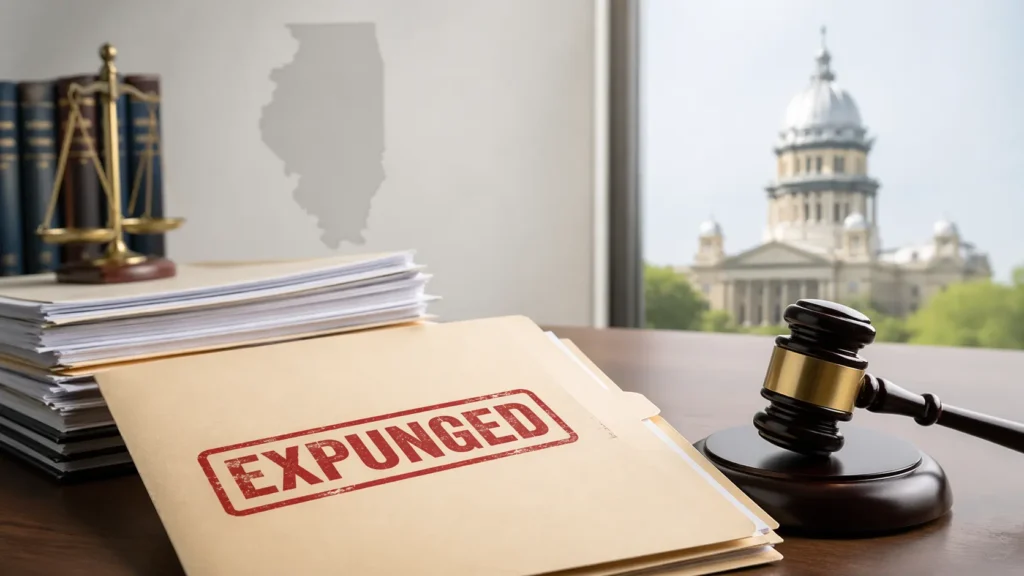
- Can you clear your criminal record in Illinois?
- What Is Expungement in Illinois?
- What Is Record Sealing in Illinois?
- Expungement vs Sealing in Illinois
- How Expungement Removes Eligible Criminal Records in Illinois
- How Record Sealing Limits Public Access to Criminal Records
- What Changed Under the Illinois Clean Slate Act?
- Automatic Sealing vs Filing a Petition in Illinois
- Can a First Arrest Be Cleared in Illinois?
- Illinois Expungement and Sealing Eligibility Checklist
- Who Can Seal a Criminal Record in Illinois?
- Criminal Offenses That Cannot Be Sealed Under Illinois Law
- What Records You Need Before Filing for Expungement or Sealing
- How Expungement or Sealing Can Affect Jobs, Housing, and Licensing
- Common Mistakes That Delay Expungement or Sealing
- Why Expungement or Sealing Petitions Get Denied
- How Does the Expungement and Sealing Process Work in Sangamon County?
- Step One: Obtain Your Complete Criminal History
- Step Two: Review Each Charge for Eligibility
- Step Three: Prepare the Current Statewide Forms
- Step Four: File in the Correct County
- Step Five: Provide Required Notice
- Step Six: Respond to an Objection or Attend a Hearing
- Step Seven: Verify That the Order Was Implemented
- Not Sure Whether Your Illinois Record Can Be Cleared?
- Related Articles
- Frequently Asked Questions About Expungement and Record Sealing in Illinois
- What is the difference between expungement and sealing in Illinois?
- Does the Illinois Clean Slate law automatically clear records now?
- Can a felony be expunged in Illinois?
- How long do you have to wait to seal a criminal record in Illinois?
- Can a dismissed case be expunged or sealed in Illinois?
- Can sealed records still be seen by law enforcement?
- Can an expungement or sealing petition be denied?
- How do I know if my Illinois criminal record qualifies?
A criminal record may affect employment, housing, professional licensing, education, and background checks even when an arrest did not lead to a conviction. Illinois law allows some records to be expunged or sealed, but eligibility depends on the outcome and legal classification of each individual case.
Expungement and sealing are not interchangeable. Some arrests, dismissals, acquittals, supervision dispositions, and convictions may qualify for relief, while others are excluded or subject to waiting periods and additional requirements.
This guide explains the general differences between expungement and sealing, how eligibility is reviewed, and how a petition may proceed for a case from Springfield or Sangamon County.
Quick Answer
Can you clear your criminal record in Illinois?
Possibly. Illinois allows some criminal records to be expunged and others to be sealed. Eligibility depends on the outcome of each case, the offense, whether there was a conviction or supervision, completion of the sentence, applicable waiting periods, and statutory exclusions. Expungement and sealing are different forms of relief, so the full criminal record should be reviewed before deciding which option applies.
What Is Expungement in Illinois?
Expungement is a legal process that removes eligible arrest and court records from ordinary access under Illinois law. It generally provides broader relief than sealing, but fewer case outcomes qualify.
Eligibility often depends on whether the case ended without a conviction, whether supervision was successfully completed, whether a required waiting period has passed, and whether another conviction affects eligibility.
An expungement order does not necessarily erase information held by every private database or non-Illinois agency. After relief is granted, additional follow-up may be needed when outdated information continues to appear.
What Is Record Sealing in Illinois?
Record sealing restricts eligible criminal records from general public access. A sealed record may no longer appear in many ordinary public searches and employment background checks, but it is not destroyed.
Courts, law enforcement agencies, and certain authorized employers or licensing bodies may still have access under Illinois law. The practical effect therefore depends partly on who is conducting the background check and why.
Sealing is available for a broader group of case outcomes than expungement, but specific offenses and circumstances remain excluded.
Expungement vs Sealing in Illinois
Expungement and sealing are two different ways to clear or limit access to criminal records in Illinois.
Expungement removes eligible records completely as if they never existed. Sealing hides records from most employers and background checks, but law enforcement and courts may still access them.
Eligibility depends on the outcome of the case, the type of offense, waiting periods, and whether any disqualifying convictions exist.
| Record Outcome | Potential Relief |
|---|---|
| Arrest with no charge | May qualify for expungement or sealing |
| Dismissed case | May qualify for expungement or sealing |
| Acquittal | May qualify for expungement or sealing |
| Successfully completed supervision | May qualify depending on the offense and waiting period |
| Eligible conviction | Usually evaluated for sealing rather than ordinary expungement |
| Statutorily excluded offense | May not qualify for the requested relief |
How Expungement Removes Eligible Criminal Records in Illinois
Expungement is a statutory process that removes eligible arrest and court records in the manner required by Illinois law. It generally provides broader relief than sealing, but fewer records qualify.
Expungement is the strongest form of relief available. It is also the most restricted. Not every arrest or conviction qualifies.
How Record Sealing Limits Public Access to Criminal Records
Record sealing does not destroy the record. It makes it inaccessible to the general public, including most employers and landlords. However, sealed records remain visible to law enforcement, courts, and certain licensing agencies.
Sealing covers a broader range of offenses than expungement. For most people with convictions on their record, sealing is the realistic path to relief.
What Changed Under the Illinois Clean Slate Act?
Illinois has enacted a broader automatic-sealing framework, but the new system does not begin until January 1, 2029.
Beginning on that date, qualifying records may become eligible for automatic sealing without an individual petition, subject to statutory exclusions and timing requirements. Older records will be processed in phases, with implementation deadlines extending into later years.
Until that system takes effect and a specific record is actually processed, people should not assume that an eligible record has already been automatically sealed. Petition-based expungement and sealing remain important under current Illinois law.
Automatic Sealing vs Filing a Petition in Illinois
As of 2026, most people seeking record relief still need to determine whether they qualify for the existing petition-based expungement or sealing process.
Illinois’ new broader automatic-sealing framework is scheduled to begin January 1, 2029. Even after implementation begins, not every offense or record will qualify automatically, and some exclusions will continue to apply.
If relief is available now through the existing petition process, there may be no reason to wait for future automatic-sealing implementation.
Can a First Arrest Be Cleared in Illinois?
A first arrest does not automatically mean a permanent criminal record. Depending on how the case ended, the record may qualify for expungement or sealing.
Eligibility depends on:
- Whether charges were filed
- Whether the case was dismissed
- Whether you received supervision
- Whether there was a conviction
- Whether waiting periods have passed
Reviewing your record early can help you understand whether clearing options are available.
Can You Expunge an Arrest Without a Conviction in Illinois?
If you were arrested but not convicted, you are generally eligible for expungement regardless of the charge. This includes cases that were dismissed, charges where you were found not guilty, and situations where the prosecutor declined to file charges.
Waiting periods apply in some situations. For arrests that did not result in charges, you may petition immediately. Arrests or charges that end without a conviction may qualify for relief, but the exact expungement or sealing rules depend on the disposition. Waiting periods are more commonly relevant to supervision dispositions and conviction-based sealing, so the final court outcome should be reviewed before filing.
If the arrest was recent or you are unsure what happens next, read more about what happens after a first arrest in Springfield, Illinois.
How Court Supervision Can Lead to Expungement Eligibility
Successful completion of court-ordered supervision (not a conviction under Illinois law) makes you eligible for expungement after a waiting period. Successfully completed supervision may qualify for expungement or sealing depending on the offense and statutory requirements. Some supervision records are subject to a waiting period, so the specific disposition and offense should be checked before filing.
If the case involved missed court dates or unresolved court issues, review this guide on unknown warrants in Illinois.
What Criminal Convictions Qualify for Expungement in Illinois?
A limited category of convictions can be expunged in Illinois, including certain minor cannabis-related offenses under the Cannabis Regulation and Tax Act, and convictions for offenses that have since been decriminalized or vacated by law.
Illinois Expungement and Sealing Eligibility Checklist
Before filing for expungement or sealing, review the basic eligibility factors. A person may need to check the case outcome, waiting period, charge type, prior record, and whether the offense is excluded under Illinois law.
- Was the case dismissed, acquitted, vacated, or resolved without a conviction?
- Was the sentence, supervision, probation, or parole fully completed?
- Has the required waiting period passed?
- Is the offense eligible for expungement or only sealing?
- Is the offense excluded from sealing under Illinois law?
- Are there cases in more than one county?
- Do you have a complete copy of your criminal record?
Most other convictions are not eligible for expungement. They may be eligible for sealing instead.
Who Can Seal a Criminal Record in Illinois?
Illinois sealing law covers a broader range of records than expungement. Eligible records may include non-conviction cases, supervision dispositions, misdemeanor convictions, and many felony convictions unless specifically excluded by statute.
Timing depends on the record type. Under the current law, some supervision records generally become eligible after two years, while many eligible conviction records are subject to a three-year period after termination of the sentence, subject to statutory exceptions.
Criminal Offenses That Cannot Be Sealed Under Illinois Law
Some Illinois convictions are excluded from sealing under Section 5.2. Eligibility must be checked against the current statute because exclusions can depend on the offense, victim, registration requirements, and other statutory classifications.
Domestic battery and violation of an order of protection convictions cannot be sealed. Domestic battery cases may also impact record sealing eligibility under Illinois domestic battery laws.
Sex offenses and offenses requiring registration on the sex offender registry cannot be sealed. DUI convictions cannot be sealed. Offenses involving minor victims generally cannot be sealed. Reckless driving convictions in certain circumstances are also excluded. Some DUI cases may affect eligibility under Illinois DUI laws.
If your record includes any of these offenses, expungement and sealing are not available for those specific charges. Other charges on the same record may still be eligible.
What Records You Need Before Filing for Expungement or Sealing
Before filing an expungement or sealing petition, gather complete court and arrest information. Missing or inaccurate case details can delay the process or lead to a denied petition.
- Case number
- Arresting agency
- Charge name and statute if available
- Case outcome
- Date the case ended
- Proof that sentence, supervision, probation, or parole was completed
- Records from every county where charges appear
How Expungement or Sealing Can Affect Jobs, Housing, and Licensing
Expungement and sealing restore your ability to honestly answer “no” to questions about arrests or convictions on most job applications, housing applications, and professional licensing forms. Illinois law prohibits most employers from asking about expunged records, and you are legally permitted to deny that the arrest or charge ever occurred.
For professional licenses governed by the Illinois Department of Financial and Professional Regulation, sealed records may still be considered. An attorney can advise you on how your specific record interacts with your licensing situation before you apply.
Common Mistakes That Delay Expungement or Sealing
Common problems include:
- Filing before a required waiting period has passed
- Using an incomplete criminal history
- Listing the wrong disposition or offense
- Assuming every charge in one case has the same eligibility
- Using outdated forms
- Filing in the wrong county
- Leaving out an arresting agency or case number
- Assuming a record was automatically cleared without verifying it
- Failing to respond to an objection or court notice
- Expecting private background websites to update immediately
A denied or incomplete filing may create additional expense and delay. Review the full record and current forms before submitting the request. If the record began with a recent criminal case, review what happens after you are charged with a crime in Illinois.
When a case is still pending, record clearing is usually not the immediate step. Learn whether a criminal defense attorney may challenge or seek reduction of pending charges.
If your criminal case is still active, record clearing may not be the immediate step. Understanding what happens after being charged can help protect your options.
Why Expungement or Sealing Petitions Get Denied
A petition may run into problems when:
- The requested record is not eligible
- The petition is filed before an applicable waiting period ends
- The case number or disposition is incorrect
- The wrong type of relief is requested
- Required information or notice is missing
- The filing uses outdated or incomplete forms
- An objection is filed and not properly addressed
A denial does not necessarily mean the record can never qualify. In some cases, the issue can be corrected or the person may become eligible later.
How Does the Expungement and Sealing Process Work in Sangamon County?
Step One: Obtain Your Complete Criminal History
Collect records for every arrest and criminal case, including matters from outside Sangamon County. Useful documents may include police records, court dispositions, supervision-completion records, probation information, and an Illinois criminal-history report.
Step Two: Review Each Charge for Eligibility
The analysis should identify the exact statute, final disposition, sentence-completion date, waiting period, later convictions, and any exclusion affecting that charge.
Do not assume the entire record qualifies because one charge was dismissed. If your record includes multiple cases, convictions, supervision dispositions, or cases from different counties, a criminal defense attorney in Springfield, Illinois can review the dispositions and determine which records may qualify for expungement, sealing, or another form of relief.
Step Three: Prepare the Current Statewide Forms
Illinois Courts publishes approved statewide forms for adult expungement and sealing. The current form set should be used because old forms may no longer match filing requirements.
Step Four: File in the Correct County
A petition is generally filed in the county connected to the arrest or criminal case. A person with cases in multiple counties may need separate filings.
Step Five: Provide Required Notice
The circuit clerk distributes or serves the filing as required by the current process. Prosecutors, law enforcement agencies, or other authorized parties may have an opportunity to object.
Step Six: Respond to an Objection or Attend a Hearing
Some requests may be decided without a contested hearing. When an objection is filed or the judge requests more information, the petitioner may need to present records and explain why the statutory requirements are satisfied.
Step Seven: Verify That the Order Was Implemented
After relief is granted, keep certified copies of the order and later check whether court, law enforcement, and private background-check records have been updated.
For a broader overview of current record-clearing options, review whether you may be able to clear a criminal record through Illinois expungement or sealing.
Not Sure Whether Your Illinois Record Can Be Cleared?
Expungement and sealing eligibility can depend on the outcome of every case, the offense involved, waiting periods, sentence completion, later convictions, and statutory exclusions. Reviewing the complete record can help determine whether expungement, sealing, or another available process may apply.
Schedule a Confidential ConsultationRelated Articles
- Criminal Case Timeline in Illinois
- Can You Expunge a DUI in Illinois?
- First Arrest in Illinois: What Happens Next
Frequently Asked Questions About Expungement and Record Sealing in Illinois
What is the difference between expungement and sealing in Illinois?
Expungement provides broader removal of eligible records, while sealing generally restricts eligible records from public access without eliminating all access by law enforcement, courts, and other authorized entities.
Does the Illinois Clean Slate law automatically clear records now?
Not broadly as of 2026. Illinois has enacted a new automatic-sealing framework scheduled to begin January 1, 2029, with phased implementation for older records. Existing petition-based expungement and sealing procedures remain important before that system takes effect.
Can a felony be expunged in Illinois?
Most ordinary felony convictions are not eligible for traditional expungement, although specific statutory exceptions exist. Many felony convictions may instead qualify for sealing if they are not excluded by Illinois law.
How long do you have to wait to seal a criminal record in Illinois?
The waiting period depends on the type of record. Some supervision records are generally subject to a two-year period, while many eligible conviction records are subject to a three-year period after termination of the sentence, subject to statutory exceptions.
Can a dismissed case be expunged or sealed in Illinois?
Dismissed cases may qualify for record relief depending on the disposition and statutory requirements. Non-conviction records are treated differently from supervision and conviction records, so the final court outcome should be reviewed before filing.
Can sealed records still be seen by law enforcement?
Yes. Sealing generally restricts public access, but law enforcement, courts, and certain other authorized entities may still access sealed records in circumstances permitted by Illinois law.
Can an expungement or sealing petition be denied?
Yes. Problems may include ineligible records, an incomplete filing, incorrect case information, an unmet waiting period, missing notice, or an objection. A denial does not always mean the record can never qualify.
How do I know if my Illinois criminal record qualifies?
Review the complete criminal history, including every arrest, case number, disposition, sentence, supervision or probation status, waiting period, and offense classification. Eligibility must usually be evaluated record by record.