
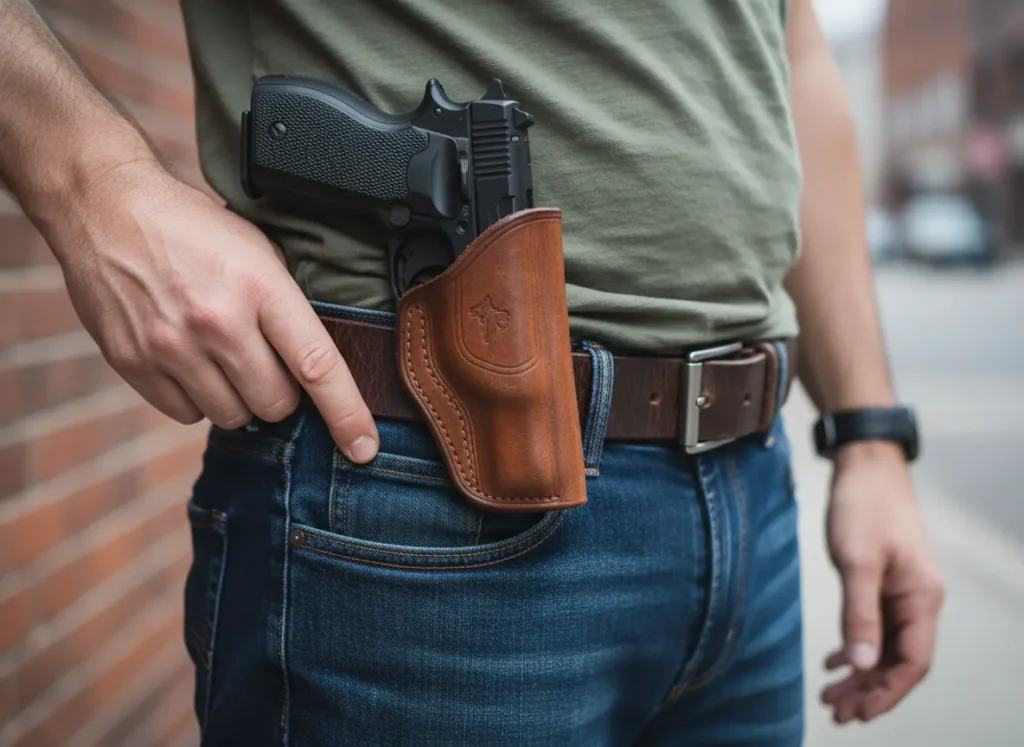
- Illinois Firearm Carry Requirements at a Glance
- Understanding the Difference Between a FOID Card and a CCL
- FOID Card vs Concealed Carry License: Which One Do You Need?
- When You Can Legally Carry a Firearm in Illinois
- Carrying a Firearm on Your Person
- What Are Illinois Firearm Transport Laws?
- Can You Keep a Gun in Your Car in Illinois?
- What to Do During a Traffic Stop
- Places Where Firearms Are Prohibited in Illinois
- Common Firearm Mistakes That Lead to Criminal Charges
- What Charges Can Result From Carrying a Gun Illegally in Illinois?
- Charged With Carrying or Transporting a Gun in Illinois?
- Common Questions About Illinois Gun Carry Laws
- Can you legally carry a gun in Illinois?
- What is the difference between a FOID card and a Concealed Carry License?
- Can you keep a loaded gun in your car in Illinois?
- How can you legally transport a firearm without a CCL in Illinois?
- Do you have to tell police you have a gun during an Illinois traffic stop?
- Where can you not carry a concealed handgun in Illinois?
- Can police search my car just because they see a firearm?
Quick Answer
Yes, firearms can be legally possessed and carried in Illinois, but different rules apply to possession, concealed carry, transportation, and prohibited locations. Illinois residents generally need valid FOID authority to possess firearms or ammunition, while carrying a concealed handgun in public generally requires an Illinois Concealed Carry License. A firearm may also be transported without a CCL when one of Illinois’ lawful transportation conditions is satisfied.
Illinois allows qualified individuals to carry concealed handguns, but the rules depend on licensing, eligibility, firearm type, location, and how the gun is transported. Having a FOID card does not automatically authorize someone to carry a loaded firearm in public.
A person may face a weapons investigation even when the violation results from confusion about a vehicle, prohibited location, expired credential, or difference between possession and concealed carry. Understanding the distinction between a FOID card and a Concealed Carry License can help prevent a serious mistake.
This guide explains the general Illinois rules for carrying and transporting a handgun, what may happen during a traffic stop, and when a firearm-carry issue can lead to criminal charges.
Illinois Firearm Carry Requirements at a Glance
| Situation | General Illinois Rule | Main Issue |
|---|---|---|
| Possessing firearms or ammunition | Illinois residents generally need valid FOID or qualifying Illinois CCL authority unless an exemption applies. | FOID eligibility and prohibited-person status. |
| Carrying a concealed handgun | Generally requires a valid Illinois Concealed Carry License. | CCL status and prohibited locations. |
| Transporting without concealed carry authority | Illinois recognizes several lawful transportation methods, including a firearm that is broken down, not immediately accessible, or unloaded and enclosed in a qualifying case or container under the applicable FOID rules. | Which statutory transportation exception applies. |
| Carrying in a prohibited location | A valid CCL does not authorize concealed carry everywhere. | Whether the specific location falls under Section 65 or another prohibition. |
Understanding the Difference Between a FOID Card and a CCL
Illinois firearm rules commonly involve two separate credentials: the Firearm Owner’s Identification Card and the Concealed Carry License.
A Firearm Owner’s Identification Card, commonly called a FOID card, generally allows an eligible Illinois resident to acquire or possess firearms and ammunition. A FOID card does not by itself authorize the cardholder to carry a loaded, concealed handgun in public.
An Illinois Concealed Carry License, commonly called a CCL, authorizes an eligible licensee to carry a concealed handgun subject to the Firearm Concealed Carry Act. The person must continue to meet applicable eligibility requirements and comply with prohibited-location, vehicle, and conduct restrictions.
Exceptions and special rules may apply based on residency, occupation, property, firearm type, or other circumstances. The exact statute and facts should be reviewed rather than deciding legality solely from whether someone possessed a physical FOID card or CCL.
| Requirement | FOID Card | Concealed Carry License |
|---|---|---|
| Main purpose | Generally permits eligible Illinois residents to acquire or possess firearms and ammunition. | Generally permits an eligible licensee to carry a concealed handgun. |
| Loaded concealed carry in public | Not authorized by a FOID card alone. | Generally authorized, subject to statutory restrictions. |
| Vehicle carry | The firearm must comply with applicable transport requirements. | A concealed handgun may generally be carried in a vehicle, subject to restrictions. |
| Prohibited locations | Possession may still be restricted by other state or federal laws. | A CCL does not override prohibited-location rules. |
FOID Card vs Concealed Carry License: Which One Do You Need?
| Your Situation | Likely Requirement |
|---|---|
| You want to own or possess a firearm | A valid FOID card is generally required for eligible Illinois residents. |
| You want to carry a concealed handgun in public | You generally need both FOID eligibility and an Illinois Concealed Carry License. |
| You want to transport an unloaded firearm | Follow Illinois firearm transport requirements. |
| You carry a firearm during daily activities | Review CCL requirements and prohibited-location rules. |
When You Can Legally Carry a Firearm in Illinois
A valid Illinois Concealed Carry License generally allows an eligible licensee to carry a concealed handgun on or about the person or within a vehicle, subject to prohibited-location and other statutory restrictions.
A FOID card alone does not provide the same concealed-carry authority.
However, Illinois law provides several separate methods by which a firearm may be lawfully transported without relying on concealed-carry authority. Depending on the circumstances, the firearm may qualify when it is:
- Broken down in a non-functioning state; or
- Not immediately accessible; or
- Unloaded and enclosed in a qualifying case or container by a person with valid FOID authority.
These are alternative statutory methods. The law should not be summarized as universally requiring a firearm to be unloaded, enclosed, and inaccessible at the same time.
Carrying a Firearm on Your Person
A valid Illinois Concealed Carry License generally permits the licensee to carry a loaded or unloaded handgun completely or mostly concealed from public view. The law applies to a concealed handgun carried on or about the person or within a vehicle.
A FOID card alone does not grant the same authority. Someone who possesses a firearm without a CCL must ensure that the firearm is handled and transported in a manner permitted by Illinois law.
The legality of carrying may also depend on whether the license remains valid, whether the person is eligible to possess firearms, whether the handgun is covered by other restrictions, and whether the person enters a prohibited location. A CCL is not blanket permission to carry every firearm in every place.
What Are Illinois Firearm Transport Laws?
Illinois recognizes several ways a firearm may lawfully be transported.
Depending on the applicable statute and circumstances, the firearm may be:
- Broken down in a non-functioning state; or
- Not immediately accessible; or
- Unloaded and enclosed in a case, firearm carrying box, shipping box, or other qualifying container by a person with valid FOID authority; or
- Carried or possessed in accordance with the Illinois Firearm Concealed Carry Act by a person with valid concealed carry authority.
These are alternatives rather than requirements that must all be satisfied simultaneously.
Vehicle firearm cases may also depend on the person’s eligibility, firearm type, location, and whether another state or federal restriction applies.
Can You Keep a Gun in Your Car in Illinois?
Whether you can keep a firearm in your vehicle depends on your licensing status, how the firearm is stored, and whether you are following Illinois transportation rules.
A person with a valid Concealed Carry License may generally carry a concealed handgun in a vehicle, subject to restrictions. Someone without a CCL must follow firearm transportation requirements, including rules regarding unloading, cases, and accessibility.
Vehicle storage mistakes are common reasons people face firearm investigations. A firearm found during a traffic stop may raise questions about possession, licensing, and whether police conducted a lawful search.
What to Do During a Traffic Stop
During an investigative stop, including a traffic stop, an Illinois concealed-carry licensee must disclose that they possess a concealed firearm if the officer asks. The licensee must also present the concealed carry license upon request and identify the firearm’s location when directed.
Keep your hands visible, remain calm, avoid reaching toward the firearm or your documents without instructions, and follow lawful directions from the officer. A driver should not assume that possessing a FOID card or Concealed Carry License eliminates the possibility of questions about how or where the firearm is being carried.
Whether police may temporarily secure the firearm and whether a search was lawful can depend on the facts of the stop. Avoid arguing at the roadside. Preserve the details and discuss any legal concerns with an attorney afterward.
If police discover a firearm during a traffic stop, the legality of the search and possession may become important. Learn what happens when police find a weapon during an Illinois traffic stop. If officers asked to search the vehicle, review when Illinois police can search your car during a traffic stop.
Places Where Firearms Are Prohibited in Illinois
An Illinois Concealed Carry License does not authorize carrying a handgun everywhere. State law identifies multiple prohibited areas, including certain schools, childcare facilities, government buildings, courthouses, public transportation facilities and vehicles, correctional facilities, hospitals, libraries, airports, amusement parks, zoos, and other specifically listed properties.
Some restrictions depend on how a location is controlled, how it is used, whether signs are posted, whether alcohol sales exceed a statutory threshold, or whether a special event or permit is involved. Parking areas may also be subject to limited vehicle-storage exceptions under certain circumstances.
Because the prohibited-area statute contains numerous definitions and exceptions, a general list should not be treated as a substitute for reviewing the exact location and current law. A person who unintentionally enters a restricted area should avoid making detailed statements before receiving legal advice.
A firearm discovered during a vehicle stop may raise separate questions about consent, probable cause, and the permissible scope of the search. Learn more about what happens when police find a weapon during an Illinois traffic stop.
Common Firearm Mistakes That Lead to Criminal Charges
Not every Illinois firearm charge begins with an intention to break the law. A person may misunderstand the difference between a FOID card and a Concealed Carry License, overlook a posted prohibited-area sign, transport a firearm incorrectly, or discover that a credential has expired or been suspended.
Intent can matter, but describing the violation as accidental does not automatically end the case. Prosecutors may still rely on the firearm’s location, whether it was loaded, how it was stored, what credentials the person possessed, and what the person said to police.
After an arrest or citation, do not attempt to explain the entire situation through repeated statements, text messages, or social-media posts. Preserve your FOID card, CCL, renewal documents, firearm-purchase records, photographs of the storage setup, and any video from the traffic stop or property.
A defense attorney can examine whether the police had a lawful basis for the stop, whether a search exceeded its legal scope, whether the firearm was legally possessed or transported, and whether the prosecution can prove each element of the alleged offense.
What Charges Can Result From Carrying a Gun Illegally in Illinois?
The possible charge depends on the person’s eligibility, license status, firearm type, location, manner of carry, and surrounding circumstances. Allegations may involve unlawful use or possession of weapons, aggravated unlawful use of a weapon, possession without required credentials, prohibited-location violations, or another firearm-related offense.
A case may become more serious when the firearm was loaded and immediately accessible, when the person was prohibited from possessing firearms, when the incident occurred in a restricted location, or when another alleged offense was involved.
The name of the charge does not establish guilt. The prosecution must prove the statutory elements, and the defense may challenge the stop, search, firearm recovery, statements, possession, knowledge, licensing evidence, or classification of the weapon.
When police recover a firearm from a vehicle, pocket, bag, or residence, the legal dispute may center on who knowingly possessed it. Read more about Illinois weapons possession and carry charges.
Charged With Carrying or Transporting a Gun in Illinois?
A firearm case may depend on FOID or concealed carry status, how the firearm was carried or transported, where it was found, whether police conducted a lawful stop or search, and the exact statute charged. Andrew Affrunti can review firearm and weapons charges in Springfield and Sangamon County.
Schedule a Confidential ConsultationCall 217-528-2183
Common Questions About Illinois Gun Carry Laws
Can you legally carry a gun in Illinois?
Yes, when the applicable requirements are satisfied. Illinois residents generally need valid firearm-possession authority, while carrying a concealed handgun generally requires an Illinois Concealed Carry License unless an exception applies.
What is the difference between a FOID card and a Concealed Carry License?
A FOID card generally concerns an eligible Illinois resident’s authority to acquire or possess firearms and ammunition. A Concealed Carry License separately authorizes qualifying concealed handgun carry under Illinois law.
Can you keep a loaded gun in your car in Illinois?
Potentially. A valid Illinois Concealed Carry License generally permits a qualifying licensee to carry a concealed handgun in a vehicle. Someone not carrying under a CCL must satisfy an applicable firearm-transport provision.
How can you legally transport a firearm without a CCL in Illinois?
Depending on the circumstances, Illinois allows transportation when the firearm is broken down in a non-functioning state, not immediately accessible, or unloaded and enclosed in a qualifying case or container under the applicable FOID rules.
Do you have to tell police you have a gun during an Illinois traffic stop?
A qualifying concealed-carry licensee must disclose possession when the officer requests that information during an investigative stop. Illinois law also requires compliance with authorized requests concerning the license and firearm location.
Where can you not carry a concealed handgun in Illinois?
Illinois law identifies numerous prohibited locations, including specified schools, courthouses, government property, public transportation, hospitals, libraries, and other locations listed in the Firearm Concealed Carry Act. Specific definitions and exceptions apply.
Can police search my car just because they see a firearm?
Not automatically. Whether police may search depends on the circumstances and whether they have consent, probable cause, a warrant, or another recognized legal basis.