
- Quick Answer
- Failure to Obey Traffic Sign Penalties in Illinois
- What Counts as a Traffic Sign or Traffic Control Device in Illinois?
- Should You Just Pay a Failure to Obey Traffic Sign Ticket?
- Possible Defenses to a Failure to Obey Traffic Sign Ticket
- Court Supervision vs Conviction for a Traffic Sign Ticket
- Why CDL Drivers Should Be Careful With Traffic Sign Tickets
- Is Failure to Obey a Traffic Sign a Moving Violation?
- How to Contest a Traffic Ticket in Sangamon County
- When to Hire a Traffic Defense Attorney in Illinois
- Got a Traffic Ticket in Springfield or Sangamon County?
- Frequently Asked Questions About Failure to Obey Traffic Sign Tickets in Illinois
- How many points is failure to obey a traffic-control device in Illinois?
- What does 625 ILCS 5/11-305 require?
- Can I fight a failure to obey traffic sign ticket?
- What if the traffic sign was blocked or difficult to see?
- Should I just pay the traffic ticket?
- Can I receive court supervision for a traffic sign ticket?
- Can a failure to obey traffic sign ticket affect my license?
- Can a failure to obey traffic sign ticket increase insurance rates?
- Is failure to obey a traffic sign worse than a regular speeding ticket?
- Should I hire a lawyer for a failure to obey traffic sign ticket?
- Can a failure to obey traffic sign ticket affect my CDL?
- Should I fight a traffic sign ticket if the sign was blocked?
Quick Answer
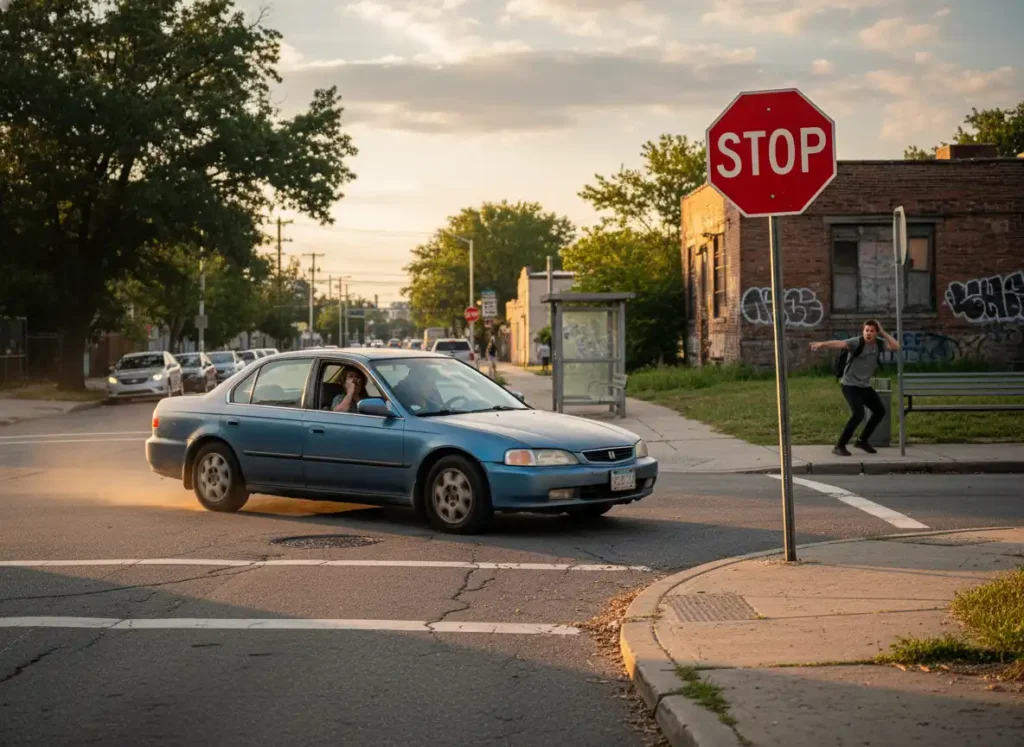
A failure to obey a traffic sign ticket in Illinois is generally a moving violation that may add points to your driving record after a conviction. Before paying the ticket, review whether court supervision may be available, whether the sign was properly visible, and whether the ticket could affect your license, insurance, CDL, or employment.
Getting pulled over and handed a ticket for failing to obey a traffic sign can feel like a minor inconvenience. Pay the fine, move on. But before you do that, it is worth understanding what is actually at stake and whether contesting the ticket makes sense for your situation.
Failure to Obey Traffic Sign Penalties in Illinois
A failure to obey traffic sign ticket may seem minor, but the outcome can affect more than the fine. A conviction can appear on your driving record, add points, affect insurance, and create problems if you already have other moving violations.
| Consequence | What It Can Mean |
|---|---|
| Driving-record points | A conviction under Section 11-305 may add 20 points to an Illinois driving record. |
| Fine and court costs | The amount depends on the charge, court disposition, and circumstances. |
| License consequences | Additional convictions may increase suspension risk depending on driving history. |
| Insurance impact | A moving violation conviction may affect insurance evaluation. |
| CDL or work-driving concerns | Commercial drivers may face additional employment and license concerns. |
If you are unsure whether your ticket counts as a moving violation, review this guide on moving vs non-moving violations in Illinois.
What Counts as a Traffic Sign or Traffic Control Device in Illinois?
Illinois law applies to official traffic-control devices that are applicable to the driver and placed or held according to the Illinois Vehicle Code.
Depending on the citation, the issue may involve:
- Traffic-control signs
- Turn restrictions
- Lane-control devices
- Yield or stop requirements
- Construction or maintenance-zone controls
- Other official devices directing traffic
The condition and placement of the device matter. Section 11-305 provides that a rule requiring an official traffic-control device generally cannot be enforced against a driver if the required device was not properly positioned and sufficiently legible to an ordinarily observant person.
Should You Just Pay a Failure to Obey Traffic Sign Ticket?
Do not automatically pay the ticket before understanding how the payment will resolve the case.
Illinois courts allow electronic guilty pleas for eligible traffic offenses through approved Plead and Pay systems. That means paying an eligible ticket through a guilty-plea process is not merely an administrative payment. It resolves the case through a guilty plea.
A traffic conviction can have different consequences depending on your driving history. Speaking with a criminal defense attorney in Springfield can help you understand your options before accepting a plea.
Before choosing that option, review:
- Whether you hold a CDL or drive professionally
- Whether the citation is eligible for court supervision
- Your prior driving record
- The point consequences of a conviction
- Whether the sign or device was properly visible
- Whether the officer’s evidence can establish the violation
A traffic sign ticket may deserve legal review when:
- The ticket could add points to your record
- You already have recent traffic convictions
- You have a CDL or drive professionally
- Your insurance rates may be affected
- The sign was blocked, missing, damaged, or unclear
- You believe the officer misunderstood the situation
A quick decision to pay may resolve the case, but it may also create consequences that last beyond the original fine.
Possible Defenses to a Failure to Obey Traffic Sign Ticket
Possible defenses depend on the specific citation and evidence.
Issues worth reviewing may include:
- The device was missing, blocked, damaged, or not sufficiently legible
- The device was not positioned where an ordinarily observant driver could reasonably see it
- A police officer directed traffic differently from the device
- The cited device did not apply to the driver’s lane or movement
- The officer could not clearly observe the alleged violation
- Dashcam or surveillance footage contradicts the citation
- Road markings or traffic controls created ambiguity
- The citation identifies the wrong statute or factual basis
Section 11-305 specifically recognizes the visibility and placement of required traffic-control devices as relevant enforcement issues. If the citation began with a traffic stop that also involved a vehicle search, review when police can search a car during an Illinois traffic stop.
Evidence That May Help Challenge a Traffic Sign Ticket
Evidence that may affect the outcome includes:
| Evidence | Why It Matters |
|---|---|
| Photos of the sign or intersection | Shows visibility, placement, and condition of the device. |
| Dashcam footage | May contradict the officer’s description of events. |
| Witness statements | Can support your version of what occurred. |
| Weather or lighting conditions | May explain why the device was difficult to observe. |
| Road markings | May show unclear traffic direction or lane instructions. |
Court Supervision vs Conviction for a Traffic Sign Ticket
Court supervision and a conviction are not the same disposition.
Supervision may be available in some traffic cases, but eligibility and the consequences depend on the driver’s history and the specific charge. It should not be described as automatic.
Drivers should understand what the proposed disposition will mean for their driving record before accepting it, particularly when they already have prior moving violations or hold a commercial driver’s license. Drivers with existing license problems should also review the consequences of driving on a suspended or revoked license in Illinois.
Why CDL Drivers Should Be Careful With Traffic Sign Tickets
CDL drivers and employees who drive for work should be careful with any moving violation. Even a traffic sign ticket may affect employer review, insurance requirements, commercial driving records, or future license risk depending on the driver’s history and the case outcome.
A CDL driver should not assume that paying the ticket or accepting supervision will fully protect commercial driving privileges. Before deciding what to do, speak with an attorney who understands how traffic outcomes can affect CDL and work-driving consequences.
If the stop involved alcohol, field sobriety testing, or DUI allegations, visit the DUI defense attorney in Springfield, IL page.
Is Failure to Obey a Traffic Sign a Moving Violation?
Yes. Failure to obey a highway sign in Illinois is generally treated as a moving violation because it involves disobeying an official traffic control device while operating a vehicle. That matters because a conviction can add points to your driving record, increase insurance costs, and create bigger problems if you already have prior traffic violations.
A conviction for disregarding an official traffic-control device is treated as a point-assigned Illinois traffic offense. The Secretary of State’s published schedule assigns 20 points to Section 11-305.
The practical impact depends on the driver’s existing record, age, and other recent convictions. This is why the ticket should be reviewed as part of the driver’s complete record rather than treated only as a fine.
How to Contest a Traffic Ticket in Sangamon County
Start by reading the citation carefully. Confirm:
- The statute listed on the ticket
- The alleged violation
- The response instructions
- The court date or deadline
- Whether a court appearance is required
Sangamon County participates in Illinois electronic court services for traffic matters, including an online traffic-ticket payment system. Illinois Courts also recognizes electronic guilty-plea programs for eligible offenses.
If you intend to contest the citation, preserve evidence early. Useful evidence may include dashcam footage, photographs of the sign or intersection, weather conditions, witness information, and any information showing the device was blocked, damaged, missing, or difficult to see.
Do not assume the statute on every “failure to obey sign” ticket is identical. Review the exact Vehicle Code section printed on the citation before building the defense.
If your traffic ticket involves multiple violations, prior convictions, or possible license consequences, review your options with an Illinois traffic defense attorney before entering a plea.
When to Hire a Traffic Defense Attorney in Illinois
A traffic citation may seem small, but the downstream effects on your license, insurance, and record are real. If you are unsure whether to contest your ticket or want help building the strongest possible case, speaking with a criminal defense attorney before making any decisions is worth your time.
Andrew Affrunti is a Springfield, Illinois attorney who handles traffic violations and related matters throughout the state. He can review your citation, assess your options, and help you decide on the best path forward.
Got a Traffic Ticket in Springfield or Sangamon County?
A failure to obey a traffic sign conviction can affect your driving record, insurance, CDL, and future license status. Andrew Affrunti can review your citation, driving history, and possible defenses before you decide how to proceed.
Schedule a Traffic Defense ConsultationFrequently Asked Questions About Failure to Obey Traffic Sign Tickets in Illinois
How many points is failure to obey a traffic-control device in Illinois?
The Illinois Secretary of State’s published point schedule assigns 20 points to a conviction for disregarding an official traffic-control device under 625 ILCS 5/11-305.
What does 625 ILCS 5/11-305 require?
Section 11-305 generally requires drivers to obey applicable official traffic-control devices unless they are otherwise directed by a police officer or another statutory exception applies.
Can I fight a failure to obey traffic sign ticket?
Yes. Depending on the facts, issues may include whether the device was visible and properly positioned, whether it applied to the driver’s movement, and whether the officer can prove the alleged violation.
What if the traffic sign was blocked or difficult to see?
Illinois law provides that when a required official traffic-control device was not properly positioned and sufficiently legible to an ordinarily observant person, the underlying rule requiring that device generally cannot be enforced against the alleged violator.
Should I just pay the traffic ticket?
Do not automatically pay before understanding how the payment resolves the case. Eligible Illinois traffic tickets may be resolved through a guilty-plea payment process, which can result in a conviction.
Can I receive court supervision for a traffic sign ticket?
Court supervision may be available in some cases, but it is not automatic. Eligibility and the effect of supervision depend on the charge and the driver’s history.
Can a failure to obey traffic sign ticket affect my license?
Yes. Because the offense can add points to an Illinois driving record, it may contribute to license consequences when combined with other qualifying violations.
Can a failure to obey traffic sign ticket increase insurance rates?
A conviction may affect insurance depending on the insurer, driving history, and other violations on the record. The impact varies by driver.
Is failure to obey a traffic sign worse than a regular speeding ticket?
It depends on the circumstances. Both may be moving violations, but the consequences depend on the specific offense, points, driving history, and case outcome.
Should I hire a lawyer for a failure to obey traffic sign ticket?
Legal advice may be helpful if the ticket could affect your license, insurance, CDL, employment, or if you believe the citation is incorrect.
Can a failure to obey traffic sign ticket affect my CDL?
Yes. A traffic sign violation may create additional concerns for CDL holders because convictions can affect commercial driving records, employment requirements, and future license issues.
Should I fight a traffic sign ticket if the sign was blocked?
Possibly. If the sign was blocked, missing, damaged, or not visible to an ordinarily observant driver, that may be an issue worth reviewing before accepting a conviction.